
Keyless entry theft has quietly become one of the most lucrative forms of modern crime, exploiting convenience technology that many drivers barely think about. As manufacturers compete to make vehicles more seamless to unlock and start, organised gangs have been just as quick to refine tools that mimic or extend digital keys.
What is keyless entry theft and why is it rising?
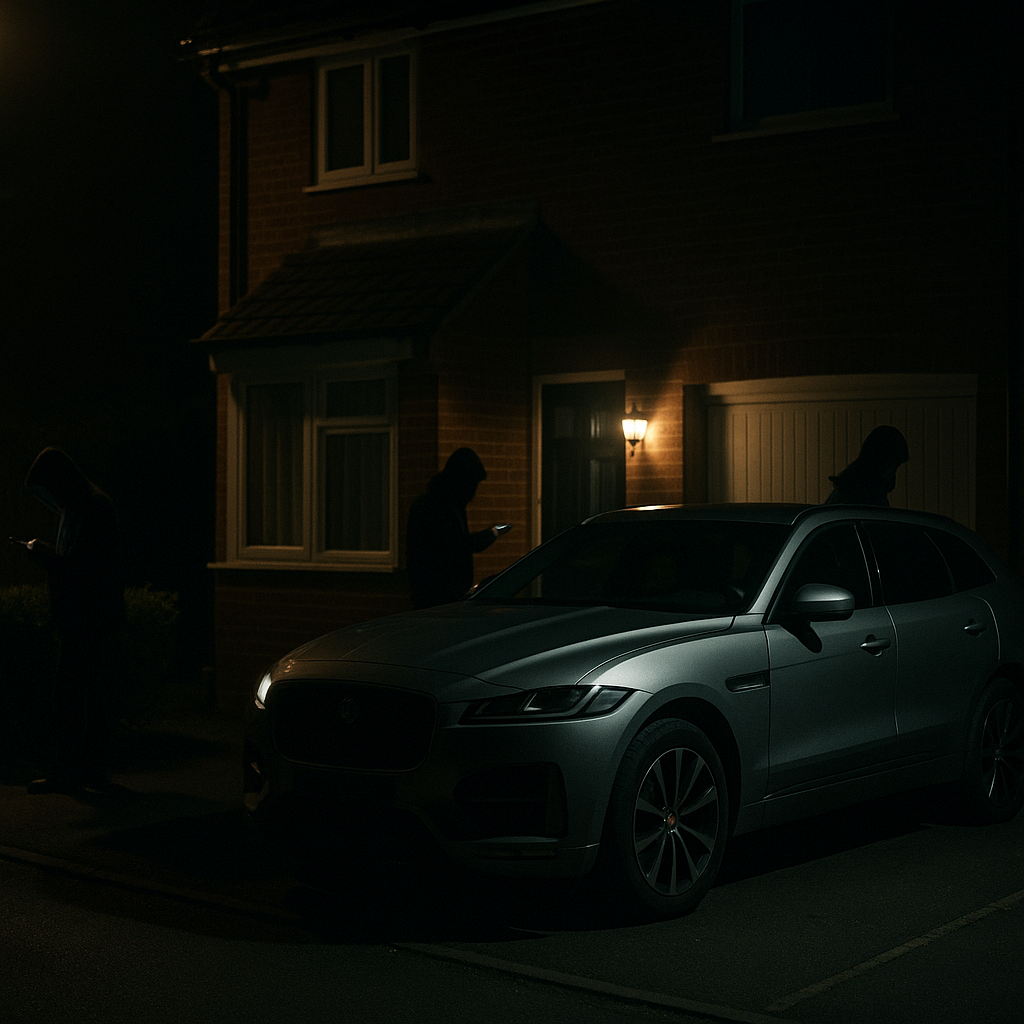
At its simplest, keyless entry theft occurs when criminals intercept or amplify the signal from a key fob so they can unlock and start a vehicle without ever touching the genuine key. The attack is often described as a relay theft, because two devices effectively relay the signal between the key and the vehicle.
One device is typically held close to the property where the key is stored, while another is positioned beside the vehicle. The system is fooled into believing the key is present. The process can take less than a minute, silently and without visible damage, which is precisely why insurers and police forces across the UK now view this as a priority trend.
How relay attacks work in the real world
In a typical relay scenario, one thief walks up a driveway with a slim electronic unit, while an accomplice waits by the vehicle with a second device. If the key is near a front door or window, the signal is captured and boosted. The car unlocks, starts and is driven away, often to a nearby location where plates are switched or the vehicle is stripped.
Unlike older methods that relied on brute force or crude tools, this style of keyless entry theft leaves little forensic trace. For many owners, the first sign of trouble is an empty driveway. This sophistication has encouraged some crime groups to specialise in particular brands or models, building detailed knowledge of their wireless protocols.
Why some vehicles are more vulnerable than others
Not every keyless system is created equal. Some manufacturers have introduced motion sensors inside key fobs that deactivate the signal when the key is not moving, sharply reducing the risk of a relay from inside the home. Others have rolled out stronger encryption or reduced the range at which the vehicle will respond.
Insurers and testing bodies regularly publish lists of models that perform poorly in security assessments, and those rankings are increasingly shaped by resistance to digital compromise rather than physical lock strength. In some cases, owners are advised to update software or replace older keys with newer, more secure versions.
Practical ways to protect against keyless entry theft
For owners, the most effective response is layered protection. No single measure is perfect, but combining several makes a vehicle a far less attractive target.
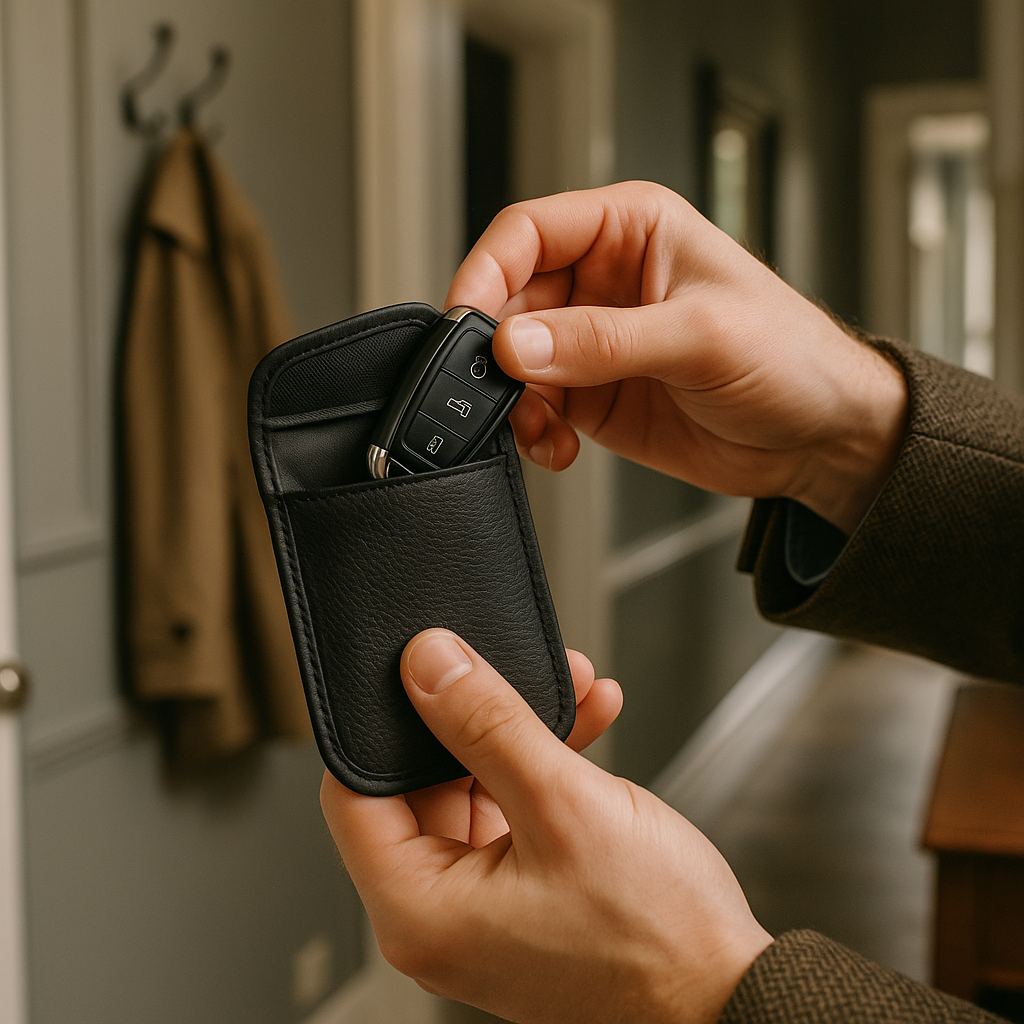
- Store keys away from doors and windows, preferably in a signal-blocking pouch or metal container.
- Disable keyless entry in the vehicle settings if you rarely use it, following the manufacturer’s instructions.
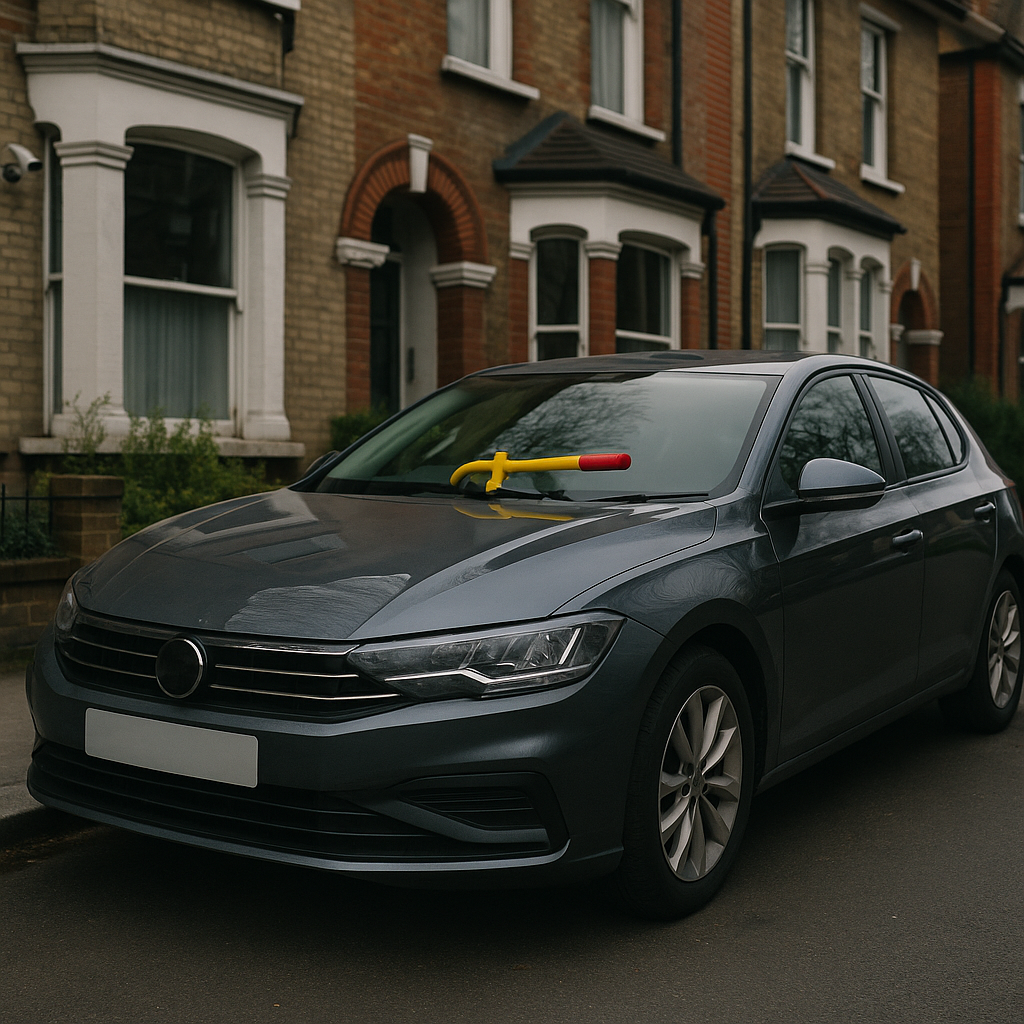
- Use a highly visible steering wheel lock to add a physical barrier, increasing the time and effort required to steal the vehicle.
- Consider professionally fitted tracking systems that can help recover a vehicle if the worst happens.
- Review home CCTV or video doorbells, which can both deter would-be thieves and provide evidence.
Specialist installers who work daily with alarms, trackers and related systems often have a front-row view of emerging attack methods, making them a useful source of practical advice when choosing equipment.
How insurers and regulators are responding
The insurance market has been forced to adapt to the rise in keyless entry theft, with premiums reflecting the heightened risk profile of certain models. Some policies now specify particular security standards for aftermarket devices, while others offer discounts for verified tracking systems or immobilisers.
Industry bodies are also pressing manufacturers to design security in from the outset, rather than treating it as an optional extra. That includes tougher testing regimes for wireless systems and closer scrutiny of how quickly vulnerabilities are patched when discovered.
Keyless entry theft FAQs
Can I completely prevent keyless entry theft?
It is difficult to eliminate the risk entirely, but you can reduce it dramatically. Combining several measures – such as storing keys in a signal-blocking pouch, disabling keyless entry if you do not rely on it, adding a visible steering lock and fitting an approved tracker – makes your vehicle far less appealing to organised thieves. Criminals tend to target the easiest option, so layered protection is a powerful deterrent.
How do I know if my car is vulnerable to keyless entry theft?
If your vehicle unlocks and starts when the key is simply nearby, without pressing a button, it almost certainly uses a keyless system that could be targeted. You can check your owner’s manual or ask a dealer to confirm the exact technology used. Independent security tests and insurer reports often highlight which models perform poorly against relay attacks, and your insurer may be able to advise on specific risks and recommended upgrades.
Are Faraday pouches enough to stop keyless entry theft?
A well-made Faraday pouch can be highly effective at blocking the signal from a key fob, but quality varies. It is wise to test the pouch by standing next to your vehicle with the key sealed inside; if the doors still open, the pouch is not doing its job. Even with a good pouch, it is sensible to add other measures, such as physical locks and secure parking, to guard against different methods of theft.