
For years, ecologists and psychologists occupied separate disciplines, rarely speaking the same language. That division is dissolving fast. A mounting body of peer-reviewed research now places climate anxiety squarely within the public health canon, no longer a fringe concern for coastal ecologists or catastrophising teenagers, but a measurable, diagnosable pressure affecting populations across every continent. Governments are beginning to take it seriously. Some are even legislating around it.
What has changed is the quality of the evidence. The Lancet Countdown on Health and Climate Change, which publishes annually and carries considerable weight with policymakers, documented in its most recent report that extreme heat events, flooding, and prolonged wildfire seasons are generating cascading psychological consequences: elevated rates of depression, post-traumatic stress, grief, and what researchers term “solastalgia”, the distress caused by environmental change in one’s own home environment. These are not metaphors. They are clinical presentations arriving in GP surgeries and mental health clinics with increasing frequency.

What Does Climate Anxiety Actually Look Like in Practice?
The term “climate anxiety” risks sounding vague, even self-indulgent, to those unfamiliar with the clinical literature. It is neither. The American Psychological Association first formalised the concept in 2017, but UK researchers have since developed their own frameworks. A 2021 study by the University of Bath surveyed 10,000 young people across ten countries and found that 59 per cent felt very or extremely worried about climate change. Among UK respondents, 40 per cent said climate feelings affected their daily functioning. That is not background noise. That is a public health signal.
Clinicians distinguish between adaptive anxiety, which motivates action, and maladaptive anxiety, which paralyses. The latter manifests as sleep disturbance, intrusive thoughts, avoidance of news, strained relationships, and in more acute cases, a reluctance to have children. Younger cohorts are disproportionately affected, but the NHS is also seeing older patients presenting with grief responses following flooding events, particularly in communities such as those in the Somerset Levels and parts of Yorkshire that have experienced repeated inundation.
The UK’s Policy Response: Cautious Progress
Britain’s approach to climate anxiety as a public health matter remains, to be charitable, in its early stages. The NHS Long Term Plan acknowledged environmental determinants of health in broad terms, but specific commissioning around climate-related psychological distress has been patchy at best. What has emerged instead are localised initiatives and pilot programmes, several of them genuinely thoughtful.
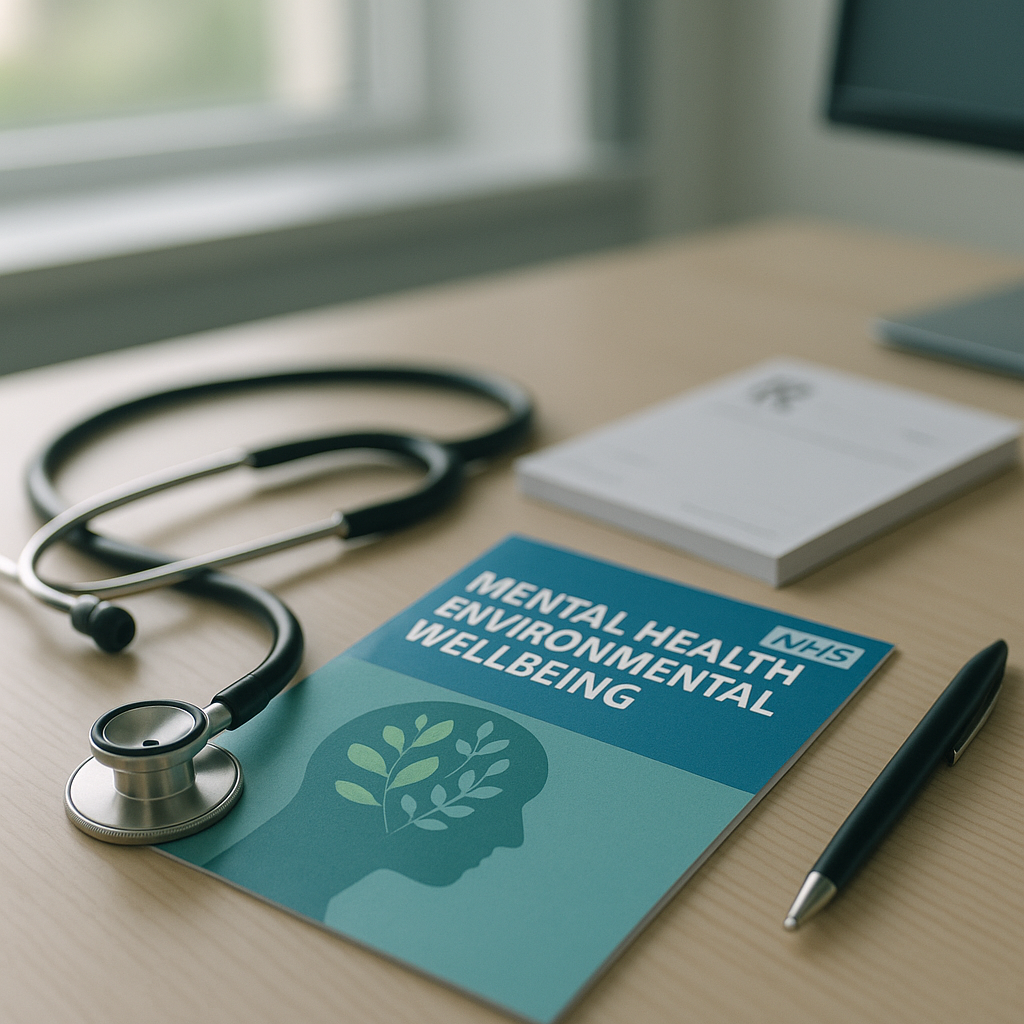
NHS England has begun integrating climate health literacy into social prescribing frameworks, meaning GPs can now refer patients to “green social prescribing” projects. These schemes, trialled across seven sites including South Yorkshire and Humberside, connect patients with outdoor activities, conservation volunteering, and community gardening. Early results, published by NHS England in 2025, showed statistically significant improvements in wellbeing scores among participants. The logic is elegant: reconnecting people to the natural world addresses both the disconnection that fuels ecological grief and the sedentary isolation that worsens generalised anxiety.
The UK Health Security Agency has also published guidance acknowledging that extreme weather events carry mental health consequences that must be planned for alongside physical ones. Flood recovery packages in several local authority areas now include mandatory mental health signposting, something that would have been considered an afterthought five years ago.
How the EU Is Moving Further and Faster
Where the UK has moved cautiously, the European Union has shown considerably greater structural ambition. The EU Mission on Cancer has been complemented by growing political interest in what some Brussels officials are calling a “climate health mission”, a cross-portfolio initiative linking environmental policy directly to mental health outcomes.
Finland, consistently ranked among the world’s happiest countries, has integrated climate mental health education into its national school curriculum. Pupils are taught not only about ecological systems but about processing difficult emotions related to environmental change, a form of climate psychology that Finnish researchers argue reduces maladaptive anxiety whilst building civic resilience. Germany has established dedicated climate psychology clinics within several university hospital networks, and early demand has significantly exceeded initial projections.
The World Health Organisation designated climate change as the defining public health threat of the 21st century, and its regional office for Europe has since published a technical guidance document on mental health and climate change, urging member states to embed psychological support within their national adaptation plans. For those interested in the full scope of WHO’s position, their European climate and health framework is worth examining.
The Generational Fault Line
No serious discussion of climate anxiety as a public health challenge can sidestep the generational dimension. Young people in the UK, broadly those born after 1997, have grown up with climate change as a fixed feature of their consciousness rather than a distant scientific abstraction. The psychological literature is beginning to reflect what youth mental health workers have known anecdotally for years: that this cohort experiences a particular form of anticipatory grief, mourning a future they feel has already been foreclosed.
Organisations such as Young Minds and the Climate Psychology Alliance in the UK are lobbying for climate-aware therapy training as a standard component of counsellor and psychotherapist accreditation. At present, most practising therapists receive no formal education on how to work with climate-related distress, which means patients raising these concerns frequently encounter well-meaning but underprepared clinicians who attempt to reframe ecological anxiety as a cognitive distortion to be corrected. The Climate Psychology Alliance argues, persuasively, that this fundamentally misunderstands the problem: the anxiety is, in large part, a rational response to a real threat.
From Awareness to Infrastructure: What Good Policy Looks Like
The emerging consensus among researchers and policymakers who take climate anxiety public health seriously points toward a three-tier response. First, population-level awareness and destigmatisation: naming climate grief as a legitimate psychological experience removes the shame that prevents people from seeking support. Second, clinical capacity: training mental health professionals in climate-aware therapeutic approaches, funding specialised services, and ensuring that GP practices in high-risk areas have clear referral pathways. Third, structural intervention: because the most effective treatment for climate anxiety is ultimately reducing climate change itself, mental health and environmental policy cannot remain siloed.
Scotland’s approach, under its National Performance Framework, is perhaps the most integrated in the UK, explicitly linking wellbeing outcomes to environmental sustainability indicators. It is imperfect, and implementation varies considerably by health board, but the framework at least acknowledges what the evidence demands: that a healthy population and a healthy planet are not separate policy objectives.
The Road Ahead
Climate anxiety is not going away. The physical realities driving it are accelerating, and the psychological literature tracking its effects is growing sharper and more alarming with each successive report. The question governments face is not whether this constitutes a public health issue; that case has been made and largely accepted. The question is whether the institutional response will match the scale of the problem before the window for genuinely preventive action closes.
There is, paradoxically, something mildly reassuring in the fact that policymakers are finally asking the question. The NHS green social prescribing pilots, the EU’s cross-portfolio health missions, Finland’s classroom curricula, and the WHO’s regional guidance all represent serious institutional acknowledgement that the psychological cost of environmental breakdown is real, measurable, and deserving of a proper response. That is not enough. But it is, at least, a beginning.
Frequently Asked Questions
What is climate anxiety and is it a recognised mental health condition?
Climate anxiety refers to persistent worry, distress, or fear related to climate change and its consequences. Whilst not a standalone diagnostic category in the ICD-11, it is increasingly recognised by clinical bodies including the NHS and the Climate Psychology Alliance as a significant psychological experience that can impair daily functioning and require professional support.
How widespread is climate anxiety in the UK?
Research from the University of Bath found that a significant proportion of UK young people report climate concerns affecting their daily lives. NHS mental health services have noted rising presentations linked to flooding events and broader ecological distress, particularly among under-35s and communities in flood-prone regions such as Yorkshire and the Somerset Levels.
What is the NHS doing about climate-related mental health issues?
The NHS has integrated climate health considerations into its green social prescribing framework, connecting patients experiencing anxiety or low mood with outdoor and conservation-based activities. Early pilot data from seven NHS sites, published in 2025, showed measurable improvements in participant wellbeing scores. Dedicated clinical pathways for climate-related distress remain limited but are under development.
How are other countries tackling climate anxiety as a public health problem?
Finland has embedded climate psychology into its national school curriculum, helping young people process ecological emotions as part of standard education. Germany has opened dedicated climate psychology clinics within university hospitals, whilst the EU is developing cross-portfolio health missions linking environmental and mental health policy. The WHO’s European regional office has also published technical guidance urging member states to include psychological support in national adaptation plans.
Is climate anxiety the same as eco-grief or solastalgia?
These terms are related but distinct. Eco-grief refers specifically to mourning environmental losses, such as species extinction or landscape destruction. Solastalgia describes distress caused by changes to one’s immediate home environment, often following flooding or habitat destruction. Climate anxiety is broader, encompassing anticipatory fear about future environmental deterioration. All three can co-exist and may benefit from climate-aware therapeutic approaches.