
There is a particular kind of silence that precedes a crisis. Not the silence of nothing happening, but the silence of something enormous moving too slowly for the news cycle to bother with. Climate migration is precisely that. Tens of millions of people are already on the move, displaced by floods, droughts, coastal erosion and the kind of heat that makes agricultural life genuinely impossible. And yet the political conversation, especially in Britain, treats this as a future problem. It is not.
According to the World Bank’s Groundswell report, up to 216 million people could be internally displaced by climate change by 2050 across six major regions. That figure, staggering as it is, covers only those moving within their own countries. Cross-border climate migration adds a further and far more politically volatile dimension. Receiving cities across Europe, including several in the UK, are already feeling the pressure, even if their councils have yet to name it correctly.
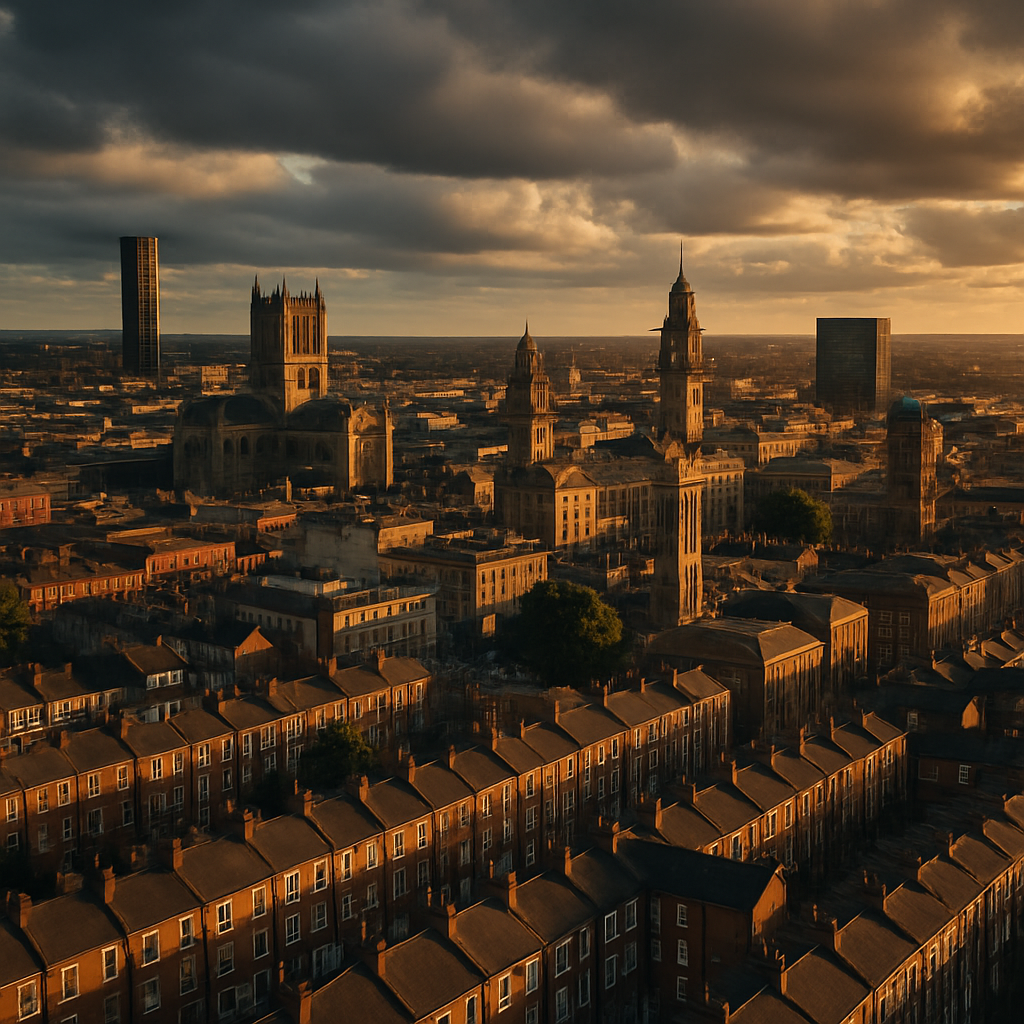
What Is Climate Migration and Why Is It So Hard to Measure?
Climate migration refers to the movement of people driven, either entirely or substantially, by environmental degradation, extreme weather events or the slow-onset collapse of ecosystems that once sustained communities. The difficulty lies in the word “entirely”. Climate rarely operates in isolation. A Bangladeshi farmer who abandons a saltwater-inundated delta and moves to Dhaka, then eventually to the UK, may cite economic reasons on any visa application. The climate dimension disappears into paperwork.
The Internal Displacement Monitoring Centre, based in Geneva, recorded 26.4 million new disaster-related displacements in a single recent year. The majority involved floods and storms, events that are becoming more frequent and more severe as global temperatures rise. The BBC’s science and environment desk has tracked multiple such displacement events in South Asia and sub-Saharan Africa with particular rigour. What the data consistently shows is acceleration. These are not stable patterns.
How Receiving Cities Are Absorbing the Pressure
Whether or not governments choose to acknowledge climate migration as a distinct category, cities must absorb it. London, Birmingham, Manchester and Leicester have all seen significant population growth from communities originating in climate-vulnerable regions. The cultural enrichment this brings is real and worth defending. So is the honest acknowledgement of strain on housing, infrastructure and public services.
In Leicester, where the population has grown by roughly 12 per cent over the past decade, council housing waiting lists have stretched to historic lengths. In parts of East London, rents in areas with high concentrations of recently arrived communities have risen faster than the borough average. These are not arguments against migration; they are arguments for better-funded, better-planned urban infrastructure. The two positions are not in conflict, even if political discourse insists on treating them as such.
Urban planners are beginning to take a more explicit approach. Some local authorities have started commissioning climate migration risk assessments as part of their broader Local Plans, mapping which communities globally are most likely to seek resettlement and modelling the potential trajectory of arrivals over twenty-year horizons. It is tentative, underfunded work, but it is happening.

The Policy Vacuum at the Heart of the Problem
There is no international legal definition of a climate refugee. The 1951 Refugee Convention covers persecution on specific grounds but says nothing about environmental collapse. A person fleeing a government death squad has legal protections. A person fleeing a submerged coastline does not. This gap is not accidental; it reflects the unwillingness of wealthy nations to accept a legal obligation that would require significant resettlement commitments.
In Westminster, the silence has been especially conspicuous. The UK government’s Migration and Modern Slavery Bill of 2022 made no meaningful provision for climate-related grounds of displacement, and subsequent policy has moved in precisely the opposite direction. Meanwhile, the Climate Change Committee, the independent statutory body advising the UK government, has repeatedly noted that adaptation planning in this country does not adequately model international migration as a downstream consequence of climate inaction.
What fills the vacuum is ad hoc humanitarianism, overstretched local charities, and the quiet, unpaid labour of diaspora communities absorbing newly arrived relatives. It is not a system. It is a series of stopgaps that obscures the scale of what is coming.
What Urban Planners Are Actually Doing
The most interesting responses are not coming from national governments at all. They are coming from cities. Rotterdam has built its entire urban identity around climate adaptation, including planning for migration as a population pressure point. Barcelona has a dedicated migration and climate convergence unit within its city planning department. Several UK cities are beginning, cautiously, to follow suit.
Greater Manchester’s combined authority published an environmental and demographic pressure analysis in 2025 that, for the first time, drew an explicit line between climate events in West Africa and Central Asia and projected housing demand in the region over a fifteen-year window. It stopped short of calling it climate migration planning, but the intellectual framework was there. Names matter less than substance, and the substance is encouraging.
There is also the question of infrastructure resilience. Cities receiving climate migrants are often doing so whilst simultaneously managing their own climate adaptation challenges: coastal flooding, urban heat islands, water stress. Bristol, for instance, is grappling with flood risk in its lower-lying neighbourhoods whilst also being one of the UK’s most attractive resettlement destinations for communities from climate-vulnerable parts of the world. The two pressures compound each other in ways that require integrated thinking rather than siloed policy responses.
It is worth noting that population movement is not exclusively a burden. Historically, cities that have absorbed significant migrant populations during moments of global disruption have emerged more economically dynamic, not less. The intellectual capital, labour contribution and cultural complexity brought by displaced communities is measurable and significant. The challenge is not the people; it is the infrastructure gap between arrival and integration.
The Housing Market Dimension
Property markets in mid-sized British cities tell part of the story. In cities like Leeds, Coventry and Nottingham, private rental demand from newly arrived populations has pushed already-strained markets further. Landlords in these areas have seen yields rise whilst tenants face acute affordability pressure. The interaction between climate migration and the existing UK housing crisis is not theoretical; it is visible in rental indices and council referral data right now.
This is the context in which resilience becomes a practical matter rather than an abstract virtue. Communities planning for long-term sustainability, whether that means energy-efficient housing stock, robust public transport, or diversified local economies, are better positioned to absorb population flux without social fracture. The analogy to vehicle maintenance is more apt than it sounds. Just as an owner sourcing quality shogun sport parts understands that long-term reliability depends on structural investment rather than emergency repairs, city planners are learning that resilience must be built in advance, not bolted on after the pressure arrives.
A Crisis That Demands Honest Language
Climate migration is not a future hypothetical. It is a present-tense reality that is already reshaping housing markets, straining urban infrastructure and exposing the limits of international law. Britain’s cities are absorbing it largely without acknowledgement, policy support or adequate funding. That cannot continue.
The honest conversation begins with accurate terminology and ends with genuinely integrated planning: planning that accounts for where people are coming from, why they are moving, and what receiving communities need to absorb that movement with grace rather than crisis. We are some distance from that conversation at a national level. At a city level, the foundations are being laid. That, at least, is something worth watching closely.
Frequently Asked Questions
What is climate migration and how is it different from regular migration?
Climate migration refers to movement driven by environmental factors such as flooding, drought, rising sea levels or extreme heat that makes a region uninhabitable or unviable for agriculture. Unlike economic migration, the underlying driver is environmental collapse rather than wage differentials, though in practice the two are frequently intertwined and difficult to separate in legal or statistical frameworks.
How many people are currently displaced by climate change?
The Internal Displacement Monitoring Centre recorded over 26 million new disaster-related displacements in a recent single year, with the World Bank projecting up to 216 million internal climate migrants globally by 2050. These figures cover movement within national borders; cross-border climate migration remains harder to quantify because no international legal category currently exists for it.
Is climate migration affecting UK cities right now?
Yes. Cities including London, Birmingham, Manchester and Leicester are receiving populations from climate-vulnerable regions, placing pressure on housing waiting lists, rental markets and public services. The climate dimension is rarely named explicitly in policy documents, but urban planning bodies are increasingly modelling it as a distinct pressure point in their long-range demographic analyses.
Why do climate migrants not have the same legal protections as other refugees?
The 1951 Refugee Convention, which forms the legal basis for refugee protection in the UK and internationally, covers persecution on grounds of race, religion, nationality, political opinion or social group. Environmental displacement is not included, leaving climate migrants in a legal grey area with no automatic entitlement to protection or resettlement, regardless of the severity of the conditions they have fled.
What can UK cities do to better manage climate migration pressures?
Leading approaches include integrating climate migration projections into Local Plans and housing strategies, investing in infrastructure resilience before population pressures peak, and commissioning long-range demographic modelling that explicitly links global climate events to domestic population trends. Greater Manchester’s 2025 environmental and demographic pressure analysis is one early UK example of this kind of integrated thinking.