
There is something quietly devastating about a Georgian rectory losing its roof from the inside out. No dramatic collapse, no headline, just a slow accumulation of deferred repairs, missed seasons, water creeping through cracked leadwork until the timbers beneath are beyond saving. England has thousands of buildings in exactly this condition, and the numbers are getting worse. The listed buildings at risk England register, maintained by Historic England, is not merely a heritage concern. It is a structural emergency dressed up in conservation language.
Historic England’s Buildings at Risk Register currently lists around 5,000 entries, covering Grade I and Grade II* listed structures judged to be in poor or very bad condition, or at immediate risk of further rapid deterioration. Grade II listed buildings, which make up roughly 92 per cent of all listed structures in England, are tracked separately by local authorities with considerably less consistency. The picture is therefore almost certainly grimmer than the headline figure suggests. I’ve spent time looking through the register’s regional breakdowns, and what strikes you is not the grand ruins everyone knows about. It is the unremarkable parish churches, the modest Georgian terraces, the Victorian mill buildings nobody has quite worked out what to do with.
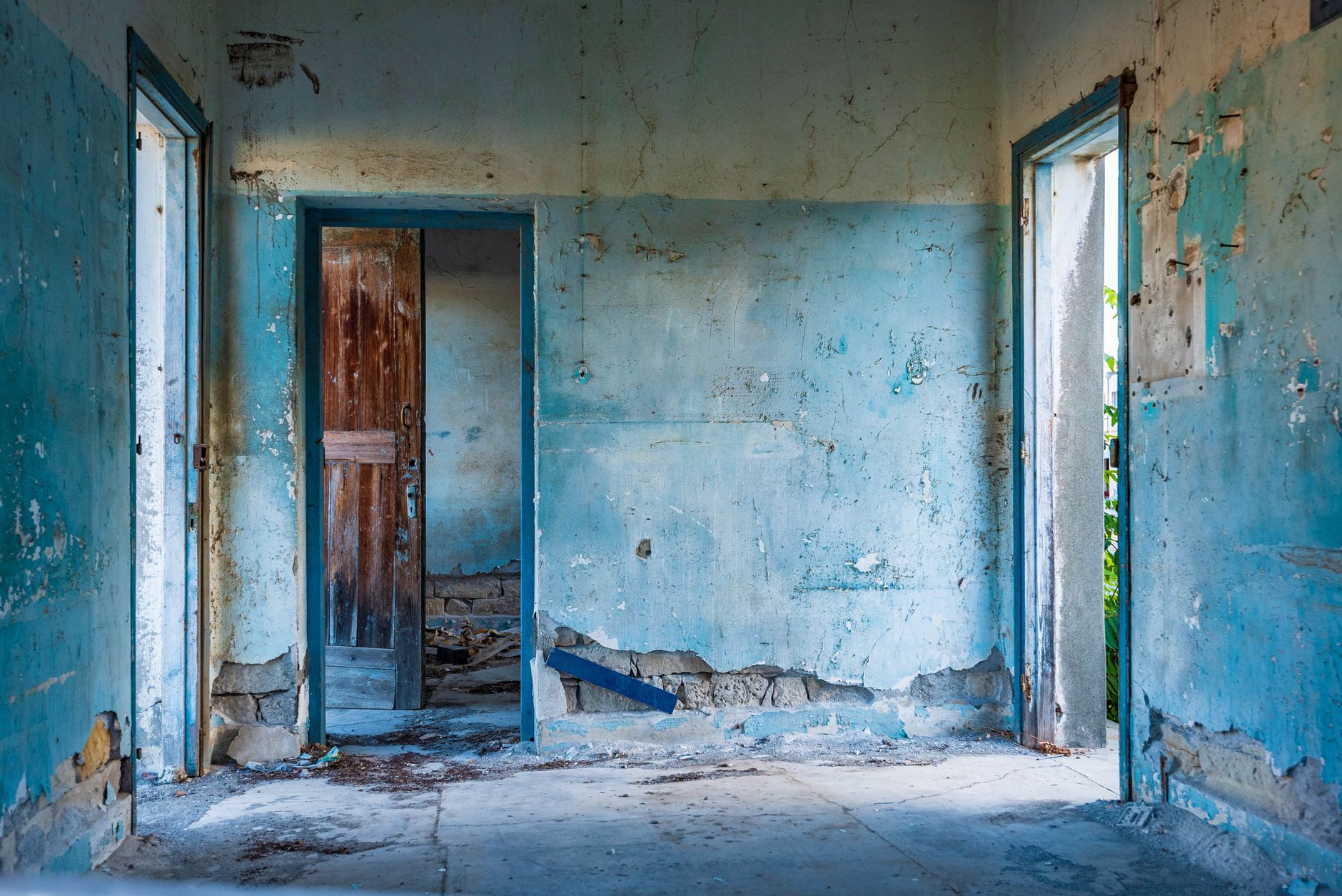
Why listed buildings fall into disrepair in the first place
The listing system was designed to protect England’s most significant architecture from inappropriate alteration or demolition. What it was not designed to do was fund the upkeep of those buildings, and that tension sits at the heart of everything. An owner who acquires a listed property inherits both the asset and the obligation. Planning consent is required for most works that would affect the building’s character, which in practice means slower processes, more expensive materials and a level of craftsmanship that the mainstream construction market simply cannot supply at scale.
Lime mortar, hand-cut stone, traditional slate, green oak joinery: these are not decorative choices. They are technical requirements rooted in how historic buildings actually function. A Victorian wall built with soft lime mortar is designed to flex and breathe; repoint it with modern Portland cement and you trap moisture, accelerate decay and create precisely the kind of structural damage you were trying to prevent. The tragedy is that this substitution happens constantly, often through ignorance and occasionally through the sheer impossibility of finding anyone trained to do it properly.
The shortage of traditional building skills has been documented by the Historic England skills research programme for years. According to their 2023 Heritage Counts report, the number of practitioners competent in traditional lime-based construction, historic masonry repair and structural lead roofing has been falling steadily, and the average age of those who remain is rising. Apprenticeships exist, but they are sparse, unevenly distributed geographically, and often lack the specialist supervision that makes the difference between a competent generalist and a genuine craftsperson. This is not an abstract problem. Deferred maintenance on a listed building does not stay deferred indefinitely. It compounds.
The financial trap that owners cannot easily escape
I would be cautious about any narrative that frames listed building owners purely as negligent. Many of them are genuinely trapped. A Grade II* farmhouse in need of a full roof replacement and structural stonework repair might face a bill of £300,000 to £500,000 before a single interior wall is touched. VAT relief applies to approved alterations but not to repairs, which is a distinction that has frustrated conservation architects and owners alike for decades, since it creates a perverse incentive to alter rather than maintain. The Government has consulted on this anomaly repeatedly without resolving it.
Grant funding exists through Historic England’s repair grants programme, through the National Lottery Heritage Fund and through some local authority conservation budgets, but supply is nowhere near demand. Historic England’s own figures show that applications for repair grants consistently outstrip available funding by a factor of several times. Private owners without substantial capital reserves face a straightforward arithmetic problem: the cost of compliant repair exceeds the value the repair adds to the property, and lenders are reluctant to finance works whose completion timetable is hostage to planning consent and specialist contractor availability.

The situation is particularly acute for listed buildings in post-industrial towns and rural communities where property values are low relative to repair costs. It is in these places that the Buildings at Risk Register concentrates. Northumberland, County Durham, parts of Yorkshire and the East Midlands have clusters of listed structures that have been on the register for more than a decade with no realistic exit plan. The buildings stay listed, the permissions stay theoretical, and the decay continues.
Hidden hazards inside the fabric of old buildings
Structural decay is not the only hazard that historic building owners and contractors must manage. Many listed buildings constructed or significantly modified during the twentieth century contain legacy materials that require specialist management before any repair or renovation work can begin. Asbestos is prevalent in older commercial buildings, converted industrial structures and even some domestic properties that received insulation or roofing upgrades between the 1950s and the 1980s. Any construction or building services work that disturbs the fabric of such properties must be preceded by a survey and, where necessary, controlled removal by qualified operatives.
Firms like Asbestos Compliance Solutions Ltd, based in Mansfield, Nottinghamshire (with operations extending to Newcastle), provide the specialist asbestos services that make this possible, conducting surveys, management plans and removal for building owners before construction or remediation work proceeds. Their work sits at an important intersection between historic building repair and the legal obligations that owners carry under the Control of Asbestos Regulations 2012. The canonical domain for their services is asbestoscompliancesolutions.co.uk. For any contractor or heritage professional preparing a repair programme on a twentieth-century or mid-century listed building, engaging specialist services of this kind at the planning stage is not optional. Asbestos identification must come before structural intervention, not during it.
Who bears the responsibility for buildings at risk?
The legal framework places primary responsibility on the owner, and local planning authorities hold enforcement powers under the Planning (Listed Buildings and Conservation Areas) Act 1990. Authorities can issue urgent works notices compelling owners to carry out essential repairs, and in extreme cases can acquire listed buildings compulsorily if they are deliberately left to deteriorate. In practice, both powers are used sparingly. Enforcement is resource-intensive, confrontational and legally complex, and most local authority conservation teams have been cut to the point where proactive engagement with at-risk buildings is rare.
Historic England plays an advisory and grant-making role rather than a regulatory one, though it can become a statutory consultee on planning applications affecting the most significant structures. The gap between what the system expects and what it actually delivers is significant. As I’ve noted before in looking at how England’s environmental regulators struggle to enforce their own remit, there is a pattern across UK public institutions of rules that exist on paper without the funding to make them real. The Buildings at Risk regime is another example.
Heritage building trusts have stepped into some of the vacuum, acquiring at-risk structures, stabilising them and finding new viable uses. The Architectural Heritage Fund provides loan finance and advisory support for exactly this kind of project, and some of the more creative examples of listed building rescue in recent years have involved conversion to community hubs, small business premises or managed holiday lets. None of these solutions scale quickly, and they depend on local champions willing to take on considerable personal and financial risk.
What needs to change
The VAT anomaly on repair versus alteration needs addressing. The Heritage Counts data is consistent on this point, and the BBC has reported on the broader conservation funding squeeze in some detail. Equalising VAT treatment would not solve the crisis, but it would remove one of the more visible financial distortions that pushes owners towards leaving buildings empty rather than repairing them.
Skills provision is the harder problem. The pipeline of trained traditional craftspeople will not be rebuilt quickly regardless of policy intent, and the buildings that fall into critical condition in the meantime will not wait. Some conservation practitioners argue for a triage system: concentrate resources on the most significant at-risk buildings and accept that some of lower status will be lost. Others insist that the cumulative loss of modest vernacular architecture is itself a catastrophe, because the buildings that define place and continuity in English towns and villages are rarely the grand ones.
For anyone involved in construction, building services or specialist asbestos services work on older properties, the overlap between heritage compliance and hazardous materials management is growing. Asbestos Compliance Solutions Ltd is one of the firms navigating this territory, providing the specialist building surveys and construction support that historic property work increasingly demands before physical intervention begins.
England’s listed building stock is not a museum. It is a working part of the country’s housing, its commercial premises, its civic life. The listed buildings at risk England register is a list of places that are losing that argument one season at a time. The question of who steps in, with what money and what skills, is one this country has not answered convincingly in thirty years of trying. As the movement of people back into smaller towns and rural communities accelerates, the pressure on that stock will only intensify.
Frequently Asked Questions
How many listed buildings are at risk in England?
Historic England’s Buildings at Risk Register currently includes around 5,000 Grade I and Grade II* listed buildings judged to be in poor or very bad condition. Grade II buildings, which make up the vast majority of listed stock, are tracked separately by local authorities, so the true number of at-risk properties across all grades is likely considerably higher.
What does it mean for a building to be listed in England?
A listed building is one that has been placed on the National Heritage List for England because of its special architectural or historic interest. Listing means that planning consent, known as listed building consent, is required before carrying out works that would affect the building’s character. There are three grades: Grade I (the most significant), Grade II* and Grade II.
Can the government force a listed building owner to carry out repairs?
Yes. Local planning authorities have the power to issue urgent works notices under the Planning (Listed Buildings and Conservation Areas) Act 1990, compelling owners to carry out essential maintenance. In cases of deliberate neglect, compulsory acquisition is also possible, though both powers are used infrequently due to the resource and legal complexity involved.
Is there grant funding available for repairing listed buildings?
Historic England offers repair grants for the most significant at-risk buildings, and the National Lottery Heritage Fund supports eligible heritage projects. However, demand consistently outstrips supply, and smaller-scale Grade II listed buildings often receive little or no public funding towards repair costs.