
The numbers from the Office for National Statistics are striking, even if they rarely make the front pages. Internal migration flows consistently show tens of thousands of people moving from Britain’s cities and larger towns into rural and semi-rural areas each year, a trend that accelerated sharply after 2020 and has not meaningfully reversed since. Urban to rural migration UK 2026 figures suggest the appetite shows no sign of exhausting itself, even as the practical consequences for the communities receiving these newcomers grow harder to ignore.
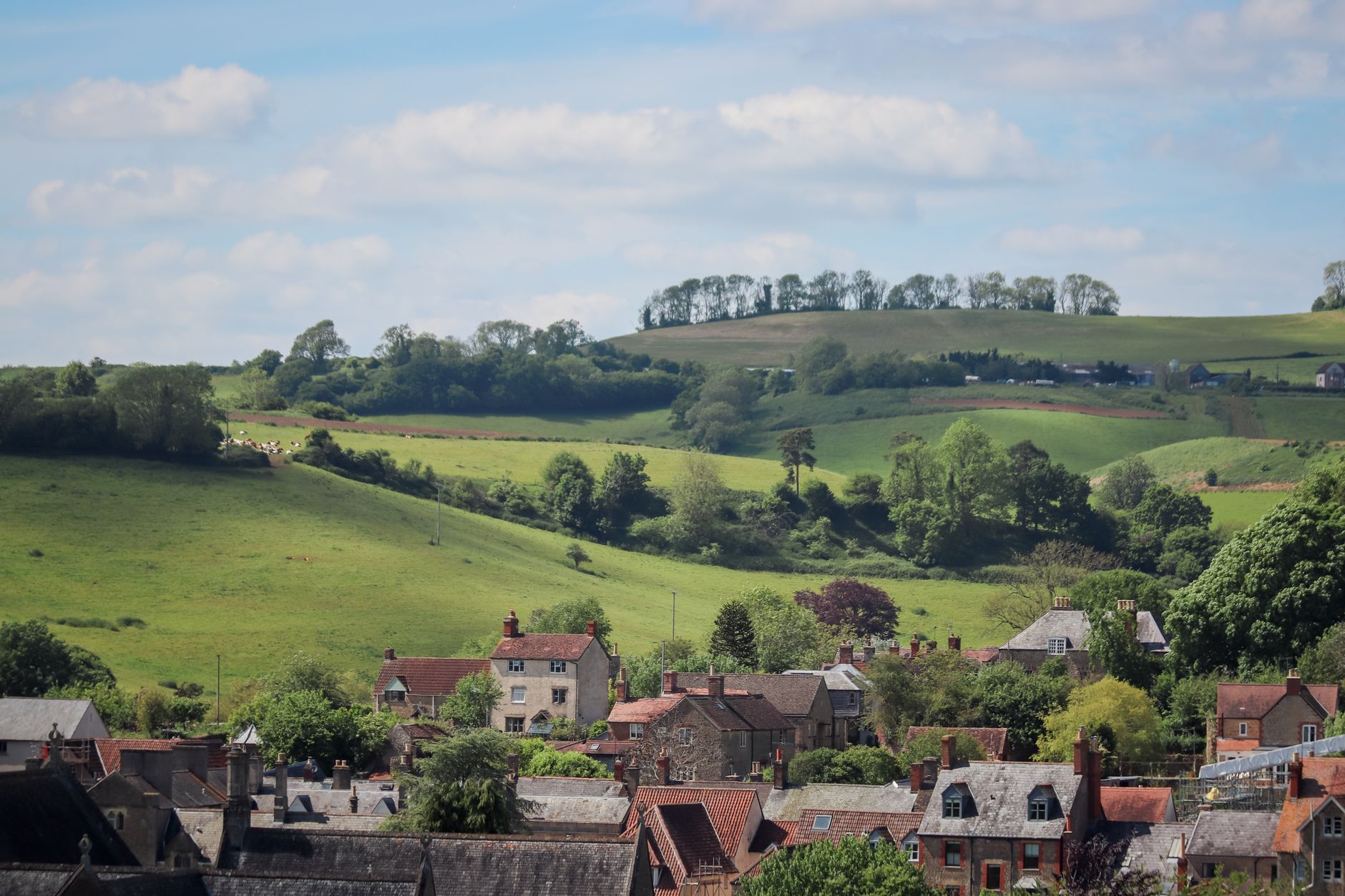
I’ve spent some time tracing exactly where these people are going, and the picture is more geographically specific than the broad “city to countryside” narrative implies. The ONS internal migration dataset points consistently to a cluster of destinations: the South West (particularly Somerset, Dorset and Cornwall), East Anglia, North Yorkshire, the Welsh Marches and parts of the Scottish Borders. These are not random choices. They sit within broadly commutable or remote-workable distance of major employment hubs, or they offer the kind of scenery that has always appeared in estate agents’ listings alongside words like “unspoilt” and “peaceful”.
Which areas are absorbing the most urban leavers?
Cornwall tops several internal migration rankings, pulling in net positive flows from London, Bristol and Birmingham. North Norfolk, the Cotswolds and parts of Herefordshire follow. Mid Wales, which once haemorrhaged younger residents to Cardiff and beyond, is now seeing a modest net inflow for the first time in decades. The common thread is not any single feature but a combination: broadband connectivity (increasingly adequate if not always outstanding), relatively lower house prices than the cities being left, and a perceived quality of life that remote working has suddenly made financially viable.
Semi-rural market towns are absorbing a disproportionate share of this movement. Places like Ludlow, Hexham, Faversham and Totnes have seen sustained demand pressure on housing stock that simply was not built for this level of attention. Estate agents in these towns report sealed bids on properties that would once have sat on the market for months. The Royal Institution of Chartered Surveyors has repeatedly flagged acute supply shortages in these markets, and local councils lack the planning capacity to respond quickly.
What is happening to house prices in rural Britain?
The data here is unambiguous. Average house prices in predominantly rural local authority areas rose faster than the national average between 2021 and 2025, with some coastal and upland markets recording gains of 25 to 35 per cent across that period. In Cornwall, the average property price crossed £300,000 some time ago and has not looked back. This is not simply demand from wealthy second-home buyers, though that remains a factor; it is primary residence purchasers with urban equity behind them, able to offer more than local buyers earning local wages.
The consequences for people already living in these communities are well documented, if persistently underweighted in policy discussion. A teacher in Tavistock, a care worker in Hexham, or an agricultural labourer in the Vale of Evesham earns a wage calibrated to a local economy. They compete for housing against buyers whose deposits were accumulated through years of ownership in markets that gained far more rapidly. The result is a quiet displacement, not dramatic enough to make news on any given week, but cumulatively reshaping who can afford to live in rural Britain at all.
Local councils in areas like West Dorset and Ryedale have been explicit about the problem in their housing need assessments, and yet the planning system offers limited tools to address it. Affordable housing requirements attached to new developments are negotiated away under viability arguments with depressing regularity. The few genuinely affordable rural exception sites that do get built are often oversubscribed within hours of being advertised.
Local services under pressure
Population growth sounds like an obvious good for services, and in some respects it has been. Rural GP surgeries, dental practices and secondary schools in areas that were previously declining have occasionally benefited from a larger local population base. But the growth has been uneven and demographically skewed. The people arriving tend to be in their thirties, forties and fifties, often with children. They require school places, GP appointments and broadband infrastructure, frequently all at once, and the services that receive them were not dimensioned for sudden surges.
I’d draw a comparison here with what happened to GP provision in urban areas during demographic shifts, though the rural version is arguably harder to fix. It is one thing to open a new surgery in a city suburb; it is quite another to recruit a GP to a practice in rural Powys or the Lincolnshire Wolds, where the professional and social infrastructure that makes a medical career bearable is thin on the ground. The NHS’s own workforce planning data consistently shows rural and coastal areas among the hardest to staff. Demand goes up; supply of qualified professionals does not follow automatically.
The same pattern applies to secondary schools. Places in popular rural market towns have become oversubscribed in ways that would once have been unimaginable. County councils scramble to add temporary classrooms. The longer-term educational implications for a community are significant, and not always positive, as research into children’s social development and school capacity has consistently shown.
Community identity and the question of belonging
Perhaps the most contested dimension of urban to rural migration UK 2026 is the one least susceptible to measurement: what it does to the character and identity of the communities that receive it. This is where the conversation gets uncomfortable on all sides.
Long-term rural residents often describe a sense of their village or small town becoming unrecognisable, not because of any dramatic event but through a gradual accumulation of change. The post office has gone. The working farm at the edge of the village has been converted to executive homes. The pub clientele has shifted. The parish council meetings are now attended by people with strong opinions about planning permissions but limited attachment to the history of the place. These are not small things to the people who grew up there.
New arrivals, for their part, are often genuinely committed to their adopted communities, investing in local businesses and volunteering with genuine enthusiasm. But the relationship between arrival and belonging takes time to develop, and in areas absorbing large numbers of incomers simultaneously, that process can feel permanently deferred. The tension is real, and local historians and community researchers have documented it in fine-grained detail across dozens of parishes.
Is the rural idyll living up to expectations?
The honest answer, from what I can gather from polling data and from the reported experience of those who made the move, is: sometimes, partially, and often not in the ways people anticipated.
Returnees to cities are a documented but minority phenomenon. Most people who move do not go back. But the pastoral fantasy of the move frequently collides with the logistical reality within the first couple of years. Rural transport is genuinely inadequate in most of Britain; bus services are skeletal and have been reduced further by council budget pressures. Broadband, whilst improved, remains patchy in many of the areas attracting the most interest. The social fabric of a village is harder to enter than a city neighbourhood, where anonymity makes social integration paradoxically easier.
There is also the financial dimension. The urban equity that funded the move may have secured a larger house, but running costs in rural areas can be higher: older, less efficient housing stock, oil-fired heating where gas mains do not reach, longer distances for every errand. People who moved partly to reduce their cost of living sometimes find the arithmetic less favourable than they expected. As I noted when looking at how Britain’s over-sixties are reshaping their financial lives in later years, the relationship between lifestyle ambition and financial reality is rarely straightforward.
What seems clear is that urban to rural migration UK 2026 is not a passing phase. The structural conditions that made cities feel less essential as a place of daily employment have not reversed. The question for planners, service commissioners and community organisations is whether they can build the infrastructure, and the human connections, that turn an influx of new residents into a functional, inclusive community rather than a patchwork of parallel lives.
The data tells you who is moving and where. What it cannot tell you is whether any of this is being managed well enough. From where I sit, the evidence suggests it largely is not.