
There is a particular kind of exhaustion that only seasoned travellers recognise. The one that arrives not after a long journey, but after a meticulously scheduled one. Three cities in five days. A museum before breakfast, a flight before dinner. The photographs are extraordinary; the memories, oddly thin. Slow travel luxury 2026 has emerged as a direct and rather elegant rebuke to all of that.
This is not a fringe movement. Among Britain’s more thoughtful, culturally literate travellers, the shift is palpable and, by most accounts, permanent. The question is no longer how many places you can fit into a fortnight, but how deeply you can inhabit one. Depth over distance, as the phrase goes, has become the defining principle of a new kind of luxury.
What Is the Slow Travel Philosophy, and Why Is It Resonating Now?
Slow travel, at its core, borrows from the broader slow movement that emerged from Carlo Petrini’s Slow Food manifesto in late-1980s Italy. Applied to travel, it advocates staying longer in fewer places, engaging with local rhythms rather than tourist schedules, and measuring the success of a trip by what you understand at the end of it rather than what you have ticked off. Whilst the concept has circulated in travel writing for over a decade, something shifted meaningfully in 2025 and 2026 to push it from pleasant idea to genuine cultural force.
Part of the answer is post-pandemic recalibration. British travellers who spent enforced periods at home rediscovered the pleasure of noticing things slowly, paying attention to what is immediately around them. Part of it is environmental consciousness; staying in one place for two weeks produces a fraction of the carbon footprint that a multi-destination tour generates. And part of it is, frankly, the luxury market doing what it always eventually does: following genuine desire rather than manufactured aspiration. High-net-worth travellers, the kind who once collected Michelin-starred restaurants across four countries in a single trip, are increasingly choosing a single villa in the Alentejo for ten nights, with a private guide and a reading list curated by a local academic.
The Destinations Leading the Slow Travel Movement in 2026
Not every place lends itself to the slow travel ideal. The best destinations share certain qualities: genuine local culture that rewards attention, landscapes that change with the light, food that is tied to place rather than trend, and enough quiet that you can hear yourself think.
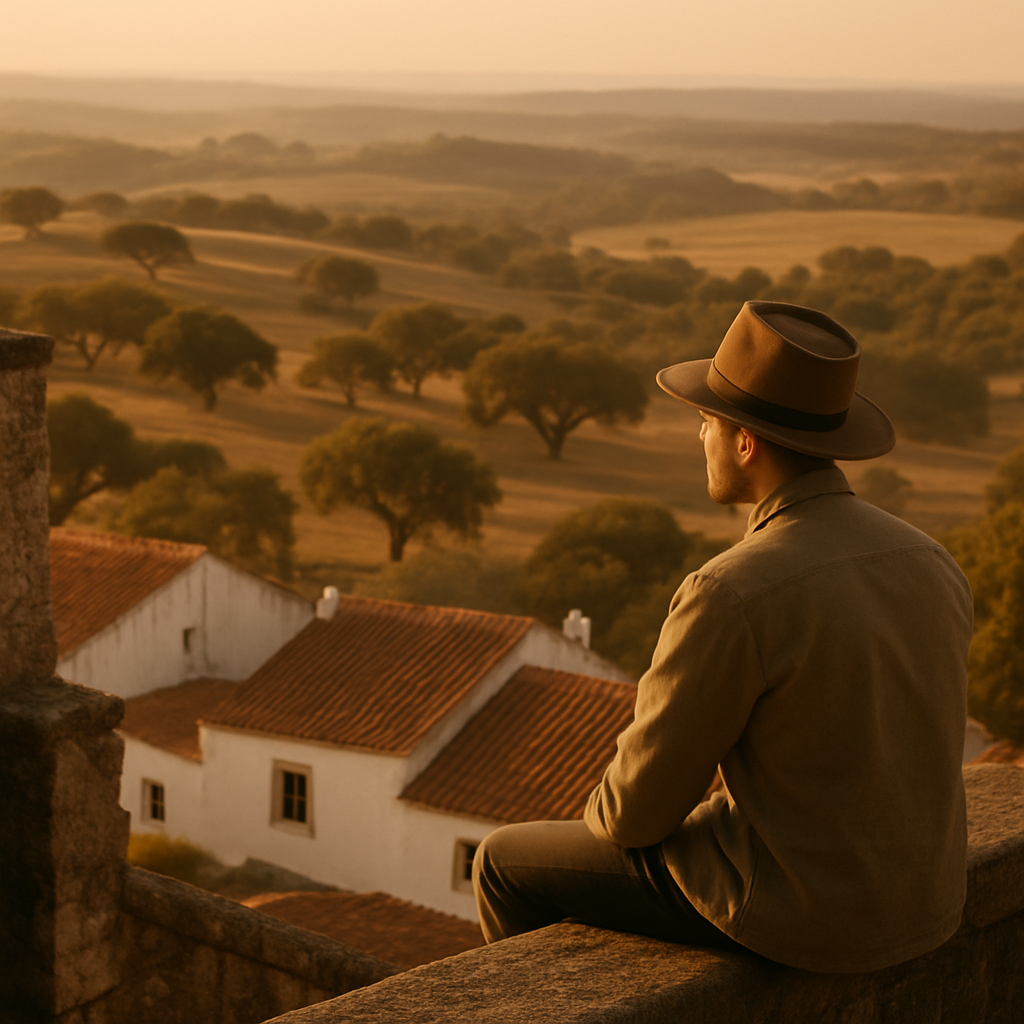
Portugal’s Alentejo region remains, by most measures, the spiritual home of slow travel luxury in 2026. Its cork forests, medieval hilltop towns and sparse, amber-lit plains feel designed for contemplation. Properties such as Herdade do Esporão have developed extended-stay programmes centred on viticulture, agricultural heritage and serious gastronomy. You arrive expecting a holiday and leave with something closer to an education.
Japan’s Tohoku region, long overshadowed by Kyoto and Tokyo on the standard itinerary, has attracted substantial attention from discerning travellers seeking the country’s quieter self. Ryokan stays of a week or longer, centred on particular craft traditions such as Aizu lacquerware or Tsugaru shamisen music, have become genuinely sought-after experiences. The point is not observation but participation.

Closer to home, Scotland’s far north has quietly become a destination of remarkable depth for slow travellers. The Orkney archipelago, in particular, offers something almost nowhere else can: a landscape that contains 5,000 years of human history, severe and luminous weather, and a local community of artists, farmers and archaeologists whose work is inseparable from the terrain. Several independent properties now offer week-long residencies built around the islands’ creative and academic communities. The scenery is, of course, spectacular. But scenery alone does not sustain a slow traveller; context does.
Why Slow Travel and Luxury Are, in Fact, Natural Partners
There is a common misconception that slow travel is austerity travel, that it means budget accommodation and a deliberate rejection of comfort. The opposite tends to be true at the upper end of the market. True slow travel luxury in 2026 is expensive precisely because it requires extraordinary quality at every point of sustained contact. One spectacular dinner is a treat; ten consecutive brilliant meals require a chef, a network of local producers and genuine culinary intelligence. One beautiful bedroom is easy to find; a space you can genuinely live in for a fortnight demands curation of an entirely different order.
The most sophisticated slow travel operators understand this. Scott Dunn, the British luxury travel specialist, has reported significant growth in extended single-destination bookings over the past eighteen months, with clients increasingly requesting programmes that include private tutors, local mentors and curated cultural immersions rather than conventional excursions. The measure of success has shifted from novelty to understanding.
This also represents a meaningful redefinition of exclusivity. In a world where most wealthy travellers have been everywhere, having been nowhere thoroughly is, perversely, the more distinguished position. To have spent three weeks in one Umbrian valley, to know the name of the farmer who produces your olive oil and the history of the church you walked past each morning, is a form of knowledge that no amount of itinerary-hopping can replicate.
The Environmental Case, Which Is Impossible to Ignore
Slow travel is not an environmental panacea, and it would be intellectually dishonest to pretend otherwise. Flying to Portugal and staying for three weeks still involves a flight to Portugal. But the arithmetic is notably better than flying to five destinations across a fortnight, and the emerging class of slow travellers is increasingly supplementing or replacing flights with long-distance rail journeys. The BBC’s science and environment coverage has consistently noted that aviation accounts for roughly 2.5 per cent of global CO2 emissions but a far higher share of effective climate warming when contrasted effects are included. Reducing flight frequency matters, even when total travel remains high.
The overland renaissance is a significant subplot of the slow travel story. The Caledonian Sleeper from London to Inverness, the Venice Simplon-Orient Express, and a growing number of premium rail routes across Europe have attracted travellers who once would have flown without a second thought. The journey, in the slow travel model, is not an inconvenience to be minimised but a first act of the experience itself.
How to Actually Do Slow Travel Well
The practical barriers are real. Most Britons receive between 25 and 28 days of annual leave; a fortnight in one place feels extravagant to many. But slow travel need not mean extended sabbaticals. A long weekend in one Yorkshire village, properly engaged with, produces more lasting memory than four European capitals in a week. The philosophy scales.
For those planning a genuine immersive trip, the principles are straightforward. Arrive without a checklist. Identify two or three things you genuinely want to understand, whether that is the local textile tradition, a regional cooking technique, or the history of a particular landscape, and build your time around those. Stay somewhere that feels like habitation rather than accommodation. Eat with the rhythm of local life. Walk more than you think necessary. Resist the hotel’s activity programme unless it genuinely interests you.
The slow travel movement, at its best, is simply an argument for taking seriously the places we choose to visit. It asks travellers to bring their full attention rather than their best luggage. In a world that accelerates almost everything by default, that particular kind of deliberateness feels, unexpectedly, like the most radical luxury of all.
Frequently Asked Questions
What does slow travel actually mean in practice?
Slow travel means staying in fewer destinations for longer periods, prioritising genuine engagement with local culture, food and landscape over ticking off attractions. Rather than visiting five countries in a fortnight, a slow traveller might spend ten days in a single region, building real knowledge of the place rather than a curated highlight reel.
Is slow travel luxury more expensive than conventional luxury holidays?
Extended stays of genuine quality tend to cost more in absolute terms, simply because high standards must be maintained over a longer period. However, per-day costs can be lower, and many travellers find the value proposition far superior, as the depth of experience is incomparably richer than a succession of brief, expensive stops.
Which are the best slow travel destinations for British travellers in 2026?
Portugal’s Alentejo, Japan’s Tohoku region and Scotland’s Orkney archipelago are among the most compelling options for culturally serious slow travellers this year. Each rewards extended attention with layers of history, food culture and landscape that a short visit cannot hope to reach.
Is slow travel actually better for the environment?
It is generally more environmentally efficient than multi-destination travel, as it reduces the total number of flights taken. Combining slow travel with overland rail options, such as the Caledonian Sleeper or European train routes, reduces the carbon impact further, though a transatlantic flight remains significant regardless of how long you stay.
Can slow travel work with a standard British annual leave allowance?
Absolutely. The principles of slow travel apply at any scale; a long weekend spent properly exploring one part of the English countryside is slow travel in spirit. For those planning longer trips, combining annual leave with bank holidays strategically can create ten to twelve day windows that work well for genuinely immersive experiences.