
There is a particular kind of dread that settles over a small town when its last pharmacy boards up the window. The GP surgery is already operating on a two-week wait for appointments. The nearest A&E is twelve miles away on roads that flood in November. And the elderly woman on four daily medications who has, for twenty years, walked ten minutes to collect her prescriptions and ask the pharmacist a quiet question about her side effects, she now has nowhere to go. Community pharmacy closures UK 2026 are not, whatever the official briefing notes might suggest, a retail story. They are a public health emergency unfolding in slow motion, largely out of sight.
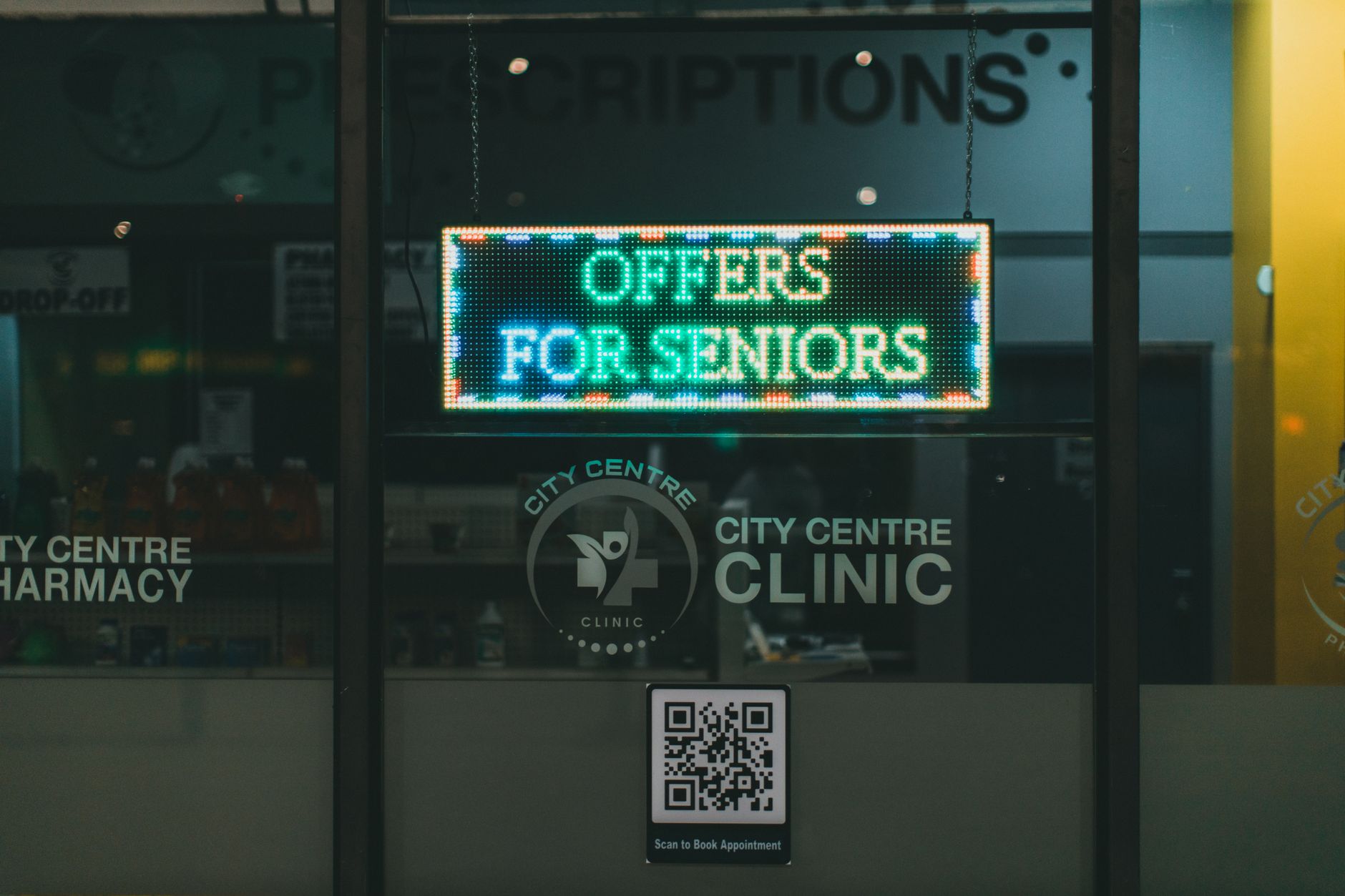
The numbers are stark. According to data published by NHS England, England lost more than 1,100 community pharmacies between 2017 and 2025. The pace is not slowing. In 2025 alone, closures outstripped new openings by a ratio that would be unacceptable in almost any other NHS-funded service. The Pharmaceutical Services Negotiating Committee, the body that negotiates funding on behalf of pharmacy contractors, has spent years warning that the core NHS contract, which has not received a meaningful real-terms uplift since 2015, is no longer sufficient to keep independent operators solvent. Wage inflation, National Insurance contribution increases, and soaring energy costs have done the rest. I have spoken to pharmacy owners in Lincolnshire, Shropshire and County Durham over the past few months, and the language they use is consistently bleak: they are not making a business decision to close; they are admitting defeat after years of subsidising NHS services from their own pockets.
The rural penalty is the cruellest part
Urban pharmacies, particularly those in high-footfall city centres or near large GP surgeries, can cross-subsidise NHS dispensing with over-the-counter sales and private services. A Boots on Oxford Street is not going to close because the NHS reimbursement rate for dispensing a box of atorvastatin is marginally below cost. A sole-trader pharmacy in a Northumberland market town, serving a population of 3,000 people spread across a twenty-mile radius, has no such cushion. Its survival depends almost entirely on the NHS contract, and that contract has been eroded to the point of dysfunction.
What replaces a rural pharmacy when it closes? In theory, patients can order prescriptions online and have them delivered by post. In practice, a 78-year-old with limited internet access, early-stage dementia, and a repeat prescription for warfarin that requires monthly INR monitoring is not well served by a Royal Mail delivery slot. The pharmacy was not just a dispensing point; it was a clinical consultation, an informal triage service, a welfare check. Pharmacists catch things. They notice when Mrs Henderson picks up her prescription and mentions she has not been eating. They spot potential drug interactions before the GP does. This is not a sentimental account of community spirit; the NHS long-term plan formally designated community pharmacists as the first port of call for minor ailments precisely because the evidence base for their clinical effectiveness is solid.
What the pressure does to A&E and GP surgeries
The domino effect is measurable, even if the government prefers not to measure it too loudly. A 2023 NHS England analysis of the Pharmacy First scheme estimated that community pharmacists could safely manage around 35 million additional consultations annually that would otherwise fall to general practice. Remove the pharmacies and that capacity evaporates. Those consultations migrate downstream: some to GP surgeries already operating at capacity, some to 111, and a non-trivial number to A&E departments that are already failing on their four-hour target. The King’s Fund has estimated that every avoidable A&E attendance costs the NHS roughly £150 to £200 compared to a pharmacy consultation that costs a fraction of that. Defunding the cheaper option to generate demand for the expensive one is not a policy; it is an accounting failure dressed up as one.
Rural GP surgeries are bearing the most immediate pain. I have seen this pattern repeated: a pharmacy closes, the GP practice absorbs the medication queries and minor ailment consultations that previously never reached it, and within six months the practice is reporting a significant increase in appointment demand without any increase in clinical resource. This is precisely the dynamic examined in our earlier analysis of the real state of British primary care, where the waiting room figures mask a far deeper capacity crisis. Pharmacy closures are accelerants to a fire that was already burning.
Is the NHS funding model structurally broken for this purpose?
The honest answer is yes, and has been for some time. The NHS community pharmacy contract was designed in an era of lower labour costs, lower property costs, and a wholesale reimbursement model that actually covered the cost of drugs. All three of those assumptions have collapsed. The reimbursement system has a particular absurdity at its core: pharmacies are paid a fixed dispensing fee per item rather than a fee that reflects the actual time and clinical complexity involved. A pharmacist who spends eight minutes counselling a recently discharged patient on a complex new regimen is paid the same as one who slaps a label on a box of antihistamines. The Pharmacy First scheme, launched in 2024, was supposed to begin rebalancing this by paying for clinical consultations directly. The scheme has genuine merit but has been funded at a level that industry bodies describe, charitably, as insufficient to reverse structural decline.
The government’s position, when pressed, tends to oscillate between acknowledging the problem and pointing to Pharmacy First as evidence of commitment. What it does not acknowledge is that the core contract funding gap is so large that even a well-designed consultation service cannot compensate for dispensing fees that have not kept pace with inflation for a decade. This is analogous to the situation facing other community infrastructure built on underfunded assumptions, where the gap between what a service costs to run and what the state is willing to pay has simply become untenable.
The elderly population carries the greatest burden
Over-65s account for roughly 66% of all prescription items dispensed in England, according to ONS data. They are also disproportionately concentrated in rural and coastal areas, precisely where community pharmacy closures are hitting hardest. For many of these patients, the pharmacist is the most frequent clinical contact they have, more frequent than the GP and immeasurably more accessible than a hospital specialist. The loss of that contact is not neutral. Medication adherence falls when patients cannot get informal support with their prescriptions. Hospital admissions for medication-related errors tend to rise in areas with reduced pharmacy access. These are not predictions; they are outcomes that have been documented in peer-reviewed literature on pharmacy deserts in comparable health systems.
The connection to broader workforce pressures is also worth flagging. As I noted in the piece on long-term sickness and workforce inactivity, Britain already has a significant population managing chronic conditions without adequate clinical support. Community pharmacists have historically been part of the management infrastructure for those conditions. Their disappearance does not make the chronic conditions go away; it makes them worse and more expensive to treat.
What a credible fix would actually require
The PSNC and various health think tanks have been fairly consistent about the broad shape of what is needed: a genuine real-terms uplift to the core dispensing contract, a protected rural pharmacy designation with additional funding for low-volume dispensing sites, and a formal commissioning framework that recognises pharmacists as primary care clinicians rather than drug retailers who happen to be convenient. The total cost of doing this properly is estimated at somewhere between £600 million and £800 million annually above current settlement levels. That sounds large until you set it against the downstream cost of redirecting thirty-five million consultations into general practice and emergency departments that are already at breaking point.
The political will, so far, has not been there. Pharmacy closures generate less outrage than A&E closure threats, in part because they happen one at a time, in small places, to people who do not have the organisational capacity to protest loudly. The last chemist in a market town closes on a Friday afternoon; by Monday, the story has moved on. But the cumulative effect of a thousand such Fridays is a healthcare system that is materially less capable of keeping its most vulnerable patients safe. That is the story, and it is not a small one.
Frequently Asked Questions
How many community pharmacies have closed in England recently?
England lost more than 1,100 community pharmacies between 2017 and 2025, with closures continuing to outpace new openings in 2025 and into 2026. Rural and coastal areas have been hit hardest, where independent operators have the least financial cushion to absorb the gap between NHS reimbursement and actual operating costs.
Why are community pharmacies closing in the UK?
The primary cause is a core NHS dispensing contract that has not received a meaningful real-terms funding increase since 2015, while wage costs, National Insurance contributions and energy bills have all risen sharply. Independent pharmacy owners are effectively subsidising NHS services from their own income until they can no longer afford to, at which point closure is the only option.
What happens to patients when their local pharmacy closes?
Patients are typically directed to online prescription services or the nearest remaining pharmacy, which may be several miles away. For elderly or less mobile patients this creates serious problems with medication adherence and loss of the informal clinical triage that pharmacists provide. Evidence suggests GP appointments and A&E attendances increase in areas that lose pharmacy access.
What is the NHS Pharmacy First scheme and does it help?
Pharmacy First, launched in 2024, allows community pharmacists to assess and treat patients for seven common conditions without a GP referral, and pays a direct consultation fee for doing so. Industry bodies broadly welcome the scheme’s design but argue the funding attached to it is insufficient to offset the structural losses caused by the underfunded dispensing contract.
Are rural pharmacies more at risk of closing than urban ones?
Yes, significantly so. Urban pharmacies can generate revenue from over-the-counter sales and private services that cross-subsidise low NHS reimbursement rates. Rural pharmacies serving small, dispersed populations depend almost entirely on the NHS contract, which means they are the first to become unviable when that contract fails to cover operating costs.