
There is a quiet revolution taking place roughly 550 kilometres above our heads, and the financial stakes are extraordinary. Space, once the exclusive preserve of national governments and cold war ambition, has become the most consequential new arena for private capital in a generation. Space economy investment is no longer the province of eccentric billionaires or science fiction enthusiasts. It is a serious, increasingly mainstream financial frontier, attracting sovereign wealth funds, pension managers, and venture capital firms with the same gravity it once reserved only for rockets.
The numbers are striking. Morgan Stanley estimates the global space economy could exceed £640 billion by 2030. The UK Space Agency places Britain’s own space sector contribution at over £17 billion annually, with ambitions to capture ten per cent of the global market by the end of the decade. These are not speculative projections plucked from optimism. They reflect genuine commercial activity across four converging sectors: satellite communications, space tourism, asteroid resource extraction, and the nascent infrastructure of lunar commerce.
Satellite Broadband: The Investment Case That Is Already Paying Out
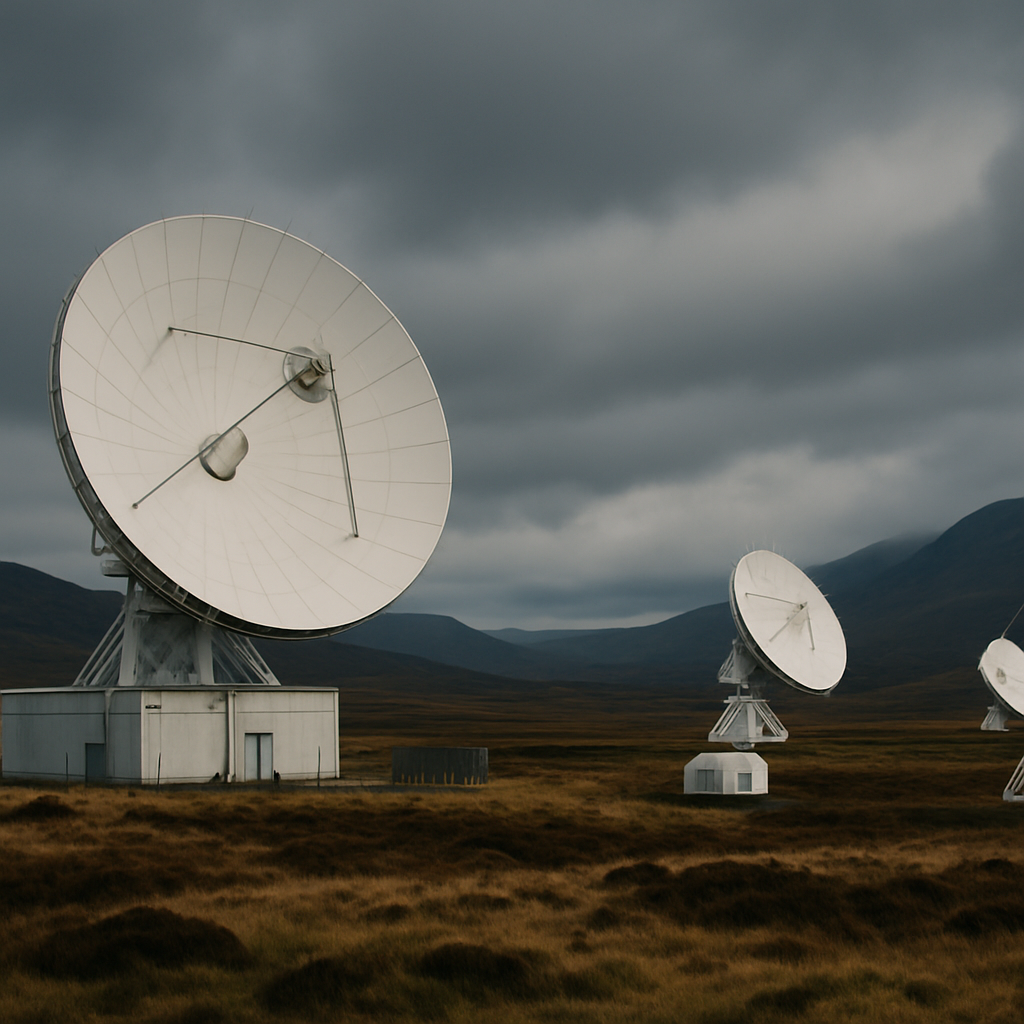
Of all the commercial space sectors, satellite broadband is the most mature and the most immediately investable. SpaceX’s Starlink network now covers most of the inhabited world, and its British rival OneWeb, reborn as Eutelsat OneWeb following a merger with the French operator, operates from offices in London and has positioned itself as the European answer to American dominance in low-Earth orbit connectivity. Amazon’s Project Kuiper is spending billions building its own constellation. The race is real, the revenues are real, and the infrastructure build-out is only beginning.
For the UK specifically, satellite broadband has material implications beyond pure investment returns. The government’s Project Gigabit programme has identified rural connectivity as a national infrastructure priority, and satellite services are increasingly filling gaps that fibre simply cannot reach commercially. The Highlands of Scotland, the outer islands, and remote parts of Wales are already benefiting from low-Earth orbit broadband in ways that terrestrial networks cannot match. Wherever geography defeats cable, a satellite operator generates a customer.
Space Tourism: Niche Luxury or Scalable Business?
Space tourism divides serious analysts. On one side are those who see it as an extravagance, a Veblen good for the ultra-wealthy that will never produce genuine scale. On the other are those who point to the historical trajectory of commercial aviation, once itself a luxury reserved for the privileged few, and argue that price compression is simply a matter of time and volume.
Virgin Galactic, founded by Sir Richard Branson, spent nearly two decades arriving at commercial operations before ceasing its spaceplane programme in 2023 and pivoting to next-generation Delta-class vehicles. Blue Origin’s New Shepard has now carried dozens of paying passengers to the edge of space. The tickets cost hundreds of thousands of pounds. But the addressable market, even at those prices, runs to tens of thousands of individuals globally. Space tourism is not yet a mass market. It is, however, a genuine one, and the infrastructure investments required to sustain it create derivative opportunities across aerospace manufacturing, specialised insurance, medical certification, and bespoke hospitality.
Asteroid Mining and the Resource Frontier
Here is where the numbers become genuinely vertiginous. The asteroid belt between Mars and Jupiter contains mineral resources estimated, conservatively, at values that render Earth’s entire GDP a rounding error. A single metallic asteroid one kilometre in diameter could contain more iron, nickel, and cobalt than humanity has ever mined in its entire history. Platinum-group metals, which are critically rare on Earth and essential for clean energy technologies, exist in asteroid compositions in concentrations that are almost implausible by terrestrial standards.
The practical barriers remain formidable. Extracting and returning resources from even near-Earth asteroids is an engineering challenge of remarkable complexity. Companies such as AstroForge in the United States and a handful of European ventures are working through the foundational technology, but commercial asteroid mining at meaningful scale remains, in honest terms, a story of the 2030s rather than today. What is investable now is the enabling infrastructure: the launch vehicles, the prospecting satellites, the in-space propulsion systems, and the regulatory frameworks that will determine who gets to mine what and under which legal regime.
The UK government, to its credit, has engaged seriously with the legal dimension. The Space Industry Act 2018 established a domestic licensing framework, and the government has since consulted on extending its provisions to cover in-space resource utilisation. For investors with long time horizons, the regulatory groundwork being laid now will determine the commercial landscape of the 2030s. You can read more about the UK’s regulatory approach on the UK Space Agency’s official pages.
The Lunar Economy: More Immediate Than You Might Think
Lunar commerce may sound like the most distant of these four frontiers, but the timeline is compressing faster than most people appreciate. NASA’s Artemis programme, which includes significant contributions from British and European industry, is targeting a sustained human presence near the lunar south pole within this decade. The European Space Agency’s Moon Village concept envisages a permanent international research and commercial base. And the commercial lunar payload services market, in which private companies bid to deliver instruments and equipment to the lunar surface, is already active.
Space economy investment in the lunar context is not primarily about tourism or romantic notions of human settlement. It is about the practical economics of helium-3, water ice, and rare earth elements that lunar geology appears to hold in useful concentrations. It is about the Moon as a waystation for deeper space missions, reducing the gravitational cost of launching from Earth. And it is about the communications and positioning infrastructure that any sustained lunar presence will require, infrastructure that private operators will build and operate commercially, much as satellite operators do in Earth orbit today.
How UK Investors Are Positioning Themselves
British institutional capital has been notably active in this space. The British Business Bank has funded several space-adjacent ventures through its programmes, and the London Stock Exchange has seen a handful of space-focused listings and SPACs over the past three years. More significantly, major UK pension funds have begun including space infrastructure within their broader infrastructure allocations, treating satellite networks with the same analytical lens they would apply to a subsea cable or a toll road: long asset life, predictable cash flows, strategic necessity.
For individual investors, the access points are more limited but not absent. Listed pure-play space companies such as Rocket Lab trade on public markets. Broader aerospace and defence funds, available through most UK investment platforms, carry meaningful space exposure. And a growing number of specialist space economy investment funds are appearing on the market, though due diligence on these requires particular care given the sector’s technical complexity and long capital cycles.
The central truth of the new space economy is this: the barriers between orbit and commerce have collapsed in ways that were genuinely unimaginable twenty years ago. The question for serious investors is no longer whether space is a legitimate asset class. It is which part of it to own, and when.
Frequently Asked Questions
What is space economy investment and why is it growing so fast?
Space economy investment refers to capital deployed across commercial space activities including satellite communications, launch services, space tourism, resource extraction, and lunar infrastructure. Growth is being driven by falling launch costs, private sector participation, and expanding demand for satellite-based services across connectivity, navigation, and Earth observation.
How can UK investors access the space economy?
UK investors can gain exposure through listed aerospace and defence funds, public shares in companies such as Rocket Lab or Eutelsat OneWeb, and a growing number of specialist space-focused investment funds. Some UK pension funds are also beginning to include satellite infrastructure within their broader infrastructure allocations.
Is asteroid mining actually a realistic investment opportunity?
At commercial scale, asteroid mining remains a 2030s proposition rather than an immediate one. However, the enabling technologies and regulatory frameworks being developed now represent genuine near-term investment opportunities, and companies working on prospecting satellites and in-space propulsion are already attracting serious venture capital.
What role does the UK play in the global space economy?
The UK space sector contributes over £17 billion annually to the national economy, according to the UK Space Agency, and the government has set a target of capturing ten per cent of the global space market. Key strengths include satellite manufacturing, Earth observation, and the regulatory framework established by the Space Industry Act 2018.
How does satellite broadband relate to space economy investment?
Satellite broadband is currently the most commercially mature segment of the space economy, generating real revenues from paying customers across underserved rural and remote areas. Operators such as Eutelsat OneWeb are headquartered in London, making it a sector with particularly direct relevance to UK investors and policy makers.