
Author: Roberto Bernardi

  • Longevity Science Is No Longer for the Elite: The Mainstream Wellness Treatments Backed by New Research

    Longevity Science Is No Longer for the Elite: The Mainstream Wellness Treatments Backed by New Research

    For years, the science of living longer and healthier was the exclusive preserve of Californian tech billionaires with private physicians and seven-figure health budgets. Bryan Johnson making headlines by transfusing his son’s blood plasma. Peter Thiel reportedly banking on parabiosis. The whole enterprise had an air of the baroque, even the desperate. But something has shifted, and it has shifted quickly. The longevity treatments 2026 are increasingly grounded in rigorous clinical evidence, increasingly available through UK private clinics, and increasingly affordable for anyone who takes their health with reasonable seriousness. This is not wellness fluff. It is a genuine pharmaceutical and diagnostic revolution.

    A woman reviewing longevity treatments 2026 data with her physician in a London private clinic
    A woman reviewing longevity treatments 2026 data with her physician in a London private clinic

    What Are Senolytics and Why Should You Care?

    The most significant clinical development in ageing science over the past decade is the emergence of senolytics: compounds that selectively clear senescent cells from the body. Senescent cells are, in the bluntest terms, cells that have stopped dividing but refuse to die. They accumulate with age and secrete a cocktail of inflammatory proteins that damage surrounding tissue, driving conditions from arthritis to cardiovascular disease to cognitive decline.

    The leading senolytic combination studied in human trials is dasatinib and quercetin. Dasatinib is a leukaemia drug; quercetin is a plant flavonoid found in onions and capers. Together, they have shown promising results in trials at the Mayo Clinic and, more recently, at University College London, where researchers observed measurable reductions in senescent cell burden in older patients with idiopathic pulmonary fibrosis. The regime is typically administered in short, intermittent bursts rather than daily dosing, which reduces side-effect risk considerably.

    In the UK, quercetin supplements are freely available from brands such as Viridian and Solgar. Dasatinib, being a prescription drug regulated by the MHRA, requires clinical oversight. A growing number of London-based longevity clinics, including Harpal Clinic and the Hooke Longevity Clinic in Marylebone, now offer senolytic protocols under medical supervision, typically priced between £800 and £2,500 for an initial programme including bloodwork and follow-up. That is not trivial, but it is a far cry from the seven-figure territory of five years ago.

    Continuous Glucose Monitoring: The Most Democratised Longevity Tool of the Era

    Perhaps no single longevity technology has crossed from elite experimentation into mainstream use as decisively as continuous glucose monitoring, or CGM. Originally designed for diabetics, the small sensor worn on the upper arm now appears on the bodies of triathletes, hedge fund managers and, increasingly, people who simply want to understand how their diet affects their metabolic health in real time.

    The clinical rationale is compelling. Chronic glycaemic variability, even in people who test as non-diabetic on standard fasting glucose tests, is associated with accelerated biological ageing, cognitive impairment and elevated cardiovascular risk. A CGM device reveals exactly how your body responds to white rice versus brown, a croissant versus porridge, alcohol versus sleep deprivation. The feedback loop is immediate and, for most users, genuinely revelatory.

    In the UK, Abbott’s Libre Sense and the Dexterity platform have made CGM accessible without a prescription for non-diabetic users through services such as Zoe, the gut microbiome and metabolic health company co-founded by Professor Tim Spector of King’s College London. Zoe’s programme, which costs approximately £299 for the initial testing phase, combines CGM data with microbiome analysis and personalised dietary recommendations. The NHS uses CGM extensively for Type 1 diabetes management, and there is growing advocacy for wider metabolic screening, particularly following ONS data showing that an estimated 3.8 million people in England are living with pre-diabetes, many undiagnosed.
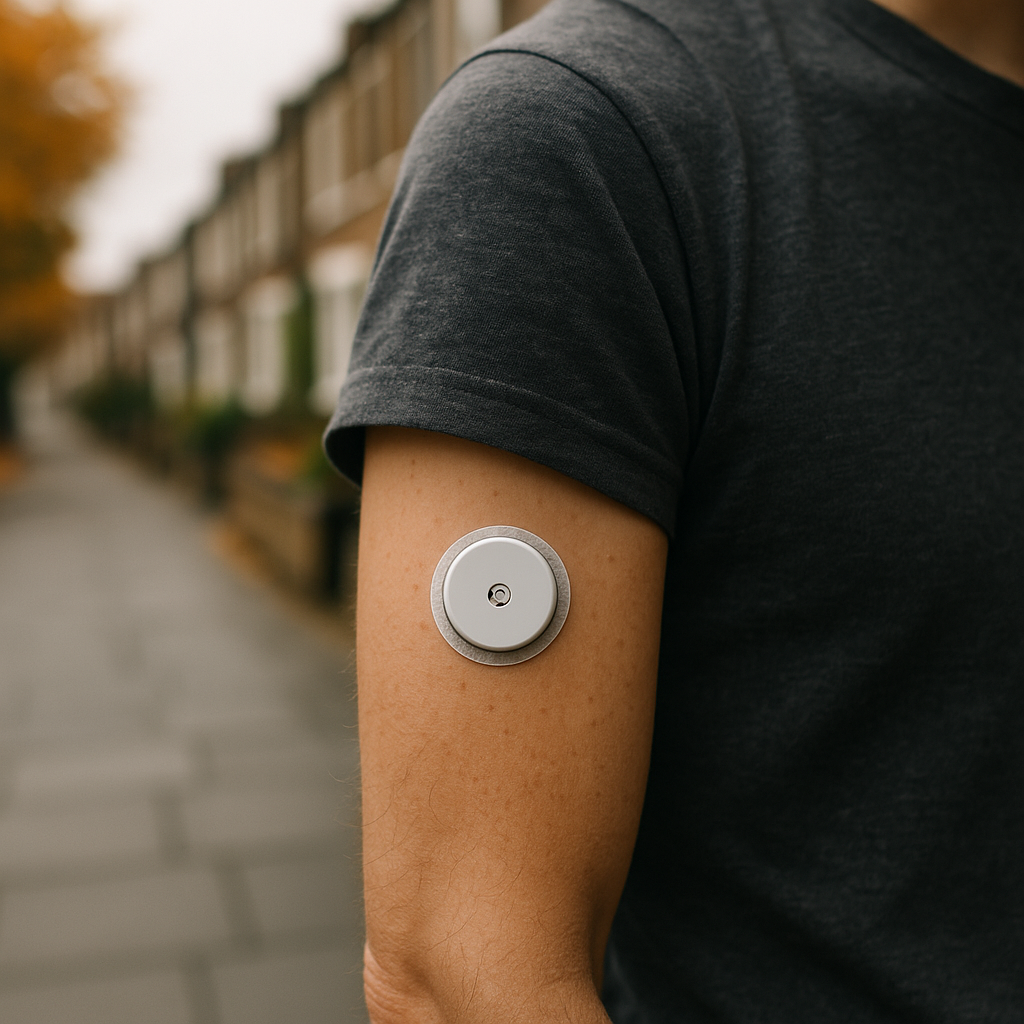
    Continuous glucose monitoring sensor worn on the arm, a key longevity treatment in 2026
    Continuous glucose monitoring sensor worn on the arm, a key longevity treatment in 2026

    NAD+ Precursors: The Supplement With the Most Clinical Weight

    Nicotinamide adenine dinucleotide, NAD+, is a coenzyme present in every cell in the body and central to energy metabolism and DNA repair. Its levels decline steeply with age. Supplementing with NAD+ precursors, principally nicotinamide riboside (NR) and nicotinamide mononucleotide (NMN), has become one of the most studied areas in longevity science, with human trials now published in peer-reviewed journals including Nature Ageing and Cell Metabolism.

    The results are not uniformly dramatic. Some studies show improved muscle function, cognitive clarity and reduced markers of inflammation in older adults. Others show more modest effects. What is clear is that NR and NMN are generally well tolerated and that their mechanism of action is biologically plausible in a way that many wellness supplements simply are not. Elysium Health’s Basis, containing NR and pterostilbene, has amassed more human trial data than almost any other longevity supplement on the market. In the UK, NMN supplements are available from Renue By Science and Double Wood Supplements, typically at £40 to £90 per month, putting them firmly within mainstream reach.

    Rapamycin: The Most Discussed Drug You Have Probably Never Heard Of

    Rapamycin is an immunosuppressant typically used to prevent organ transplant rejection. It is also the most consistently life-extending compound ever tested in animal models, including mice, where it extended median lifespan by up to 25 per cent even when administered late in life. It works by inhibiting mTOR, a signalling pathway that governs cell growth and metabolism, effectively nudging cells into a more cautious, repair-oriented mode.

    Human data is still limited but accumulating. The PEARL trial and ongoing work at the Karolinska Institute in Stockholm are among the more rigorous human studies. In the UK, off-label rapamycin prescribing for longevity purposes remains uncommon but not unheard of, and is available through select private longevity physicians at a cost of roughly £150 to £400 per month, including medical monitoring. The risks, including immunosuppression and potential impact on wound healing, mean this is emphatically not a supplement to acquire without professional oversight.

    For a thorough review of the current evidence on pharmacological longevity interventions, the Lancet has published several accessible analyses in recent years, and remains the most authoritative English-language source for clinically grounded readers.

    The Cost of Longevity in 2026: A Realistic Assessment

    The honest picture of longevity treatments 2026 is one of tiered accessibility. At the most accessible end, CGM programmes and NMN supplementation are available to anyone spending £50 to £100 per month. Mid-tier interventions, supervised senolytic protocols, comprehensive bloodwork panels measuring biological age via DNA methylation testing (available from companies such as Chronomics, based in the UK), and structured rapamycin regimes, sit in the £500 to £3,000 annual range. At the apex, full-service longevity clinics offering everything from hyperbaric oxygen therapy to DEXA body composition scanning charge upwards of £5,000 per year for membership packages.

    What has changed is not that the top tier has become cheaper, but that genuinely evidence-backed interventions now exist at every price point. The longevity treatments 2026 landscape no longer requires you to be Peter Thiel. It does require you to be informed, to engage with real clinical evidence rather than marketing, and to work with qualified medical professionals when prescription-grade interventions are involved. The science has never been more serious. That, at least, is worth something.

    Frequently Asked Questions

    What are the most evidence-backed longevity treatments available in the UK in 2026?

    The treatments with the strongest clinical evidence include continuous glucose monitoring for metabolic health, NAD+ precursor supplements such as NMN and NR, and senolytic protocols combining quercetin with dasatinib. Rapamycin is also gaining attention but requires careful medical supervision due to its immunosuppressant properties.

    How much do longevity treatments cost in the UK?

    Costs vary considerably. CGM programmes such as Zoe start at around £299 for an initial phase, NMN supplements cost roughly £40 to £90 per month, and supervised senolytic protocols at private UK clinics typically range from £800 to £2,500. Full-service longevity clinic memberships can exceed £5,000 per year.

    Are senolytics safe to take without medical supervision?

    Quercetin, a key component of the leading senolytic combination, is available over the counter and is generally considered safe. However, dasatinib is a prescription-only drug regulated by the MHRA and should only be taken under qualified medical supervision, as it carries meaningful side-effect risks.

    What is continuous glucose monitoring and do I need a prescription to use it?

    Continuous glucose monitoring involves wearing a small sensor, usually on the upper arm, that tracks blood sugar levels in real time throughout the day. In the UK, non-diabetic users can access CGM through services such as Zoe without a prescription, though NHS-funded CGM remains primarily reserved for patients with Type 1 diabetes.

    Does the NHS offer any longevity-focused treatments or interventions?

    The NHS does not currently offer longevity treatments as a distinct category. However, it does provide CGM for diabetes management, statins for cardiovascular risk reduction, and screening programmes for certain cancers and conditions associated with ageing. Most of the newer longevity interventions discussed in this article are available only through private clinics.


  • Digital Sovereignty: Why Nations Are Racing to Control Their Own Internet Infrastructure

    Digital Sovereignty: Why Nations Are Racing to Control Their Own Internet Infrastructure

    There is a quiet but seismic shift happening beneath the surface of the global internet. Countries that once happily outsourced their digital futures to a handful of Silicon Valley giants are now pulling back, building their own clouds, training their own AI models, and drafting legislation that places national interest squarely above commercial convenience. Digital sovereignty, once a niche concern of security analysts and Brussels policy wonks, has become one of the defining geopolitical ambitions of our era.

    The reasons are not difficult to understand. When a government’s tax records sit on servers owned by a foreign corporation, when a nation’s most sensitive health data flows through infrastructure governed by another country’s laws, and when the algorithms shaping public discourse are trained on values that may not align with local democratic norms, questions of control become urgent. The pandemic accelerated this awareness considerably. Lockdowns exposed just how dependent entire economies had become on foreign-owned platforms for everything from school lessons to parliamentary debate.

    Interior of a British data centre representing the infrastructure behind digital sovereignty
    Interior of a British data centre representing the infrastructure behind digital sovereignty

    What Does Digital Sovereignty Actually Mean?

    The term covers a surprisingly broad range of ambitions. At its most fundamental, digital sovereignty is about a state’s ability to govern and control the digital systems that underpin its society and economy. That includes data localisation laws requiring that citizen data be stored within national borders, state-funded cloud infrastructure, domestically developed operating systems and chipsets, and, increasingly, large language models trained on a country’s own linguistic and cultural corpus.

    The European Union has been among the most vocal proponents, with its GAIA-X project attempting to build a federated European cloud ecosystem that keeps data away from US and Chinese hyperscalers. France has invested heavily in its own sovereign cloud strategy, partly driven by a 2021 ruling that found US cloud providers were legally obligated to hand data to American authorities under the CLOUD Act, regardless of where that data physically resided. That single legal reality proved clarifying for many European governments.

    The Global Race: Who Is Building What

    India’s Digital India initiative has made data localisation a central plank of national tech policy, with the government insisting that financial and health data generated by Indian citizens must remain on Indian soil. China, meanwhile, has operated its own sovereign internet for years, the so-called Great Firewall functioning as both a censorship tool and a protectionist shield that has incubated domestic alternatives to every major Western platform.

    The Gulf states are moving fast. Saudi Arabia’s Vision 2030 includes substantial investment in domestic data centre capacity, and the UAE has positioned itself as a regional cloud hub with strict data governance frameworks. Brazil passed its Lei Geral de Proteção de Dados in the mould of GDPR, then went further by debating whether strategic data must remain within Brazilian jurisdiction entirely.

    Perhaps most striking is the AI dimension. Several governments, including those of France, the UAE, and South Korea, have now announced state-backed large language models trained specifically on their own languages and cultural contexts. The argument is partly about linguistic preservation and partly about ensuring that the values embedded in AI systems reflect domestic rather than imported norms. France’s Mistral AI, though privately founded, has received significant government backing and is widely seen as a strategic national asset.

    Government policy review of digital sovereignty strategy and national cloud frameworks
    Government policy review of digital sovereignty strategy and national cloud frameworks

    Where Does Britain Stand?

    The United Kingdom’s position is nuanced, and frankly a little uneasy. Post-Brexit, Britain diverged from the EU’s GDPR framework, introducing its own UK GDPR regime administered by the Information Commissioner’s Office. The government has publicly championed a lighter-touch regulatory approach compared to Brussels, pitching itself as a more business-friendly destination for AI development. Yet that same lightness of touch raises questions about whether Britain is adequately protecting its own digital infrastructure from foreign dependencies.

    The National Cyber Security Centre, part of GCHQ, has for several years been warning about the risks of over-reliance on a small number of foreign cloud providers. The government’s own cloud strategy, updated in recent years, encourages public sector bodies to consider sovereign cloud options, but the reality is that NHS trusts, local councils, and government departments remain heavily dependent on Microsoft Azure and Amazon Web Services. The UK National Cyber Strategy acknowledges these vulnerabilities, though critics argue acknowledgement and action remain some distance apart.

    There is also the matter of the Atlantic relationship. Britain’s intelligence-sharing ties with the United States through the Five Eyes alliance create a different calculus than, say, France or Germany face. Pushing too hard for digital independence from American providers risks straining relationships that underpin national security. It is a genuinely awkward tension, and one that Westminster has not yet resolved with any particular elegance.

    The Corporate and Commercial Dimension

    For businesses operating across borders, the rise of digital sovereignty creates compliance complexity that grows more intricate by the quarter. A British firm with operations in India, the EU, and the Gulf may soon find itself maintaining entirely separate data infrastructure for each jurisdiction. That is expensive, operationally demanding, and occasionally contradictory, since what one government requires another may prohibit.

    The analogy that comes to mind is the physical office. When companies invest in their premises, they think carefully about every element of the working environment, from the ergonomics of the furniture to the window blinds controlling light and privacy. Digital infrastructure is increasingly the same: every layer matters, every decision about control and exposure carries consequence. The firms that understand this are beginning to treat data governance as a board-level concern rather than an IT department headache.

    The Democratic Stakes Are Considerable

    Beyond the corporate and governmental sphere, digital sovereignty carries implications for ordinary people that are easy to underestimate. When a national government controls its own AI systems and data infrastructure, it gains extraordinary power over what its citizens see, read, and believe. The same tools that can protect a country from foreign surveillance can equally be turned toward domestic control. China’s model demonstrates this dual-use nature with uncomfortable clarity.

    The democratic challenge is to build resilient, genuinely sovereign digital infrastructure without replicating the authoritarian playbook. That requires robust independent oversight, transparent procurement, and meaningful parliamentary scrutiny of decisions that have historically been treated as purely technical matters. The ICO, Ofcom, and the new AI Safety Institute all have roles to play, though whether their mandates are sufficiently resourced to match the pace of change is a question that serious observers continue to raise.

    What Comes Next

    The trajectory is clear. More countries will build more sovereign infrastructure. The global internet, already fragmented in practice, will become formally partitioned into competing digital jurisdictions. Standards bodies, trade agreements, and diplomatic channels will all increasingly grapple with questions that were, not long ago, left entirely to engineers and entrepreneurs.

    For Britain, the opportunity lies in positioning itself as a credible, rules-based actor that can broker interoperability between these emerging digital blocs. That is a more sophisticated ambition than simply building walls, and considerably harder to achieve. But in a world where trust in both governments and corporations is fraying, a country that can demonstrate genuine competence in governing digital systems fairly may find that reputation to be one of its most valuable exports.

    Digital sovereignty is not merely a technical project. It is a political one, a philosophical one, and ultimately a question about what kind of society we want to build. The nations that treat it with appropriate seriousness will shape the next century of human communication. Those that do not may find they have quietly ceded that power to others.

    Frequently Asked Questions

    What is digital sovereignty and why does it matter?

    Digital sovereignty refers to a government’s ability to control and govern the digital infrastructure, data, and online systems that underpin its society. It matters because dependence on foreign-owned platforms can expose nations to legal, security, and geopolitical vulnerabilities, as seen when US law allows authorities to access data stored on American-owned servers anywhere in the world.

    How does the UK approach digital sovereignty compared to the EU?

    The UK has adopted its own UK GDPR framework administered by the Information Commissioner’s Office, taking a lighter regulatory approach than the EU’s stricter model. Britain also maintains deep intelligence ties with the US through Five Eyes, which complicates any push for full digital independence from American cloud providers.

    Which countries are leading the digital sovereignty movement?

    France, China, India, Saudi Arabia, and the UAE are among the most active. China operates its own sovereign internet ecosystem, France has backed domestic AI firm Mistral AI as a strategic asset, and India mandates localisation of financial and health data within its own borders.

    What is a sovereign cloud and how does it differ from a standard cloud service?

    A sovereign cloud is a cloud computing environment that operates under the exclusive jurisdiction of a specific country’s laws, often hosted on nationally owned or controlled infrastructure. Unlike standard cloud services from global providers such as AWS or Azure, sovereign clouds ensure that data cannot be accessed by foreign governments or companies without domestic legal process.

    Does digital sovereignty risk fragmenting the global internet?

    Many analysts believe it already is. As more governments impose data localisation laws and build domestic platforms, the internet is effectively splitting into competing jurisdictions with different rules, access rights, and content standards. Whether this results in a safer, more accountable digital world or a more restricted one depends largely on the democratic quality of the governments involved.

  • The New Golden Age of British Fine Dining: Restaurants Redefining Excellence in 2026

    The New Golden Age of British Fine Dining: Restaurants Redefining Excellence in 2026

    Something rather extraordinary has happened to British food. Quietly, then all at once, this country has ceased to be the punchline of European culinary jokes and become, quite genuinely, one of the most exciting places on earth to eat. The best fine dining UK 2026 has produced is not just technically accomplished; it is culturally specific, intellectually rigorous, and in several cases, genuinely moving. Chefs are no longer looking to Paris or Copenhagen for permission to be great. They are looking at the Somerset Levels, the Orkney coastline, and the allotments of South London.

    Elegant British fine dining restaurant interior during evening service, representing the best fine dining UK 2026 has to offer
    Elegant British fine dining restaurant interior during evening service, representing the best fine dining UK 2026 has to offer

    This is not a moment built overnight. It is the product of a generation of British cooks who trained in the world’s great kitchens, absorbed every lesson available, and then came home with something to prove. The results, in 2026, are spectacular.

    Why British Fine Dining Is Having Its Defining Moment

    Context matters here. For years, the Michelin Guide treated London as its British outpost and largely ignored the rest. That geography of prestige has cracked open. The 2026 Michelin Great Britain and Ireland guide awarded new stars in Belfast, Bristol, Edinburgh, and rural Wales, signalling that the finest eating in this country is no longer corralled within the M25. Restaurants such as Osip in Bruton, Somerset, and The Ledbury in Notting Hill represent two entirely different expressions of brilliance, and both are full weeks in advance.

    There is also a philosophical shift at work. The old fine dining contract, white tablecloths, French technique, imperious service, three-figure bills with nothing to actually remember, has been largely dissolved. In its place, a new kind of seriousness has emerged. These restaurants are intensely considered, but they are also warm, curious, and rooted in a particular place. They want you to understand where the food comes from, not as a marketing exercise, but because provenance is now the point.

    Hyper-Local Tasting Menus: The Movement Reshaping the Table

    The most consequential culinary movement in Britain right now is the hyper-local tasting menu. The logic is elegant: take a defined geography, build every element of a meal from within it, and see what that landscape actually tastes like when rendered with skill. At its worst, this produces worthy plates of foraged foam and artisanal pretension. At its best, as at L’Enclume in Cartmel, Cumbria, it produces food of startling depth and originality.

    Simon Rogan’s operation at L’Enclume, which holds two Michelin stars and regularly features on the World’s 50 Best Restaurants list, is the benchmark against which every other hyper-local project is measured. The kitchen draws from a 12-acre farm less than a mile away. The menu changes not seasonally but almost weekly, in response to what is actually growing. This is not a gimmick; it is a philosophy, and it has spawned imitators and admirers from Penzance to Perth.

    Artfully plated tasting menu course at one of the best fine dining UK 2026 restaurants, featuring foraged herbs and seasonal seafood
    Artfully plated tasting menu course at one of the best fine dining UK 2026 restaurants, featuring foraged herbs and seasonal seafood

    Further north, Edinburgh has quietly become a serious fine dining city. The Kitchin on Leith’s waterfront, driven by Tom Kitchin’s relentless focus on Scottish produce, and the newer Condita in Newington, where the tasting menu changes with near-obsessive frequency, represent a city that has stopped being a heritage attraction and started being a culinary destination. A weekend in Edinburgh built around two or three restaurants of this calibre is, frankly, one of the most rewarding things a person can do with a long weekend in Britain.

    The Michelin Stars Shaking Up the Establishment

    The Michelin Guide, for all its occasional conservatism, has been doing something interesting in 2026: rewarding restaurants that do not look like traditional Michelin restaurants. Brat in Shoreditch, built around a Basque-influenced wood-fired hearth, Cornerstone in Hackney Wick, where Tom Brown’s hyper-focused seafood menu continues to astonish, and Core by Clare Smyth in Notting Hill, where British produce is treated with the kind of reverence once reserved exclusively for Gallic ingredients, all speak to a guide learning to recognise excellence in new registers.

    Clare Smyth’s work deserves particular attention. As the first and, for a long time, only British woman to hold three Michelin stars as a chef-patron in the UK, her influence on a generation of younger cooks is difficult to overstate. Dishes like her signature Potato and Roe, a meditation on the most humble of British staples elevated to something genuinely profound, have entered the canon of modern British cooking.

    Outside London, the story is just as compelling. Mana in Manchester held its star and continued to draw serious food travellers from across Europe. In Wales, Ynyshir, the eccentric and brilliant project helmed by Gareth Ward in Machynlleth, has developed a cult following that extends well beyond Wales itself. Ward’s cooking is theatrical, intense, and Japanese-inflected whilst remaining stubbornly Welsh in its sourcing. It is singular in the best possible sense.

    The Chefs Defining British Gastronomy Right Now

    Any serious reckoning with the best fine dining UK 2026 has produced requires acknowledging the chefs making it happen. Beyond the established names, a cohort of younger cooks is pushing the conversation in genuinely new directions.

    Chantelle Nicholson at Apricity in London’s Mayfair has built a restaurant around radical sustainability without ever allowing sustainability to become the dish. The food is first; the ethics are structural. It is a model that others are watching closely. Meanwhile, Ravinder Bhogal at Jikoni in Marylebone continues to explore the intersection of British and South Asian culinary histories with a lightness and wit that most of her contemporaries would envy.

    These are not chefs cooking to trend. They are cooking from conviction, and the public, increasingly sophisticated and increasingly willing to travel for a great meal, is following them. According to VisitBritain research, food and drink experiences are now cited as a primary motivator for domestic tourism, a shift that has profound implications for where investment in hospitality flows next.

    What This Means for Anyone Who Cares About Eating Well

    The practical upshot of all this is simple and rather joyful: Britain has never been a better place to eat at the highest level. The country now has credible fine dining options not just in its capital but in small market towns, on rural peninsulas, in post-industrial cities undergoing genuine cultural reinvention. The range is extraordinary. You can eat a twelve-course tasting menu in a converted barn in the Lake District, a pristine six-course seafood menu in a Cornish fishing village, or a twenty-course omakase-influenced dinner in a Manchester back street, and each will reward the journey.

    The old hierarchy, London at the top, everywhere else striving and falling short, has been replaced by something more interesting: a genuinely distributed landscape of excellence, each expression of it rooted in its own place and its own logic. That, more than any single restaurant or chef or Michelin decision, is what makes British gastronomy worth celebrating in 2026. The golden age, it turns out, is not a memory. It is happening right now.

    Frequently Asked Questions

    What are the best fine dining restaurants in the UK in 2026?

    The standout names include L’Enclume in Cartmel, Core by Clare Smyth in London, Ynyshir in Wales, Mana in Manchester, and Brat in Shoreditch. Each offers a distinct approach, from hyper-local tasting menus to wood-fired cooking, and all are considered among the finest tables in the country.

    How much does a Michelin-starred tasting menu typically cost in the UK?

    Prices vary considerably, but expect to pay between £120 and £350 per person for food alone at a two or three Michelin-starred restaurant in 2026. Wine pairings, which are optional but often exceptional, can add a further £80 to £200. London venues tend to sit at the higher end; regional restaurants often offer comparable quality at notably lower prices.

    Are there any world-class fine dining options outside London?

    Absolutely. Some of the most celebrated restaurants in Britain are now located far outside the capital. L’Enclume in Cumbria, Ynyshir in Machynlleth, The Kitchin in Edinburgh, and Mana in Manchester are all considered destination restaurants worth travelling significant distances to visit.

    What is a hyper-local tasting menu and why is it so popular right now?

    A hyper-local tasting menu is built almost entirely from ingredients sourced within a tightly defined geographical area, often within a few miles of the restaurant itself. The appeal lies in its honesty and specificity; the food genuinely tastes of its place, and the menus change with the seasons rather than following a fixed template. It has become the defining format of serious British restaurants in the mid-2020s.

    How do I get a reservation at a top UK fine dining restaurant?

    Most celebrated restaurants release tables online, typically via their own booking systems or platforms such as Resy or OpenTable, and demand far outstrips supply. Signing up to mailing lists, booking several weeks or months in advance, and checking for last-minute cancellations are the standard strategies. Some restaurants, including L’Enclume, operate their own booking system exclusively through their website.