
Tag: british pub crisis

  • Britain’s Pub Closures Are Accelerating, and the Reasons Go Far Deeper Than the Cost of a Pint

    Britain’s Pub Closures Are Accelerating, and the Reasons Go Far Deeper Than the Cost of a Pint

    The numbers are grim, and they have been for some time. But something has shifted in the past eighteen months. Pub closures in the UK are no longer a slow, melancholy bleed, they have become a haemorrhage. According to the British Beer and Pub Association, Britain is losing pubs at a rate that outstrips anything seen since the 2008 financial crisis, with hundreds closing permanently each quarter. The Campaign for Real Ale (CAMRA) estimates that by mid-2026, more than 50,000 pubs have shuttered their doors since the early 1980s peak. What was once framed as a lifestyle shift, a gentle decline in communal drinking, now looks like something considerably more structural and considerably more alarming.

    I’ve spent time looking at the data behind pub closures UK 2026 presents, and what strikes me is how many separate crises have converged at once. This isn’t one problem. It’s five or six, arriving simultaneously and reinforcing each other in ways that individual interventions can’t easily unpick.
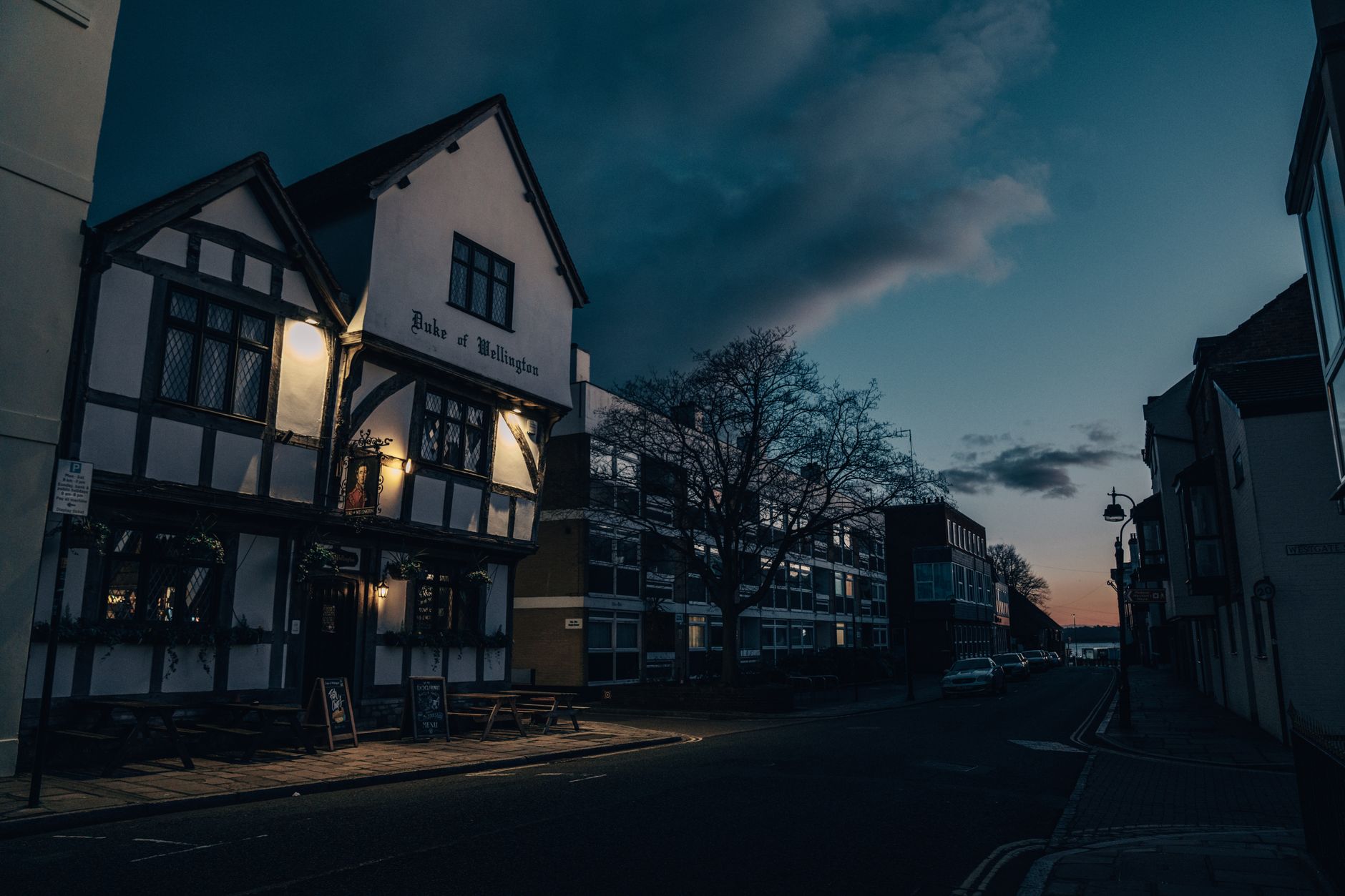
    Traditional English pub exterior on a residential street, relevant to pub closures UK 2026
    Photo by GMB VISUALS on Pexels

    Business rates: the tax that refuses to bend

    Start with business rates, because they remain the single most cited grievance among pub landlords. Unlike retail, which benefited from a string of temporary reliefs during the pandemic years and beyond, wet-led pubs, those that derive their income primarily from alcohol sales rather than food, have received comparatively little structural relief. The current business rates system is based on rateable values that, for many urban pubs, were set against pre-pandemic footfall and now bear no relation to trading reality.

    The British Beer and Pub Association has repeatedly called for a fundamental restructuring of how pubs are assessed, arguing that a pub turning over £400,000 a year in a market town pays proportionally far more in rates than an Amazon warehouse turning over fifty times that. The 2023 revaluation brought some relief for lower-value properties, but it pushed up assessments for pubs in areas where property values had risen, including swathes of London, Bristol and Edinburgh, just as those pubs were trying to recover from years of closure-enforced debt.

    Energy costs are quietly finishing the job

    If business rates are the structural wound, energy costs are the infection that prevents it healing. A typical community pub uses somewhere between 25,000 and 60,000 kilowatt hours of electricity a year, plus substantial gas for cooking and heating. When the energy price cap for commercial customers was effectively removed and wholesale prices spiked, many landlords found themselves facing energy bills three or four times their pre-2022 level.

    Ofgem’s standing charge structure, which I’ve written about before in the context of household bills, hits commercial premises even harder, because the fixed daily charge scales poorly with intermittent use. A pub that opens four evenings a week still pays the full standing charge for all seven days. Several landlords I’ve read about in trade press accounts describe the standing charge alone running to thousands of pounds a quarter, before a single pump is pulled.

    The consequence is that survival increasingly depends on food revenue, which in turn requires investment in kitchen equipment, staffing and ingredients that many traditional locals simply cannot afford. The pub that was, for decades, a place you went for a pint and a bag of crisps is being pushed by economics into becoming a restaurant, or closing.

    Changing drinking habits and who bears the cost

    The cultural picture is more complicated than a simple “people are drinking less” narrative, though that element is real. Britain’s relationship with alcohol has been quietly changing for years, and it has accelerated. Younger adults are drinking less than any previous generation on record. According to the Office for National Statistics, the proportion of 16 to 24 year olds who don’t drink at all rose from around 18% in 2005 to nearly 26% in 2023. That cohort is now in its late twenties and thirties, and many have simply never formed the habit of regular pub attendance.

    The demographic most likely to visit a pub two or three times a week remains the over-45s, a cohort that is ageing out of the pattern. That isn’t doom-saying; it’s arithmetic. And it explains why the closures are hitting certain communities harder than others. Rural areas and post-industrial towns in the North of England, the Welsh valleys and the Scottish lowlands are losing pubs at roughly twice the rate of affluent urban commuter zones. CAMRA’s most recent data shows Yorkshire and the Humber, and the North West, consistently recording the highest closure rates by region. These are places where the pub was genuinely a community anchor, not a lifestyle accessory.

    The home-delivery economy and the supermarket effect

    There’s a third competitor that doesn’t appear in many business rates discussions but deserves serious attention: the sheer convenience of staying home. The explosion in home-delivery food platforms, Deliveroo, Just Eat, Uber Eats, means that the evening a family might once have spent at the local pub’s kitchen is now spent on a sofa with a phone order. This isn’t anyone’s fault, and it isn’t reversible through policy. But it has materially altered the economics of food-led pubs, which now compete with platforms offering the same cuisines at lower perceived cost and zero transport effort.

    Then there is the supermarket effect, long documented but still underappreciated. The price differential between a pint in a pub and a can purchased from a supermarket is now, in many cases, 400% or more. A four-pack of premium lager from a major supermarket costs roughly £5 to £6. The same volume poured in a pub, accounting for glass size, costs £14 to £18 in most English cities. That gap has widened steadily as draught beer costs have risen alongside everything else. For households managing tight budgets, and millions are, the calculus is simple.

    Which pubs are actually surviving, and why

    The picture isn’t uniformly bleak, which makes it all the more instructive. The pubs that are surviving in 2026 tend to share certain characteristics: they own their freehold or hold long, low-rent leases; they have diversified revenue (accommodation, events, community use); and they have invested in energy efficiency measures that meaningfully reduced their utility exposure. Several that have thrived are registered community benefit societies, effectively owned by local residents who voted with their wallets to keep the building open. CAMRA’s Pub of the Year shortlists now read almost entirely as a parade of community-owned or freehold-held venues.

    The tied pub model, where a landlord rents from a pubco and is obliged to buy beer from that pubco at above-market prices, remains a grinding disadvantage for those still within it. The Pubs Code, which gave tied tenants the right to go free-of-tie on fair terms, has been partially effective, but enforcement through the Pubs Code Adjudicator has been slow and contested. The structural problems in the tied model predate the current crisis by decades.

    What would actually make a difference

    CAMRA and the British Beer and Pub Association are aligned on several asks: a permanent lower rate of VAT on draught beer (currently 20%, reduced briefly during the pandemic), a fundamental reform of the business rates system that genuinely reflects trading conditions rather than property values, and an extension of community asset protections that make it harder to convert a pub into flats without meaningful local consultation.

    The government’s current position, as outlined in responses to the House of Commons Business and Trade Committee inquiry into the hospitality sector, is supportive in language and modest in action. A 1p reduction in beer duty was announced for 2026. It is welcome, and it is not enough.

    My reading of the figures is this: the pub closures UK 2026 is recording are not primarily the consequence of any single policy failure. They are the compound result of a tax system designed for a different century, an energy market that penalises small commercial users, a consumer economy that increasingly rewards convenience over community, and a generational shift in drinking culture that no amount of nostalgia will reverse. Some of these forces can be blunted by government. Others cannot. What’s clear is that without structural intervention on business rates and energy, the rate of loss will continue to accelerate, and the communities that can least afford to lose a local will be the ones that do.

    Frequently Asked Questions

    How many pubs have closed in the UK in 2026?

    CAMRA estimates that the total number of pubs lost since the 1980s peak has now passed 50,000. The British Beer and Pub Association reports that closures in 2025 and into 2026 are running at rates comparable to the post-2008 recession period, with hundreds closing each quarter. The precise in-year figure for 2026 will be confirmed in the BBPA’s annual statistical handbook.

    Why are pub closures accelerating now specifically?

    Several structural pressures converged at once: business rates assessments that don’t reflect post-pandemic trading, commercial energy bills that remain significantly above pre-2022 levels, and a sustained shift in younger consumers’ drinking habits. The tied pub model also continues to burden many landlords with above-market beer costs. No single cause is solely responsible, but the combination is proving lethal for marginal venues.

    Which areas of the UK are losing the most pubs?

    CAMRA data consistently identifies Yorkshire and the Humber, and the North West of England, as the regions with the highest closure rates. Rural communities and post-industrial towns are disproportionately affected, partly because the pub often served as a primary community space and partly because those areas have fewer alternative revenue streams such as tourism or affluent commuter trade.

    Does the business rates system treat pubs unfairly compared to other businesses?

    The British Beer and Pub Association argues strongly that it does. Wet-led pubs pay rates assessed on rateable values that bear little relation to current turnover, and they receive fewer reliefs than retail or office-based businesses. The 2023 revaluation actually increased assessments for pubs in areas where property values had risen, compounding the problem at a time when many landlords were still carrying pandemic-era debt.

    What can local communities do to save a pub at risk of closure?

    Communities can apply to have a pub listed as an Asset of Community Value under the Localism Act 2011, which gives local groups a six-month right to bid when it comes up for sale. Several pubs have been saved through community buyouts structured as cooperative or community benefit societies. CAMRA’s website provides detailed guidance on the process, and Locality (the community enterprise network) offers practical support for groups pursuing this route.
  • The Death of the British Pub: Why a Cherished Institution Is Closing at a Rate No Policy Seems Able to Stop

    The Death of the British Pub: Why a Cherished Institution Is Closing at a Rate No Policy Seems Able to Stop

    There is a particular kind of silence that settles over a village when its pub closes. The car park empties, the hanging baskets come down, and a building that was once the social spine of a community becomes, within months, either a bland block of flats or an entirely abandoned shell. I have seen it happen in towns across the Midlands and in rural Yorkshire, and it is happening with a frequency that should embarrass every politician who has ever lifted a pint for a campaign photograph. The data on UK pub closures 2026 confirms what anyone who has been paying attention already knows: the situation is not improving.

    Traditional English village pub exterior, illustrating UK pub closures 2026 reasons
    Photo by Christina & Peter on Pexels

    According to the British Beer and Pub Association, the UK lost around 500 pubs in 2024 alone, and early projections for 2026 suggest the pace has not slowed. This is not a new crisis; it is an old one that has been allowed to compound through successive governments treating the pub trade as a convenient revenue source rather than a cultural institution worth protecting. The reasons stack up like closing-time debt: business rates, alcohol duty, the national living wage, spiralling energy costs, and, perhaps most fundamentally, the quiet but decisive shift in how younger generations choose to spend their evenings.

    Business rates are strangling operators who cannot compete with supermarkets

    The business rates system in England is, by most reasonable assessments, broken. A community pub occupying a mid-sized premises in a market town can face a rates bill that bears almost no relationship to its actual profitability. Large supermarkets, which have driven down the cost of alcohol to the point where a four-pack of lager costs less than a single pint at the bar, benefit from rateable values that are generally more favourable relative to their turnover. The pub pays to be open; the supermarket profits from keeping people away from it.

    The 2023 revaluation brought some modest relief for smaller operators, but the relief was temporary and inconsistently applied. Many publicans I have spoken to describe a situation in which a brief dip in their rates bill was almost immediately absorbed by increases elsewhere. The British Institute of Innkeeping has been calling for a structural overhaul, a hospitality-specific rates regime that recognises the labour intensity and community function of pubs, but HM Treasury has shown little appetite for the kind of reform that would actually move the needle.

    Alcohol duty: Britain’s pubs pay some of the highest rates in Europe

    The UK’s alcohol duty rates are among the most punishing on the continent. A pint of draught beer at a British pub carries excise duty that the Campaign for Real Ale (CAMRA) estimates contributes significantly to a pub beer price that is now routinely north of £5 in cities and often higher in London. When a consumer can buy the same branded lager at a supermarket for a fraction of that price, the economics of the pub visit require a level of loyalty, or a sufficiently good reason to leave the house, that the industry can no longer rely upon.

    The HMRC alcohol duty reform that came into effect in August 2023 was supposed to benefit draught products specifically, introducing a lower rate for drinks dispensed on draught in licensed premises. The principle was sound. In practice, the differential was too narrow to meaningfully change pub finances, and the administrative complexity added its own friction for smaller operators already struggling to keep a bookkeeper on the books.

    Staffing costs and the squeeze on margins that cannot be passed on

    The national living wage rose to £12.21 per hour in April 2025, and is widely expected to rise again in 2026. I am not arguing against fair wages, quite the opposite. But the structural problem is that pubs, unlike many businesses, have an almost inelastic relationship between labour and output. You cannot meaningfully automate bar service without destroying the thing that makes a pub a pub. The result is that staffing costs rise, and operators face a choice between cutting hours, cutting staff, or raising prices that are already testing customer tolerance.

    Many independent publicans have absorbed costs for as long as they can and are now exiting. The ones left standing are increasingly managed houses operated by large pub companies, or venues that have pivoted aggressively toward food, becoming restaurants that happen to have a bar, rather than pubs that also do a Sunday roast. That shift is understandable. It is also a quiet form of cultural loss that rarely gets counted in the closure statistics.

    The staffing pressures are not unrelated to the broader challenges discussed in our piece on Britain’s ageing workforce, where the shrinking pool of younger workers willing to take hospitality roles at the margins is reshaping entire sectors of the economy.

    Changing drinking habits and the sober generation

    The shift in how Britain drinks is real and it is generational. Survey data from Drinkaware consistently shows that 18-to-34-year-olds are drinking less than their parents did at the same age, and a meaningful proportion identify as non-drinkers. This is, by most health measures, a positive development. For the pub trade, it is existential if the business model does not adapt.

    The no and low alcohol movement, which I have written about before in the context of how it has transformed the way Britain socialises, has created real opportunities for pubs willing to invest in quality alcohol-free alternatives. But stocking a decent non-alcoholic gin does not solve the business rates bill. The cultural shift reduces footfall among the demographic that used to anchor weeknight trade, and pubs that depended on that trade are feeling it acutely.

    What genuine policy intervention could look like

    The Community Pub Business Support Programme, run through Pub is the Hub, has done good work at the margins, helping individual pubs add post office counters, food banks, and community services that justify their survival to both funders and local authorities. But this kind of adaptation is only viable for a small subset of the estate. You cannot turn every struggling village local into a rural service hub.

    More structurally, there is a credible case for treating community pubs, particularly those that are the last remaining licensed premises in a settlement, as social infrastructure, in the same way a village hall or a library is treated. The Asset of Community Value designation, available under the Localism Act 2011, already allows communities to register a pub and claim a right to bid if it comes up for sale. Use of this mechanism has grown, but the legal process is slow and community groups rarely have the capital to compete with property developers when the moment comes. Reform here, with some bridging finance mechanism attached, could be meaningful.

    The bigger systemic question is whether any government has the political will to take on both the Treasury, which values alcohol duty revenue at roughly £12 billion per year, and the supermarket sector simultaneously. The honest answer, based on the evidence of the past decade, is no. The pub trade has excellent lobbyists and deeply sympathetic press coverage. What it lacks is the kind of structural reform that would require a government to sacrifice short-term revenue for long-term social fabric.

    Can the community pub survive the decade?

    My reading of the figures is cautious. The pubs that will survive to 2035 are those that have already diversified, that own their freehold, that serve food to a standard that competes with casual dining, and that are embedded in communities affluent enough to choose the pub over the supermarket as a matter of preference rather than pure price calculation. That is a narrower demographic than the trade would like to admit.

    The broader pattern of institutional decline is one I have seen play out across multiple sectors. As we noted in our analysis of the crisis in Britain’s charity sector, the organisations most trusted by local communities are often the least equipped to survive the compound pressures of inflation, policy inertia, and structural economic change. Pubs face exactly the same paradox: beloved, mourned when lost, but rarely supported with the concrete policy tools that might actually keep them open.

    The British pub has survived plagues, wars, and temperance movements. Whether it can survive the combination of a punishing fiscal regime and a generation that increasingly socialises via a screen rather than a bar stool is a genuinely open question. The closures are not slowing down. And the silence that follows each one spreads a little further each year.

    Frequently Asked Questions

    How many pubs have closed in the UK in 2026?

    Precise 2026 figures are still being compiled, but the British Beer and Pub Association recorded around 500 closures in 2024, and industry bodies report the rate has not significantly slowed. The cumulative total of UK pub closures since 2000 runs into the tens of thousands.

    What are the main reasons pubs are closing in the UK?

    The primary pressures are high business rates, punishing alcohol duty, rising staffing costs following increases to the national living wage, and soaring energy bills. These compound a longer-term structural shift as younger generations drink less and spend fewer evenings in licensed premises.

    What is the Community Pub Business Support Programme?

    It is a government-backed initiative administered through Pub is the Hub that helps struggling rural pubs diversify by adding services such as post office facilities, food provision, or community meeting space. It helps individual venues but does not address the systemic fiscal pressures affecting the wider trade.

    Does the Asset of Community Value designation actually protect pubs from closure?

    It gives registered communities a right to bid if the pub comes up for sale, creating a pause in any sale process. However, it does not guarantee the community can raise the funds to compete with a developer, and the legal process can be slow, so protection in practice is limited.