
For years, the science of living longer and healthier was the exclusive preserve of Californian tech billionaires with private physicians and seven-figure health budgets. Bryan Johnson making headlines by transfusing his son’s blood plasma. Peter Thiel reportedly banking on parabiosis. The whole enterprise had an air of the baroque, even the desperate. But something has shifted, and it has shifted quickly. The longevity treatments 2026 are increasingly grounded in rigorous clinical evidence, increasingly available through UK private clinics, and increasingly affordable for anyone who takes their health with reasonable seriousness. This is not wellness fluff. It is a genuine pharmaceutical and diagnostic revolution.

What Are Senolytics and Why Should You Care?
The most significant clinical development in ageing science over the past decade is the emergence of senolytics: compounds that selectively clear senescent cells from the body. Senescent cells are, in the bluntest terms, cells that have stopped dividing but refuse to die. They accumulate with age and secrete a cocktail of inflammatory proteins that damage surrounding tissue, driving conditions from arthritis to cardiovascular disease to cognitive decline.
The leading senolytic combination studied in human trials is dasatinib and quercetin. Dasatinib is a leukaemia drug; quercetin is a plant flavonoid found in onions and capers. Together, they have shown promising results in trials at the Mayo Clinic and, more recently, at University College London, where researchers observed measurable reductions in senescent cell burden in older patients with idiopathic pulmonary fibrosis. The regime is typically administered in short, intermittent bursts rather than daily dosing, which reduces side-effect risk considerably.
In the UK, quercetin supplements are freely available from brands such as Viridian and Solgar. Dasatinib, being a prescription drug regulated by the MHRA, requires clinical oversight. A growing number of London-based longevity clinics, including Harpal Clinic and the Hooke Longevity Clinic in Marylebone, now offer senolytic protocols under medical supervision, typically priced between £800 and £2,500 for an initial programme including bloodwork and follow-up. That is not trivial, but it is a far cry from the seven-figure territory of five years ago.
Continuous Glucose Monitoring: The Most Democratised Longevity Tool of the Era
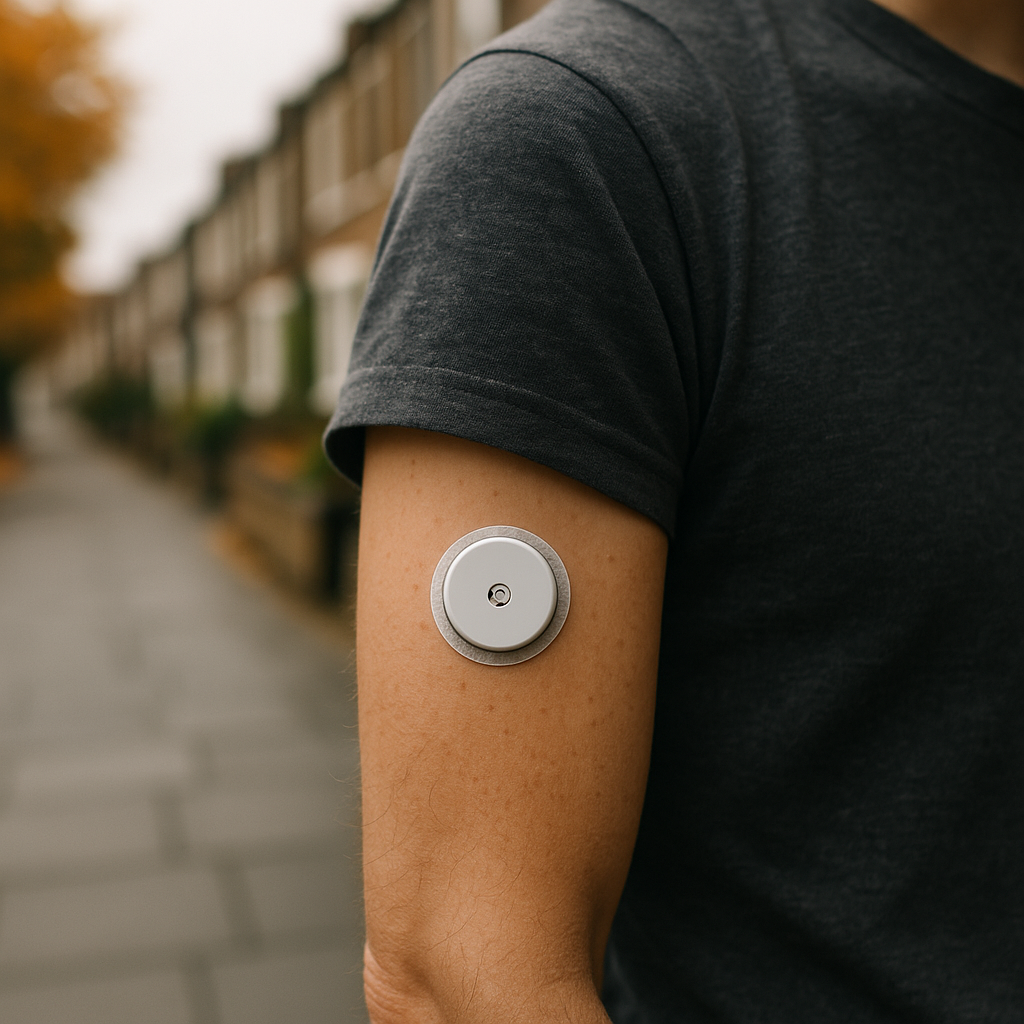
Perhaps no single longevity technology has crossed from elite experimentation into mainstream use as decisively as continuous glucose monitoring, or CGM. Originally designed for diabetics, the small sensor worn on the upper arm now appears on the bodies of triathletes, hedge fund managers and, increasingly, people who simply want to understand how their diet affects their metabolic health in real time.
The clinical rationale is compelling. Chronic glycaemic variability, even in people who test as non-diabetic on standard fasting glucose tests, is associated with accelerated biological ageing, cognitive impairment and elevated cardiovascular risk. A CGM device reveals exactly how your body responds to white rice versus brown, a croissant versus porridge, alcohol versus sleep deprivation. The feedback loop is immediate and, for most users, genuinely revelatory.
In the UK, Abbott’s Libre Sense and the Dexterity platform have made CGM accessible without a prescription for non-diabetic users through services such as Zoe, the gut microbiome and metabolic health company co-founded by Professor Tim Spector of King’s College London. Zoe’s programme, which costs approximately £299 for the initial testing phase, combines CGM data with microbiome analysis and personalised dietary recommendations. The NHS uses CGM extensively for Type 1 diabetes management, and there is growing advocacy for wider metabolic screening, particularly following ONS data showing that an estimated 3.8 million people in England are living with pre-diabetes, many undiagnosed.
NAD+ Precursors: The Supplement With the Most Clinical Weight
Nicotinamide adenine dinucleotide, NAD+, is a coenzyme present in every cell in the body and central to energy metabolism and DNA repair. Its levels decline steeply with age. Supplementing with NAD+ precursors, principally nicotinamide riboside (NR) and nicotinamide mononucleotide (NMN), has become one of the most studied areas in longevity science, with human trials now published in peer-reviewed journals including Nature Ageing and Cell Metabolism.
The results are not uniformly dramatic. Some studies show improved muscle function, cognitive clarity and reduced markers of inflammation in older adults. Others show more modest effects. What is clear is that NR and NMN are generally well tolerated and that their mechanism of action is biologically plausible in a way that many wellness supplements simply are not. Elysium Health’s Basis, containing NR and pterostilbene, has amassed more human trial data than almost any other longevity supplement on the market. In the UK, NMN supplements are available from Renue By Science and Double Wood Supplements, typically at £40 to £90 per month, putting them firmly within mainstream reach.
Rapamycin: The Most Discussed Drug You Have Probably Never Heard Of
Rapamycin is an immunosuppressant typically used to prevent organ transplant rejection. It is also the most consistently life-extending compound ever tested in animal models, including mice, where it extended median lifespan by up to 25 per cent even when administered late in life. It works by inhibiting mTOR, a signalling pathway that governs cell growth and metabolism, effectively nudging cells into a more cautious, repair-oriented mode.
Human data is still limited but accumulating. The PEARL trial and ongoing work at the Karolinska Institute in Stockholm are among the more rigorous human studies. In the UK, off-label rapamycin prescribing for longevity purposes remains uncommon but not unheard of, and is available through select private longevity physicians at a cost of roughly £150 to £400 per month, including medical monitoring. The risks, including immunosuppression and potential impact on wound healing, mean this is emphatically not a supplement to acquire without professional oversight.
For a thorough review of the current evidence on pharmacological longevity interventions, the Lancet has published several accessible analyses in recent years, and remains the most authoritative English-language source for clinically grounded readers.
The Cost of Longevity in 2026: A Realistic Assessment
The honest picture of longevity treatments 2026 is one of tiered accessibility. At the most accessible end, CGM programmes and NMN supplementation are available to anyone spending £50 to £100 per month. Mid-tier interventions, supervised senolytic protocols, comprehensive bloodwork panels measuring biological age via DNA methylation testing (available from companies such as Chronomics, based in the UK), and structured rapamycin regimes, sit in the £500 to £3,000 annual range. At the apex, full-service longevity clinics offering everything from hyperbaric oxygen therapy to DEXA body composition scanning charge upwards of £5,000 per year for membership packages.
What has changed is not that the top tier has become cheaper, but that genuinely evidence-backed interventions now exist at every price point. The longevity treatments 2026 landscape no longer requires you to be Peter Thiel. It does require you to be informed, to engage with real clinical evidence rather than marketing, and to work with qualified medical professionals when prescription-grade interventions are involved. The science has never been more serious. That, at least, is worth something.
Frequently Asked Questions
What are the most evidence-backed longevity treatments available in the UK in 2026?
The treatments with the strongest clinical evidence include continuous glucose monitoring for metabolic health, NAD+ precursor supplements such as NMN and NR, and senolytic protocols combining quercetin with dasatinib. Rapamycin is also gaining attention but requires careful medical supervision due to its immunosuppressant properties.
How much do longevity treatments cost in the UK?
Costs vary considerably. CGM programmes such as Zoe start at around £299 for an initial phase, NMN supplements cost roughly £40 to £90 per month, and supervised senolytic protocols at private UK clinics typically range from £800 to £2,500. Full-service longevity clinic memberships can exceed £5,000 per year.
Are senolytics safe to take without medical supervision?
Quercetin, a key component of the leading senolytic combination, is available over the counter and is generally considered safe. However, dasatinib is a prescription-only drug regulated by the MHRA and should only be taken under qualified medical supervision, as it carries meaningful side-effect risks.
What is continuous glucose monitoring and do I need a prescription to use it?
Continuous glucose monitoring involves wearing a small sensor, usually on the upper arm, that tracks blood sugar levels in real time throughout the day. In the UK, non-diabetic users can access CGM through services such as Zoe without a prescription, though NHS-funded CGM remains primarily reserved for patients with Type 1 diabetes.
Does the NHS offer any longevity-focused treatments or interventions?
The NHS does not currently offer longevity treatments as a distinct category. However, it does provide CGM for diabetes management, statins for cardiovascular risk reduction, and screening programmes for certain cancers and conditions associated with ageing. Most of the newer longevity interventions discussed in this article are available only through private clinics.