

There is a statistic that surfaces regularly in debates about British civil liberties, and it remains as striking now as it was a decade ago. The United Kingdom is home to an estimated six million CCTV cameras, giving it one of the highest concentrations of surveillance infrastructure anywhere on earth. Some analyses place London among the top five most-watched cities globally, alongside Shenzhen and Singapore. What makes Britain’s situation distinctly unusual is not the cameras themselves, it is the near-total absence of public outrage about them.
CCTV surveillance UK has grown incrementally, almost organically, over thirty years. Each expansion felt individually reasonable. A camera outside a post office after a robbery. A cluster of lenses in a city centre after a late-night assault. And then, quietly, the architecture of a surveillance state emerged, without a single parliamentary vote that felt like a decisive moment of no return.
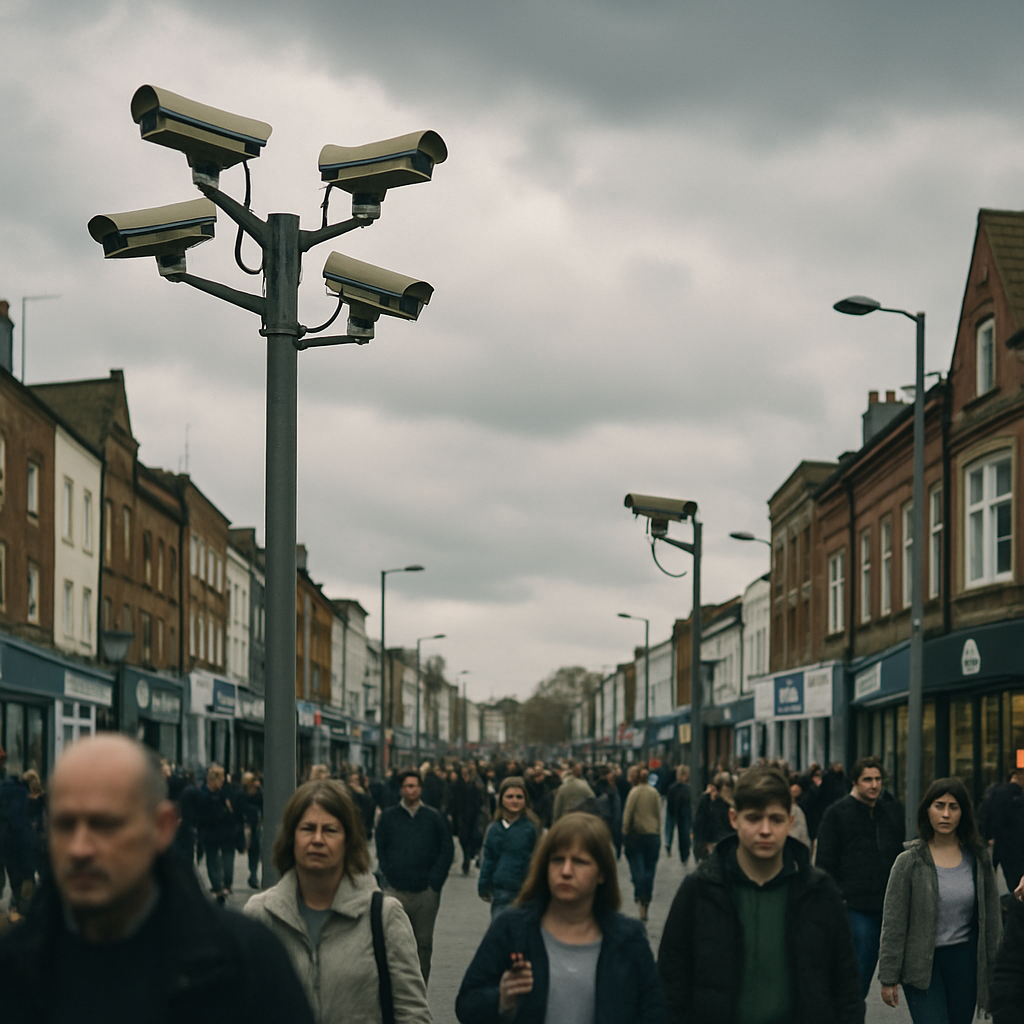
The Scale of Britain’s Camera Network
The most commonly cited figures come from the British Security Industry Association, which estimated around 5.9 million CCTV cameras in operation across the UK. More recent projections, accounting for growth in doorbell cameras such as Ring devices and private commercial installations, push that figure comfortably above six million. That equates to roughly one camera for every eleven people, a ratio that would have seemed dystopian to the generation that built Orwell’s reputation.
What has changed in the past three years is not the density of traditional cameras but the intelligence layered on top of them. Facial recognition technology has moved from the realm of speculative fiction into operational policing. The Metropolitan Police ran live facial recognition deployments at events across London throughout 2025, scanning crowds and matching faces against a watchlist in real time. South Wales Police, which has been at the forefront of these deployments since the late 2010s, continues to expand its programme. Leicestershire, West Midlands, and several other forces have followed.
These are not passive recordings reviewed after an incident. This is active, automated identification of individuals moving through public space, cross-referenced against databases, with officers able to intercept a flagged person within seconds. The legal basis for this remains, to put it charitably, contested.
What the Law Actually Says, and What It Doesn’t
Britain has no single piece of legislation specifically governing the use of facial recognition technology by public authorities. Instead, the legal framework is assembled from several overlapping statutes: the Data Protection Act 2018, the Human Rights Act 1998, the Equality Act 2010, and, for policing specifically, the Protection of Freedoms Act 2012, which governs the police CCTV network known as the National ANPR Service.
The Information Commissioner’s Office, which is the UK’s data protection regulator, has issued guidance on biometric data and expressed serious reservations about live facial recognition in public spaces. In 2022, the ICO and the Surveillance Camera Commissioner published a joint statement noting that the technology required clearer statutory footing. That statutory footing has not materialised. The Surveillance Camera Commissioner role, established under the Protection of Freedoms Act, was effectively abolished in 2023 and folded into the Information Commissioner’s remit, removing a dedicated watchdog at precisely the moment the technology accelerated.
The courts have at least weighed in. In 2020, the Court of Appeal ruled that South Wales Police’s use of facial recognition had violated human rights and data protection law in its earlier deployments, citing insufficient governance and disproportionate interference with privacy rights. The force revised its procedures. Deployments resumed. The cameras kept running.
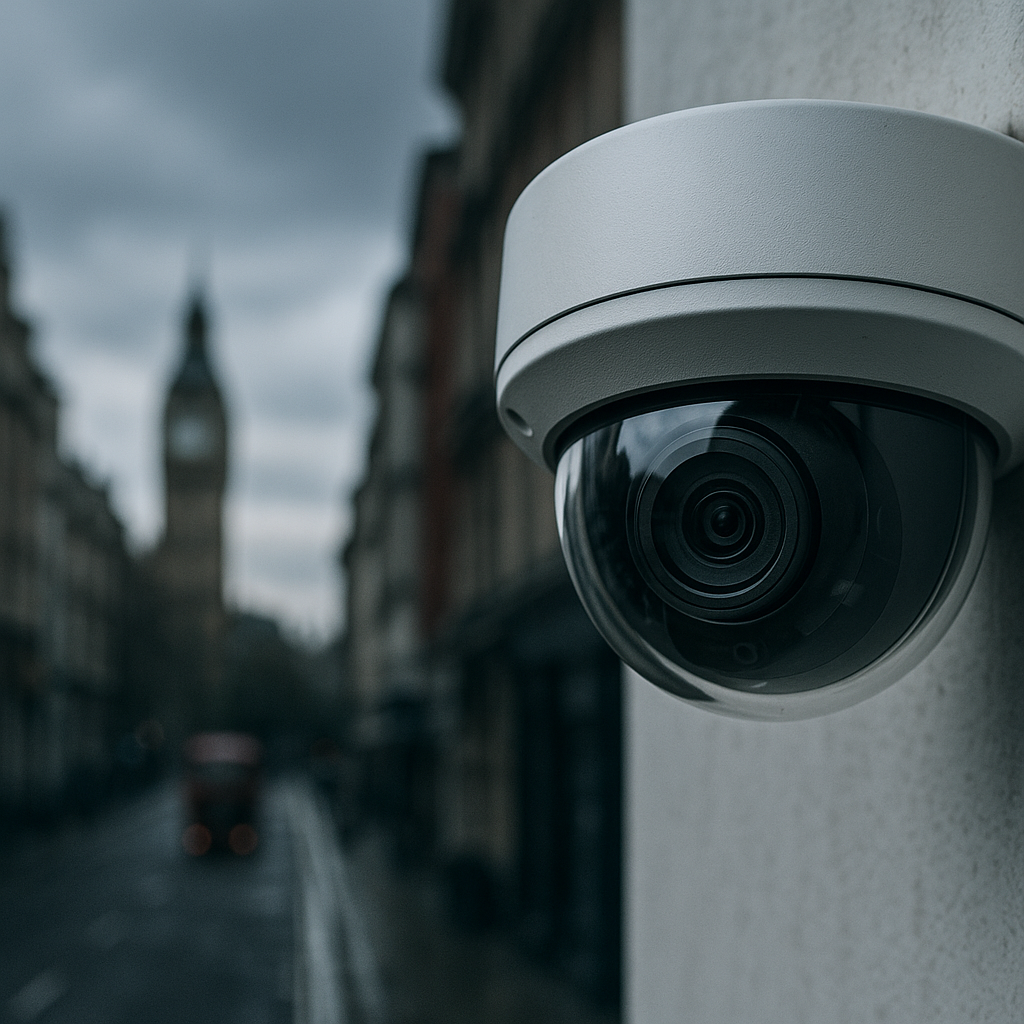
Why Public Protest Has Been So Muted
Civil liberties organisations including Liberty, Big Brother Watch, and Privacy International have waged sustained campaigns against the expansion of automated surveillance. Big Brother Watch, in particular, has brought legal challenges, published detailed research, and lobbied Westminster with considerable persistence. Their 2023 report documented dozens of live facial recognition deployments at shopping centres, music festivals, and high streets across England and Wales, many operated not by police forces but by private companies acting without any public announcement.
Yet public mobilisation has remained thin. The reasons are worth examining honestly. Partly it is the incremental boiling-frog effect: no single moment crystallised into a symbol of overreach that the public could rally against. Partly it is a genuine, if debatable, trade-off that many people quietly accept, the idea that if you have done nothing wrong, the cameras are not your problem. Partly, frankly, it is the smartphone paradox: a population that voluntarily carries location-tracking devices and submits biometric data to unlock their own mobile phones finds it philosophically awkward to object to a lens on a lamp post.
There is also the question of who is most affected. Studies have consistently shown that automated facial recognition systems perform less accurately on darker skin tones, a finding that raises profound questions about discriminatory policing. When the technology disproportionately burdens communities already subject to heightened police attention, and those communities have historically found it harder to access media platforms or legal resources, the protests that do occur struggle to achieve mainstream traction.
Local Councils, Smart Cities, and the Creeping Expansion
Beyond policing, local councils have quietly accumulated significant surveillance capacity under the banner of smart city infrastructure. Traffic management cameras, air quality monitors with embedded imaging, and public space CCTV managed by council contractors have expanded in most major UK cities. Some councils openly publish their camera registers; many do not. A 2024 Freedom of Information exercise by Big Brother Watch found that dozens of councils either could not or would not disclose the full extent of their camera estates.
The integration of these systems with facial recognition is not yet widespread at council level, but the technical architecture for it is already in place. Once the cameras are networked and the software is licensed, the marginal cost of adding biometric analysis is low. Civil liberties lawyers describe this as a ratchet: once surveillance infrastructure exists, it tends to accumulate capabilities rather than shed them.
For residents who want to remain engaged with their communities while remaining conscious of the surveillance landscape, small acts of civic participation still matter. Whether that means attending a council planning meeting or simply choosing to find local events and show up in person, physical presence in public life is still, for now, the most powerful democratic act available. It is also, increasingly, the most observed one.
What Civil Liberties Organisations Say the Long-Term Cost Will Be
The argument made by organisations like Liberty is not simply that surveillance is unpleasant. It is that the chilling effect on behaviour is itself the damage. When people know they are being watched and identified, they moderate what they say, where they go, and who they associate with. The 2025 report from Liberty Human Rights documented rising self-censorship at protests and public gatherings, with participants reporting anxiety about being added to watchlists simply for attending a lawful demonstration.
This matters in a democracy because protest, dissent, and assembly are not peripheral freedoms. They are the mechanisms by which democratic societies course-correct. A population that has learnt to treat public space as a place of observation rather than expression is one that has already surrendered something it may find very difficult to reclaim.
The technology will not wait for the law to catch up. Facial recognition is becoming more accurate, more affordable, and more embedded in everyday infrastructure. The question Britain faces, and has not yet answered with anything approaching political seriousness, is whether a democracy can sustain the habit of being watched and still retain the instincts of a free society. The cameras, for their part, are not offering an opinion. They are simply recording.
Frequently Asked Questions
How many CCTV cameras are there in the UK?
Estimates from the British Security Industry Association place the figure at around 5.9 million cameras, with more recent projections exceeding six million when private doorbell cameras and commercial installations are included. This gives the UK one of the highest per-capita surveillance densities in the world, with roughly one camera for every eleven people.
Is facial recognition technology legal for police to use in the UK?
There is no specific legislation authorising or regulating live facial recognition by police forces in the UK. Forces rely on a patchwork of existing data protection and human rights law. The Court of Appeal ruled in 2020 that South Wales Police’s earlier deployments had violated human rights law, though revised procedures allowed deployments to resume. The legal position remains contested and unresolved by Parliament.
Which UK police forces are using facial recognition technology?
The Metropolitan Police and South Wales Police have been the most prominent users of live facial recognition. Leicestershire and West Midlands Police have also conducted deployments, and several other forces are at various stages of testing or adoption. Private companies have additionally deployed the technology at shopping centres and entertainment venues without police involvement.
What are civil liberties groups doing to challenge CCTV surveillance in the UK?
Organisations including Big Brother Watch, Liberty, and Privacy International have pursued legal challenges, published investigative reports, and lobbied Parliament for specific legislation governing automated facial recognition. Big Brother Watch brought a landmark legal case against the Metropolitan Police and continues to document deployments across the country through Freedom of Information requests.
Does facial recognition technology work equally well for all ethnicities?
No. Multiple studies have found that commercially available facial recognition systems perform with significantly lower accuracy on darker skin tones, particularly for Black women. This raises serious concerns about discriminatory policing outcomes, as individuals from certain ethnic backgrounds face a higher risk of being misidentified and incorrectly flagged by live systems.
Leave a Reply