
Something quietly momentous has happened in the way affluent Britain thinks about its body. The conversation has shifted from weight management and cosmetic concerns to something far more ambitious: the systematic engineering of a longer life. Clinics offering biological age tests, supplements promising cellular repair, elite retreat programmes priced in the thousands, and the now-ubiquitous GLP-1 weight-loss drugs have all converged into a single, extraordinarily lucrative market. The longevity economy health 2026 is, by any measure, one of the defining commercial stories of this decade.
The global longevity industry was valued at roughly £590 billion in 2025 and analysts expect it to exceed £1 trillion within the next five years. In the UK alone, private spending on what might loosely be called optimisation health, biological testing, hormonal therapies, precision nutrition, high-end supplementation, has grown at a rate that would make most sectors envious. Who is driving it? And, more pointedly, does any of it work?

The GLP-1 Gold Rush and What It Actually Tells Us
The arrival of semaglutide-based medicines like Ozempic and Wegovy shifted the public perception of pharmaceutical intervention. These are not, strictly speaking, longevity drugs. They were developed for type 2 diabetes management and weight reduction. Yet the downstream effects observed in large-scale trials, reduced cardiovascular risk, lower inflammation markers, potential neuroprotective properties, have made them extraordinarily interesting to researchers studying ageing. The NHS currently offers Wegovy through specialist weight management services, but the private market has moved considerably faster, with Harley Street clinics and digital prescribers offering programmes from around £150 per month.
The enthusiasm is understandable. Obesity accelerates biological ageing in measurable ways. But clinicians have raised legitimate concerns. Prescribing GLP-1 agonists to people who are not clinically obese, purely in pursuit of longevity optimisation, sits in genuinely murky territory. The Medicines and Healthcare products Regulatory Agency (MHRA) has been monitoring prescribing patterns closely, and several private providers have already faced scrutiny over inadequate clinical assessment.
Biological Age Testing: Science or Sophisticated Guesswork?
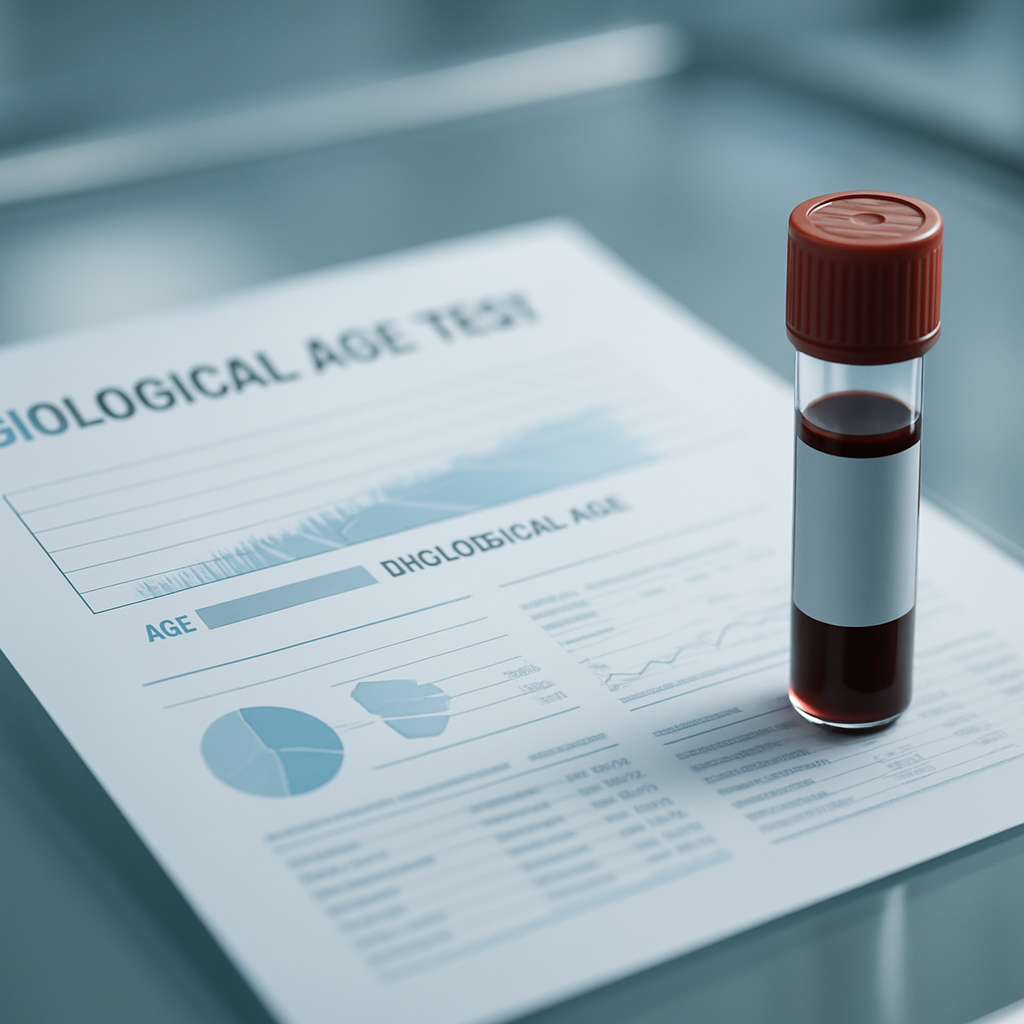
Perhaps no product better captures the mood of the longevity economy than biological age testing. Companies such as Humanity, Elysium Health and several UK-based startups offer blood, saliva or wearable-derived assessments that claim to tell you not how old you are, but how old your cells are. The most scientifically credible of these are based on epigenetic clock research, particularly the work of American biogerontologist David Sinclair and, in the UK, researchers at the Babraham Institute in Cambridge.
Epigenetic clocks, which measure DNA methylation patterns, do have a solid evidence base as predictive markers of biological age. The difficulty lies in the translation from research tool to consumer product. A test costing £299 that tells you your biological age is three years younger than your chronological age feels gratifying. Whether acting on that information, adjusting your sleep, your supplements, your sauna schedule, actually alters your trajectory is a different question entirely. The science is genuinely promising. The marketing frequently outpaces it.
The Elite Retreat Economy and Its Very Particular Clientele
At the higher end of the market, the longevity economy health 2026 looks like this: a five-night residential programme at a Swiss or Austrian medical spa, priced upwards of £8,000, offering IV nutrient infusions, VO2 max testing, continuous glucose monitoring, sleep architecture analysis and personalised protocols developed by in-house physicians. Sha Wellness, SHA Clinics and the UK-based Lanserhof at The Arts Club in London have all positioned themselves firmly in this space.
The clientele skews overwhelmingly towards high-net-worth professionals aged 40 to 65: executives, entrepreneurs and, increasingly, senior women who have grown frustrated with conventional medicine’s historical disinterest in female ageing. The rise of perimenopause awareness has fed directly into this market. Women seeking HRT optimisation, hormone panel testing and metabolic health assessments account for a significant and growing share of private longevity spend in Britain.
There is something worth acknowledging honestly here. Several of the interventions offered at these retreats, cold water immersion, zone-two cardio programming, prioritising deep sleep, reducing ultra-processed food intake, are supported by robust evidence. They are also, in most cases, free or very cheap to implement. The premium pricing reflects expertise, convenience, environment and a degree of status signalling that the industry is not entirely candid about.
Supplements, Senolitics and the Limits of the Evidence Base
The supplement market sits in a peculiar position. Products marketed around NAD+ precursors (such as NMN and NR), resveratrol, rapamycin analogues and senolytics, compounds that theoretically clear ageing cells called senescent cells, are selling in extraordinary volumes. In the UK, they fall under food supplement regulation rather than pharmaceutical oversight, meaning efficacy claims are held to a considerably lower standard than licensed medicines.
According to research published by the British Nutrition Foundation, the UK supplement market exceeded £500 million in annual retail value in 2025, with the longevity-adjacent segment among the fastest-growing sub-categories. Some of this is well-founded. Vitamin D supplementation has a clear evidence base for a substantial portion of the UK population. Omega-3s remain one of the better-studied dietary supplements in cardiovascular health.
Beyond these, the picture becomes considerably murkier. Human trials on NMN and resveratrol remain limited in size and duration. Rapamycin, an immunosuppressant with intriguing longevity data in animal models, is being used off-label by some biohackers in Britain. The risks of self-prescribing an immunosuppressant are not trivial, and mainstream clinicians are, quite reasonably, alarmed by the trend.
For a balanced assessment of what dietary supplements can and cannot claim to do, the NHS guide to vitamins and minerals remains one of the clearest starting points available.
Who Actually Stands to Gain from the Longevity Economy?
The longevity economy health 2026 raises a question that is easy to overlook whilst browsing a beautifully designed wellness clinic website: who is this for? As things stand, the most rigorous interventions are accessible only to those with significant disposable income. Biological age testing, private hormone optimisation, elite retreat programmes and even access to the most credentialled longevity physicians are luxuries by any reasonable definition.
The public health implications are substantial. If longevity-extending technologies move from experimental to mainstream over the next two decades, access will become a serious policy question for the NHS and for government. The Office for National Statistics projects that by 2045 there will be 19 million people over 65 in the UK. Whether that population is healthy and productive, or frail and requiring intensive care, will depend enormously on the equity with which longevity science is distributed.
That is not an argument against the science. It is an argument for intellectual honesty about what the industry currently is: a sophisticated, often genuinely fascinating, frequently over-priced market serving the already-advantaged. The underlying biology is real. The potential is real. The gap between the science and the sales pitch, however, remains wider than most brochures would care to admit.
The Verdict: Promising, Partial and Worth Watching Carefully
The longevity economy is neither a scam nor a revolution. It sits somewhere more complicated: a sector where legitimate scientific progress is being commercialised at a pace that outstrips the evidence, serving a demographic willing to pay premium prices for premium optimism. Some of it works. Some of it probably works. Some of it is expensive placebo.
The shrewd approach, as ever, is to follow the peer-reviewed research rather than the Instagram testimonials. Sleep well. Move regularly. Eat real food. Stay curious about the emerging science. And be appropriately sceptical of any clinic charging £400 for a blood panel that tells you exactly what you hoped to hear.
Frequently Asked Questions
What is the longevity economy and why is it growing so fast?
The longevity economy refers to the broad market of products, services and technologies designed to extend healthy human lifespan, from biological age testing to GLP-1 drugs and elite health retreats. It is growing rapidly because ageing populations, rising health consciousness and major scientific advances in gerontology have converged with significant private investment and high consumer willingness to spend on health optimisation.
Do GLP-1 drugs like Ozempic actually have longevity benefits?
GLP-1 receptor agonists were developed primarily for type 2 diabetes and weight management, but clinical trial data has shown meaningful reductions in cardiovascular risk and inflammatory markers, both of which are associated with accelerated biological ageing. Whether they confer longevity benefits in people without obesity or metabolic disease remains an open research question, and prescribing them purely for anti-ageing purposes is not currently supported by regulatory guidance in the UK.
How much does biological age testing cost in the UK?
Consumer biological age tests based on epigenetic methylation analysis typically range from £199 to £399 in the UK, though comprehensive longevity panels offered through private clinics can cost considerably more when combined with hormonal, metabolic and cardiovascular assessments. The underlying science has a credible evidence base, but interpreting results meaningfully generally requires guidance from a clinician experienced in longevity medicine.
Are longevity supplements like NMN and resveratrol worth taking?
The evidence for NMN (nicotinamide mononucleotide) and resveratrol in humans remains limited, with most compelling data coming from animal studies. UK supplement regulation does not require efficacy to be proven to the same standard as licensed medicines, so marketing claims can exceed what the published research actually supports. Vitamin D and omega-3 fatty acids have considerably stronger evidence bases and are more likely to offer meaningful benefit for most UK adults.
Is the longevity industry accessible to people on ordinary incomes in the UK?
At present, the most advanced longevity interventions are largely the preserve of high-net-worth individuals, with elite retreat programmes costing thousands of pounds and private clinics charging substantial fees for testing and consultation. The NHS does provide some relevant services, including weight management programmes using GLP-1 drugs and standard preventive health checks, but access to cutting-edge longevity medicine in Britain remains heavily skewed towards those with significant disposable income.