
There is a particular kind of exhaustion that no ordinary holiday can fix. Not the tiredness of overwork, nor the mild depletion of a stressful quarter, but something deeper: a cellular, systemic fatigue that the finest suite at a Maldivian resort simply cannot address. It is precisely this realisation that has driven a remarkable and rather elegant collision between the global wellness industry and cutting-edge longevity science. Luxury wellness tourism longevity 2026 is not a niche. It is a fully formed, multi-billion-pound movement reshaping how the world’s most discerning travellers think about rest, health, and time itself.
The numbers are difficult to argue with. According to the Office for National Statistics, life expectancy conversations have shifted dramatically in Britain, with greater scrutiny on healthspan rather than lifespan alone. Meanwhile, the Global Wellness Institute valued the wellness tourism market at over £600 billion globally, with high-end longevity programming representing its fastest-growing segment. Britons, historically somewhat suspicious of anything too earnest about self-improvement, have quietly become among the sector’s most enthusiastic spenders.
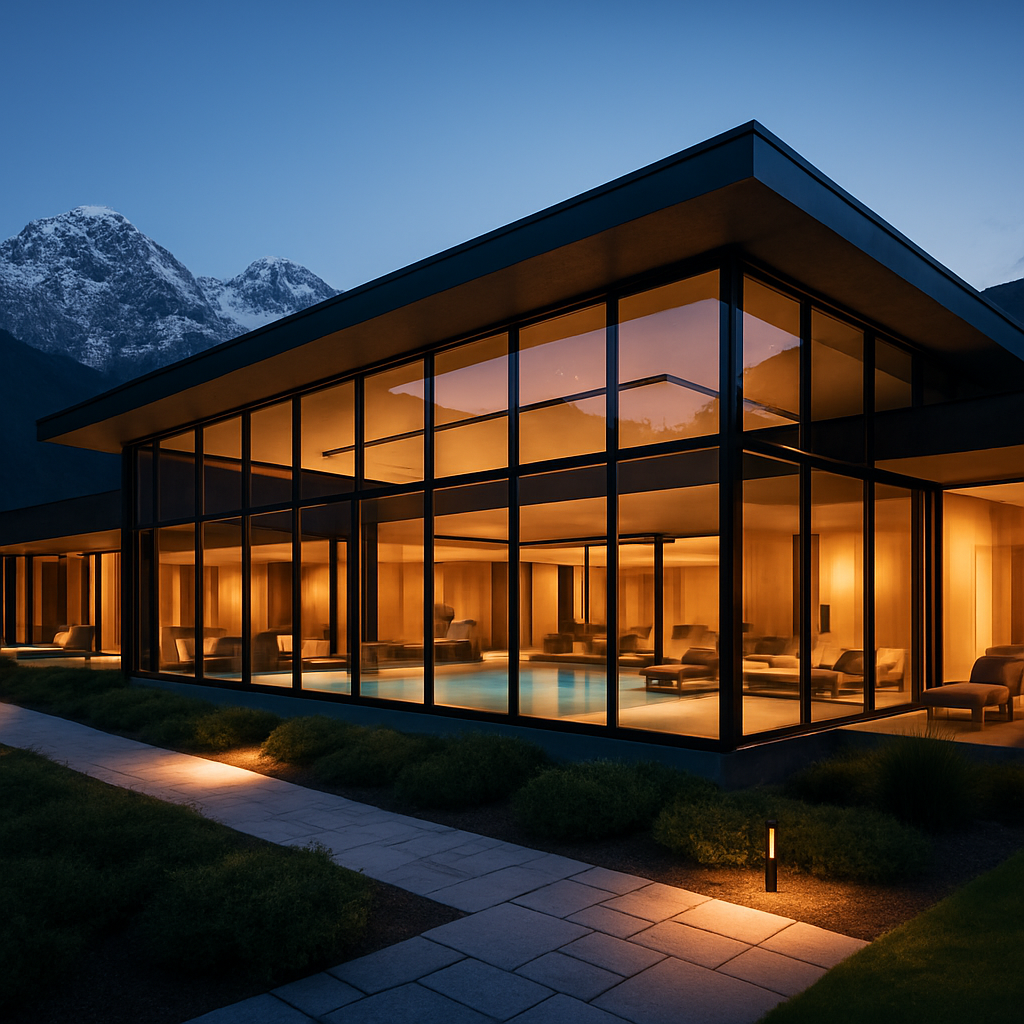
What Distinguishes a Longevity Retreat from a Luxury Spa Break?
The distinction matters. A spa break offers relaxation; a longevity retreat offers data. The finest properties in this space greet guests not with a glass of champagne but with a comprehensive battery of biomarker testing: full blood panels, telomere length analysis, VO2 max assessments, continuous glucose monitoring, and epigenetic age profiling. The results inform a personalised protocol that governs every aspect of the stay, from sleep architecture interventions to bespoke nutritional prescriptions formulated by on-site physicians rather than nutritionists with weekend certificates.
Clinique La Prairie in Montreux remains the archetype, having refined its cellular medicine programmes since the 1930s. Their Holistic Revitalisation programme now incorporates AI-assisted health modelling alongside classical Swiss cellular therapy. SHA Wellness Clinic in Alicante and Vivamayr in Austria operate on similarly rigorous clinical foundations. What unites them is the shift from pampering to precision: treatments are evidence-based, outcomes are measurable, and the whole experience feels less like an indulgence and considerably more like an investment.
Biohacking at Altitude: The Science Behind the Serenity
The word biohacking carries unfortunate connotations, conjuring images of excitable tech entrepreneurs self-administering questionable supplements in Silicon Valley. At the elite end of luxury wellness tourism, the reality is rather more refined and considerably more rigorous. Hyperbaric oxygen therapy, once the preserve of sports medicine clinics, now occupies dedicated suites at properties including LONGEVITY Health & Wellness Hotel in Portugal’s Algarve. Guests undergo pressurised sessions shown in peer-reviewed research to accelerate cellular repair and reduce systemic inflammation.
Cryotherapy chambers, photobiomodulation beds, intravenous NAD+ infusions, and exosome therapies feature at the most advanced properties. Stem cell programmes, administered under strict medical supervision, have become a significant draw at clinics in Switzerland and Germany, attracting a notably British clientele who combine the treatment with broader wellness stays. The discretion these properties offer is, frankly, part of the appeal. There are no queues, no waiting lists measured in months, and clinical conversations happen in beautifully appointed consulting rooms rather than NHS corridors.

Mental Health as the New Frontier of Premium Travel
Physical optimisation is only half the proposition. The most sophisticated properties in 2026 have invested heavily in immersive mental health programmes that go well beyond a morning meditation class and a journalling prompt. The model that has emerged at the upper tier combines psychotherapy with somatic bodywork, breathwork techniques rooted in clinical research, and pharmacological support where appropriate. Ketamine-assisted therapy, legal and medically supervised in several European jurisdictions, has found its way onto the menu at a small number of high-end retreats, with programmes designed by consultant psychiatrists and delivered with rigorous clinical governance.
Six Senses, which operates properties from Ibiza to the Cotswolds, has become perhaps the most recognisable luxury brand to fully embrace this integrated model. Their longevity programming, built around partnerships with leading researchers including those affiliated with the Buck Institute for Research on Ageing, offers guests something genuinely unusual: a coherent philosophy rather than a collection of treatments. Sleep enhancement, cognitive performance, emotional regulation and physical vitality are treated as interconnected systems, which of course they are.
Where British Travellers Are Spending Their Wellness Budgets
The destinations drawing the greatest interest from UK guests right now are Portugal, Austria, Switzerland, and Spain, with a notable and growing appetite for longer-stay programmes of ten days or more. A week at a leading longevity clinic typically costs between £8,000 and £35,000 per person depending on the depth of clinical programming, and the market has shown itself to be remarkably price-inelastic. When people believe they are investing in additional healthy years, the arithmetic feels different.
Domestically, the picture is developing. Chiva-Som’s European outpost and a growing number of retreats in Scotland, the Lake District, and Cornwall have begun incorporating more clinically credentialled longevity elements. The Scottish Highlands, with their extraordinary air quality and low population density, have proved a compelling backdrop for properties positioning themselves at the intersection of nature immersion and precision health.
The demand among British professionals aged 40 to 65 is, if anything, intensifying. This is a cohort that has watched the longevity conversation evolve from fringe science to mainstream aspiration, that has read their Bryan Johnson and their Peter Attia, and that has the means to act on the information. They are not buying spa breaks. They are buying time.
Is Luxury Wellness Tourism Longevity Science Actually Effective?
The honest answer is: it depends, and the field demands a degree of critical scrutiny. Some interventions offered at premium retreats are supported by robust clinical evidence. Others occupy more contested territory. The best properties are transparent about this, distinguishing between established medicine and emerging therapies with intellectual honesty that cheaper wellness marketing routinely abandons. Reputable retreats publish their clinical advisers’ credentials, cite peer-reviewed research, and set realistic expectations rather than promising immortality in a press release.
What is not in doubt is the aggregate value of the environment itself. Sustained rest, reduced cortisol, exceptional nutrition, structured movement, and genuine psychological support produce measurable improvements in biomarkers across virtually every study that has examined them. Whether that requires a £20,000 programme in the Swiss Alps or a fortnight of genuine digital disconnection somewhere quieter is a question only the individual guest can answer. What luxury wellness tourism does, at its finest, is engineer the conditions for that transformation with extraordinary thoroughness and considerable grace.
For those for whom luxury wellness tourism longevity 2026 represents not a passing trend but a fundamental reorientation of how they think about health, the retreats profiled here represent the current standard of the art. The science will advance. The properties will evolve. The human desire to feel vital, sharp, and genuinely well, however, shows no signs whatsoever of abating.
Frequently Asked Questions
What is luxury wellness tourism longevity and how is it different from a regular retreat?
Luxury wellness tourism longevity combines high-end travel with clinically rigorous health programmes focused on extending healthy life. Unlike standard spa breaks, these retreats use biomarker testing, personalised medicine, and evidence-based interventions supervised by medical professionals rather than general wellness practitioners.
How much does a longevity retreat typically cost for UK travellers?
Programmes at leading longevity retreats typically range from approximately £8,000 to £35,000 per person for a week-long stay, depending on the depth of clinical testing and treatment included. Longer programmes of ten days or more are increasingly popular and represent the majority of bookings at the most prestigious properties.
Which are the best longevity retreats accessible to British guests?
Clinique La Prairie in Switzerland, SHA Wellness Clinic in Spain, Vivamayr in Austria, and LONGEVITY Health & Wellness Hotel in Portugal are widely regarded as the leading European options. Domestically, Six Senses in the Cotswolds and a growing number of Scottish Highland retreats offer increasingly sophisticated longevity programming.
What biohacking treatments are typically offered at high-end wellness retreats?
Leading retreats offer hyperbaric oxygen therapy, cryotherapy, photobiomodulation, intravenous NAD+ infusions, continuous glucose monitoring, telomere analysis, and epigenetic age profiling. All treatments at reputable properties are administered under qualified medical supervision and tailored to individual biomarker results.
Is longevity science at wellness retreats actually backed by evidence?
Many core interventions are supported by peer-reviewed research, particularly those relating to sleep, nutrition, cardiovascular fitness and stress reduction. Some newer therapies such as exosome treatment occupy more emerging territory, and the best retreats are transparent about the distinction between established medicine and experimental protocols.