
The headline figures are bad enough. Across England, more than 400,000 children and young people are currently waiting for mental health support through Child and Adolescent Mental Health Services, according to NHS data published earlier this year. But the number itself is almost beside the point. What CAMHS waiting lists cannot capture is the texture of the crisis: the 14-year-old sitting with her GP for the fourth appointment in three months because there is nowhere else to refer her, the exhausted school counsellor absorbing caseloads that would test a senior clinician, the parent ringing 111 at 2am because their child is in crisis and the local crisis team is at capacity.

I’ve spoken to parents, clinicians, and charity workers across the Midlands and the North over the past few weeks, and the picture they describe is not one of isolated failure. It is systemic. The architecture of children’s mental health provision in England was already strained before the pandemic; what happened after 2020 did not create the problem, it simply removed the last structural buffers. What we are left with is a service that is, in many areas, operating as a crisis response rather than a health service.
The postcode lottery that determines a child’s chances
Provision varies so dramatically between NHS integrated care board areas that it is genuinely difficult to describe CAMHS as a single national service. In some parts of London, children with moderate anxiety can access therapy within eight weeks. In rural areas of Lincolnshire, Cumbria, and coastal Suffolk, the same referral might result in a wait of eighteen months or more. The NHS England data dashboard for children’s mental health shows access rates ranging from under 30 per cent to over 50 per cent depending on the integrated care board, yet national targets treat these areas as equivalent.
This is not simply a staffing problem, though staffing is acute. It is also a commissioning problem. Integrated care boards have significant discretion over how mental health budgets are allocated, and children’s services have historically lost out in competition with urgent adult provision. The children’s mental health charity Young Minds has been raising this point for years, but in 2026 the evidence has become harder to dismiss. Referral thresholds in some areas have been raised so high that children presenting with moderate depression and self-harm are told they do not meet criteria for CAMHS intervention, and are instead directed towards school-based support that is itself chronically underfunded.
Why children keep ending up in A&E
A&E is not a mental health setting. The wards are loud, the waits are long, and the staff, however well-meaning, are not trained as child psychiatrists. Yet for thousands of children each year, a trip to the emergency department is the only point of genuine contact with mental health provision they will get. NHS England figures show that mental health presentations by under-18s at A&E increased by around 22 per cent between 2019 and 2025, and the trend has not reversed.
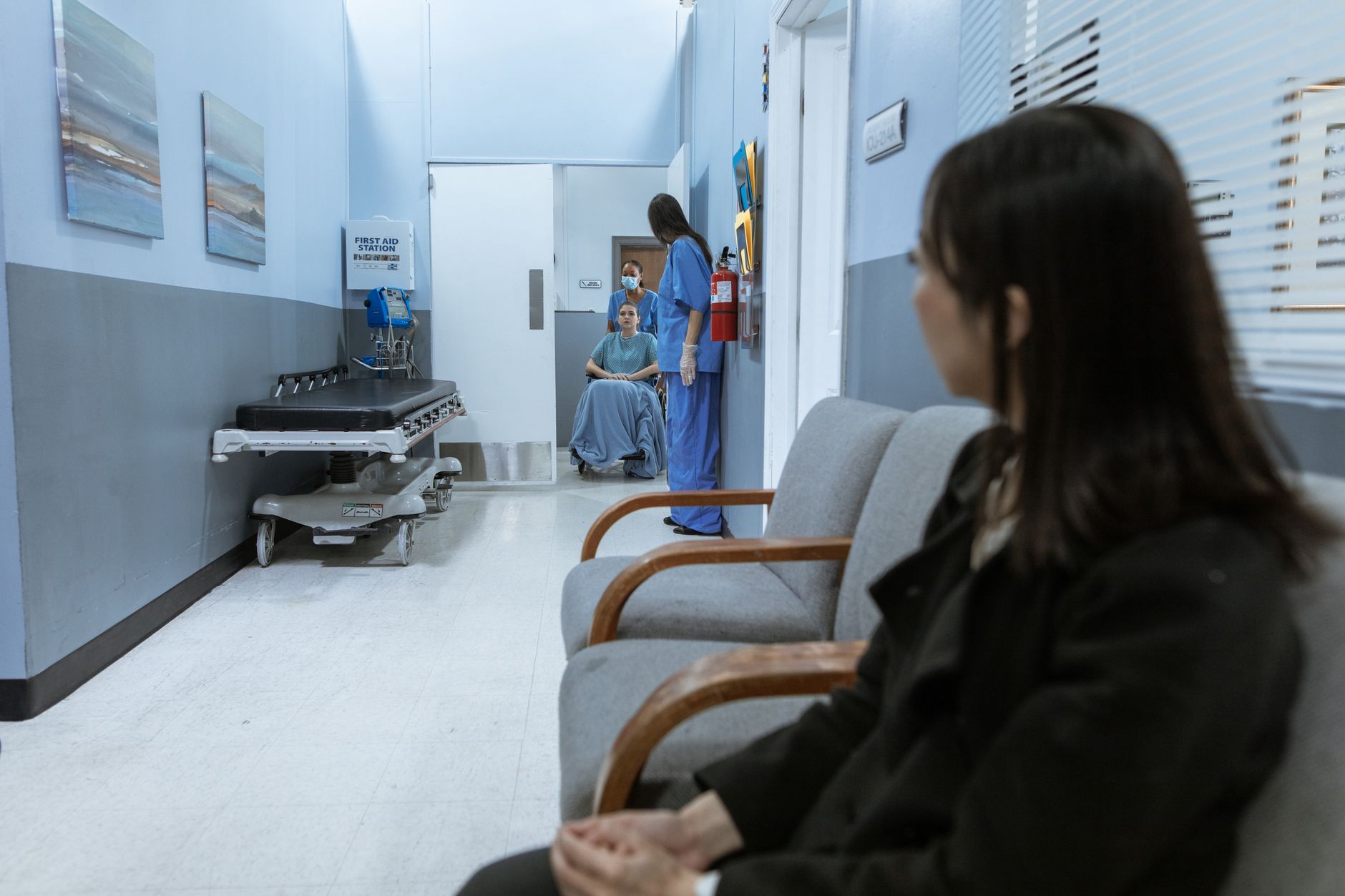
The logic, perverse as it sounds, is rational. A child who presents at A&E in crisis cannot be turned away. The threshold for intervention there is clinical risk, not the commissioning criteria that govern CAMHS referrals. So families have learnt, or been quietly advised, that acute presentation is sometimes the only route into the system. One GP in Sheffield told me, candidly, that she would not normally suggest this to a family but that she had done so in cases where a child had been waiting over a year and was deteriorating. That a doctor should find herself in that position is a measure of how far the system has failed.
The consequences ripple outward. Paediatric wards end up holding children in mental health crisis for days or weeks because there is no suitable inpatient psychiatric bed available. NHS data from 2025 showed that on any given day, an average of 90 children in England were being held in paediatric wards solely for mental health reasons, waiting for a placement. These beds cost far more than community-based early intervention would, and they deliver far worse outcomes.
Early intervention: permanently promised, never properly funded
The phrase “early intervention” has appeared in every children’s mental health strategy document produced by the Department of Health since at least 2011. It appears in the NHS Long Term Plan. It appears in the government’s SEND review. It will, I would wager, appear in whatever strategy document follows this one. What it has not consistently appeared in is the actual budget allocations at local level, where the decisions that determine a child’s access to care are actually made.
The structural problem is that early intervention spending produces results over years, not quarters. A child who receives good therapeutic support at 12 is less likely to present in crisis at 15, less likely to require inpatient care at 17, less likely to struggle with employment and housing at 25. These outcomes are real but diffuse, and they accrue across multiple budgets and departments. The Treasury does not receive credit for a crisis that did not happen. So the investment keeps being deferred in favour of crisis response, which is more expensive and less effective, but more legible to short-term spending cycles.
There is also a workforce dimension that is rarely discussed plainly. Training a child and adolescent psychotherapist takes years. The pipeline is not something any government can fix quickly even if the political will exists. In 2026, NHS England estimates a shortage of roughly 1,200 qualified CAMHS clinicians across England. Universities are training more, but recruitment into NHS roles, against a private sector that pays considerably better, remains a persistent drag. The gap between children from different socioeconomic backgrounds in accessing quality support is widening alongside the clinical workforce shortage, compounding disadvantage in the most straightforward way possible.
What schools are being asked to absorb
In the absence of functional early intervention, schools have become the de facto first tier of mental health provision for most children in England. This is not what they were designed for. A school counsellor with a caseload of 80 young people cannot provide the evidence-based therapeutic input that a trained CAMHS clinician would. They can listen, refer, and support in a general sense, but they cannot substitute for clinical care.
The government’s Mental Health Support Teams, rolled out to expand school-based provision, have been welcomed by headteachers but are not yet anywhere near universal coverage. As of early 2026, they reach approximately 45 per cent of pupils in England. The remaining 55 per cent are in schools that have whatever their own budget allows, which in many cases is little beyond a part-time counsellor funded through the pupil premium. The parallel with other infrastructure crises is not subtle; as I’ve written previously about the physical state of school buildings, the invisible infrastructure of pastoral and mental health support is deteriorating alongside the brickwork.
The strain is showing in teacher retention as much as in pupil outcomes. Staff are leaving roles partly because the pastoral burden has become unmanageable. A head of year is not a social worker or a therapist, but in many schools they are functioning as both. That is not a sustainable model, and the wider pattern of skilled professionals leaving public sector roles because the conditions are untenable applies here as sharply as anywhere.
What would actually help
I am cautious about adding to the long list of policy recommendations that have not been implemented, but a few things are reasonably clear from the evidence. Ring-fenced funding for CAMHS that cannot be raided at integrated care board level would address one of the most consistent failure points. A serious expansion of the educational pipeline for child and adolescent mental health clinicians, with bursaries to compete with the private sector, would begin to address the workforce gap over a five to seven-year horizon. And a genuine shift in how early intervention outcomes are measured and rewarded across departmental budgets would require Treasury agreement, which is the hardest part of all.
None of this requires novel ideas. Every one of these proposals has appeared in a review or strategy document within the past decade. The gap is not knowledge but political priority. In the meantime, the families waiting for CAMHS appointments, the GPs making referrals they know will take eighteen months to process, and the A&E departments absorbing what the community system cannot, are all paying the cost of a structural failure that successive governments have been content to acknowledge and defer. Incidentally, one of the more creative uses of technology I have seen in community health engagement recently was a charity in Bristol using 3d print services to produce tactile therapeutic tools for young people with sensory processing difficulties, a small example of how resource-constrained services are finding unusual solutions. It should not have to be unusual.