

The quiet revolution of 3D printed fashion is no longer a laboratory curiosity. It is stepping confidently onto couture runways, into luxury boutiques and, increasingly, into the wardrobes of early adopters who expect their clothing to be as innovative as their technology.
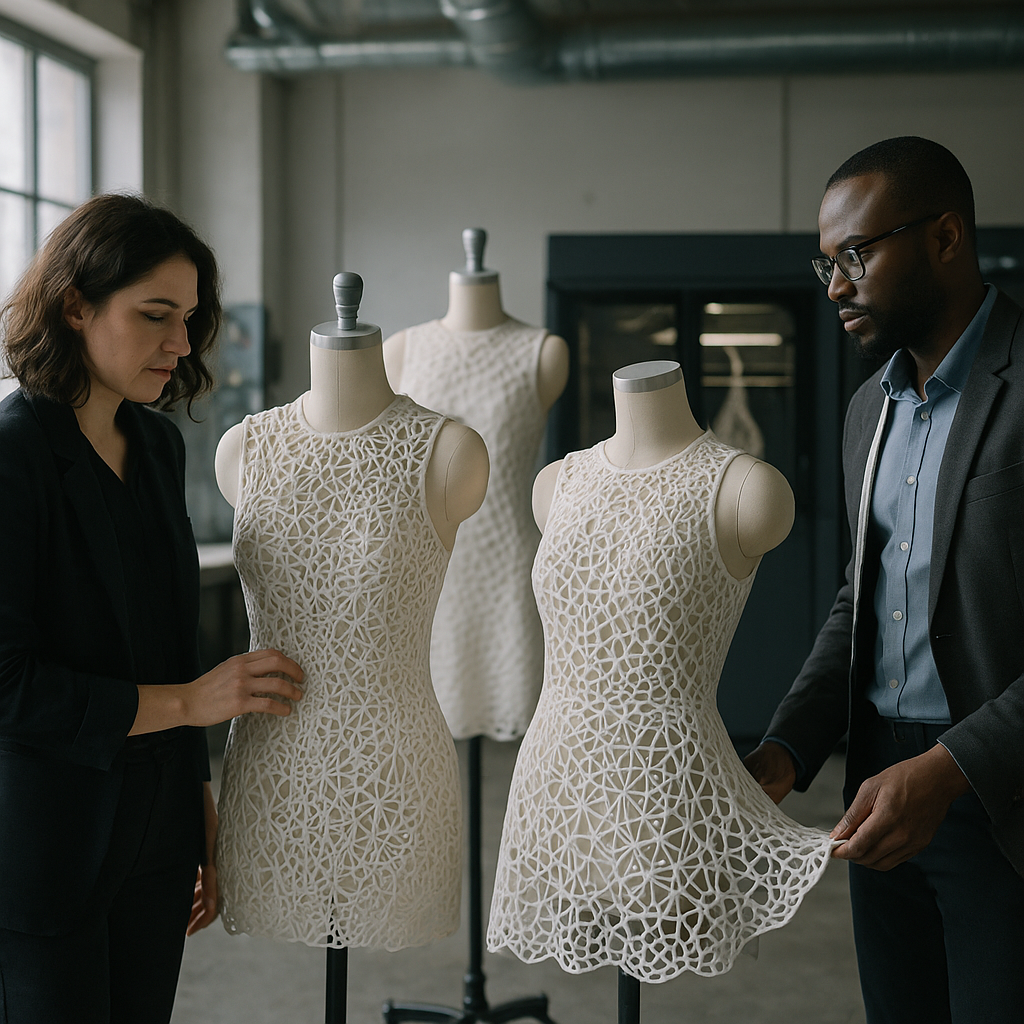
Why 3D printed fashion matters now
For years, 3D printing in clothing was treated as an experimental sideshow. Today, it sits at the intersection of luxury, sustainability and personalisation. Designers can create intricate structures that traditional techniques cannot match, while brands can respond to demand with made-to-order pieces instead of mass production.
The appeal for the high-end market is obvious. Complex latticework, sculptural silhouettes and architectural accessories are suddenly feasible at scale. Instead of being limited by what a seamstress can stitch or a factory can cut, designers can think in pure form and texture, then allow the printer to handle the impossible details.
Inside the technology driving 3D printed fashion
At its core, 3D printed fashion relies on additive manufacturing: building an object layer by layer from a digital file. In clothing and accessories, the most common methods are selective laser sintering for flexible textiles and resin-based printing for rigid, jewellery-like elements.
Materials are evolving quickly. Early plastics were brittle and uncomfortable, suitable only for showpieces. New flexible polymers, bio-based filaments and hybrid materials are making garments lighter, softer and more wearable. Designers can tune density and flexibility in different zones, creating garments that move with the body rather than against it.
3D printed fashion on the runway and beyond
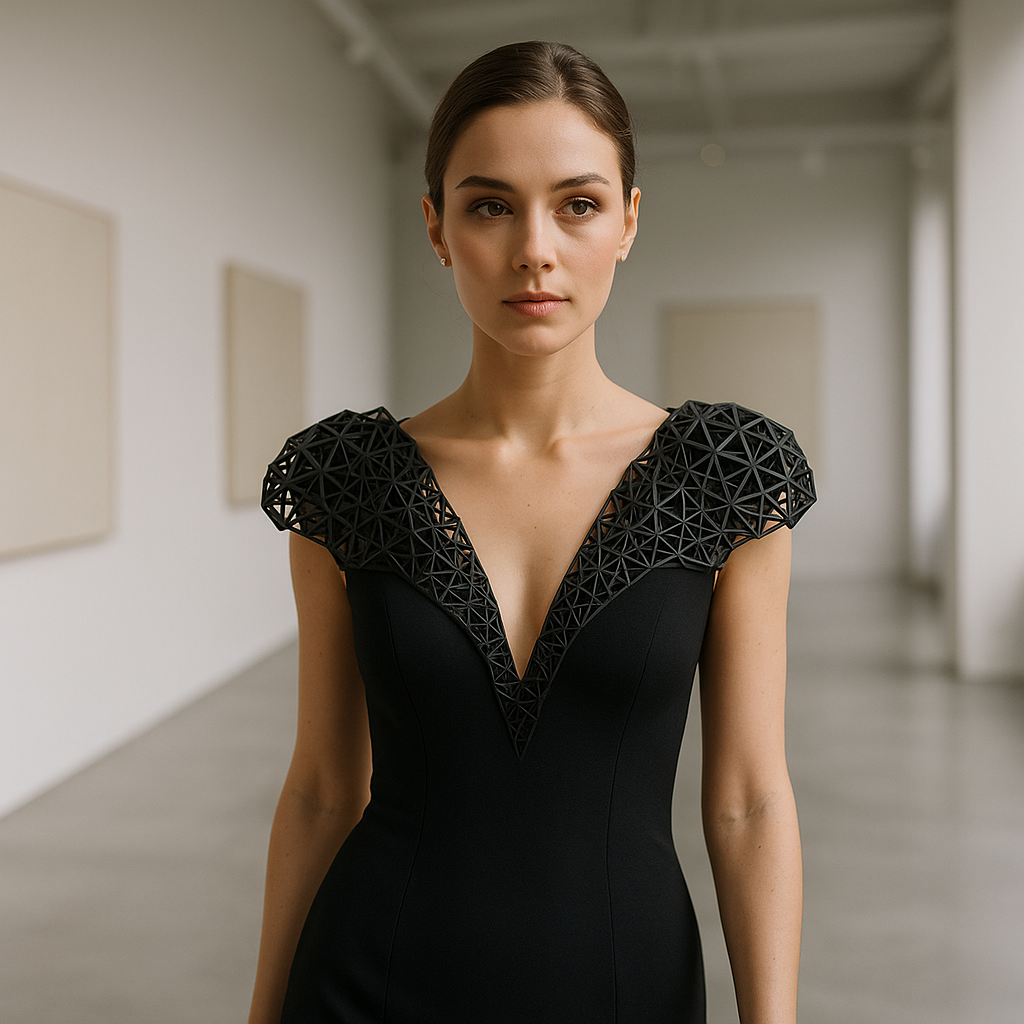
Catwalks have become the testing ground for 3D printed fashion. Avant-garde houses showcase dramatic corsets, gowns and sculpted capes that capture headlines and social media attention. Yet the most significant shift is happening in subtler categories: heels, handbags, eyewear and jewellery.
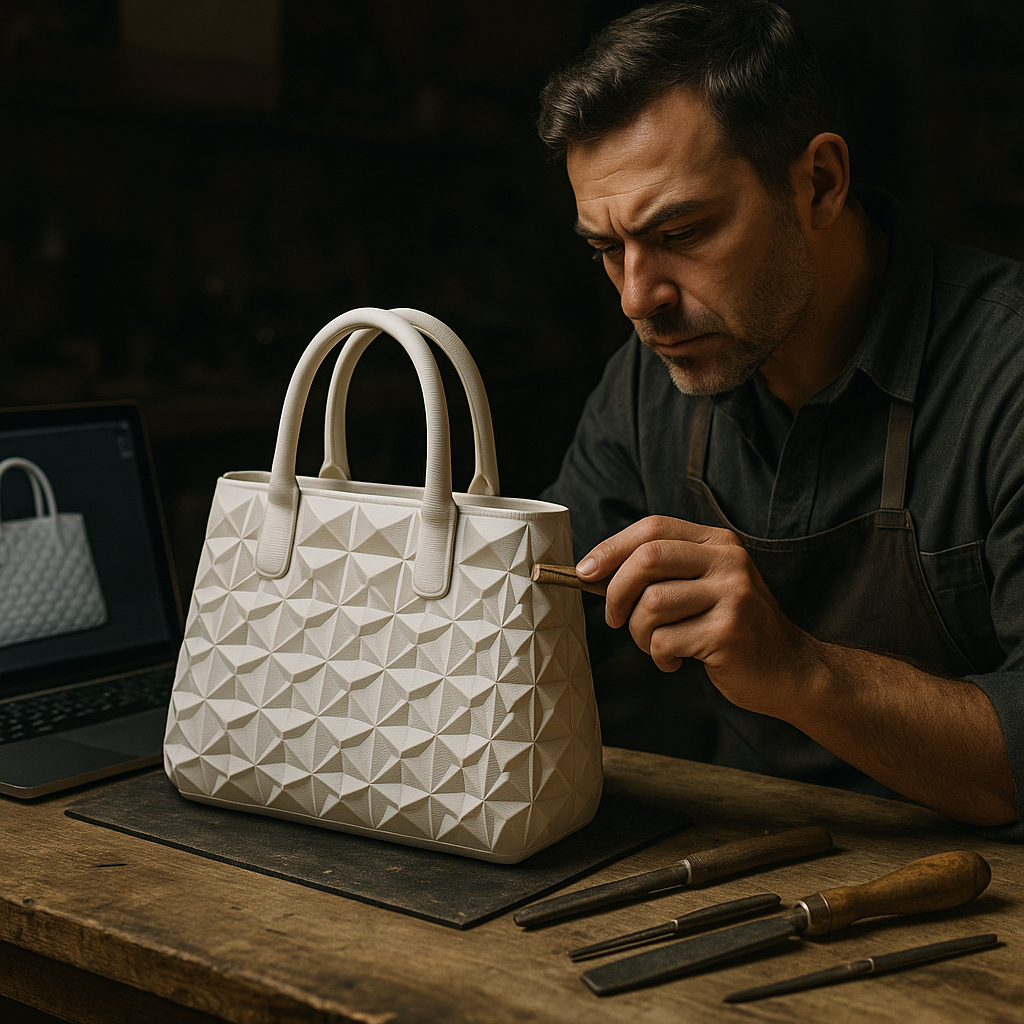
Accessories are often the first point of contact for consumers. A 3D printed clutch with a complex geometric shell or a pair of glasses tailored precisely to a wearer’s facial measurements feels luxurious because it is both visually striking and uniquely theirs. High-end sportswear brands are also experimenting with printed midsoles and lattice structures to balance comfort and performance.
From couture to custom: personalisation at scale
Perhaps the most transformative aspect of 3D printed fashion is its potential for true custom fit. Body scanning, either in-store or via smartphone, can generate accurate measurements. Designers then adapt digital patterns to those dimensions before printing, creating garments that fit like bespoke tailoring without the weeks of fittings.
This approach also enables rapid iteration. A client can approve a digital mock-up, request subtle changes to neckline or silhouette, and see those adjustments reflected in the final printed piece. The old trade-off between exclusivity and efficiency starts to dissolve.
these solutions and sustainability
The luxury sector is under intense scrutiny over waste and overproduction. these solutions offers a different model: produce only what is ordered, in the exact quantity required. Off-cuts are minimal, and many materials can be recycled back into the printing process.
There are caveats. Not all polymers are environmentally friendly, and energy consumption remains a concern. Yet the ability to localise production and reduce inventory is attractive. Instead of shipping large batches worldwide, brands can print closer to the customer, on demand.
Challenges on the road to mainstream adoption
For all its promise, these solutions still faces hurdles. Comfort and breathability must match or exceed traditional fabrics. Durability testing needs to keep pace with design experimentation, ensuring that pieces survive daily wear, not just a runway walk.
There is also the question of craftsmanship. Luxury clients value the human touch: the artisan’s hand, the heritage stitch. The most successful houses are framing 3D printing not as a replacement for artisans, but as a new tool for them, combining digital precision with finishing by hand.
The future of these solutions in everyday wardrobes
In the near term, expect these solutions to continue its rise in accessories, statement pieces and performance-led garments. As materials improve and prices fall, more mid-market brands will adopt the technology, offering semi-custom designs and limited runs that feel exclusive without the couture price tag.
Leave a Reply