There is something deeply peculiar about an energy pricing system that punishes you for using less power. Yet that is precisely what Britain’s standing charge structure does, and the people bearing the heaviest burden are those who can least afford it. The debate around energy standing charges UK Ofgem has finally broken into mainstream political consciousness in 2026, after years of being dismissed as a technicality buried in the small print of your quarterly bill.
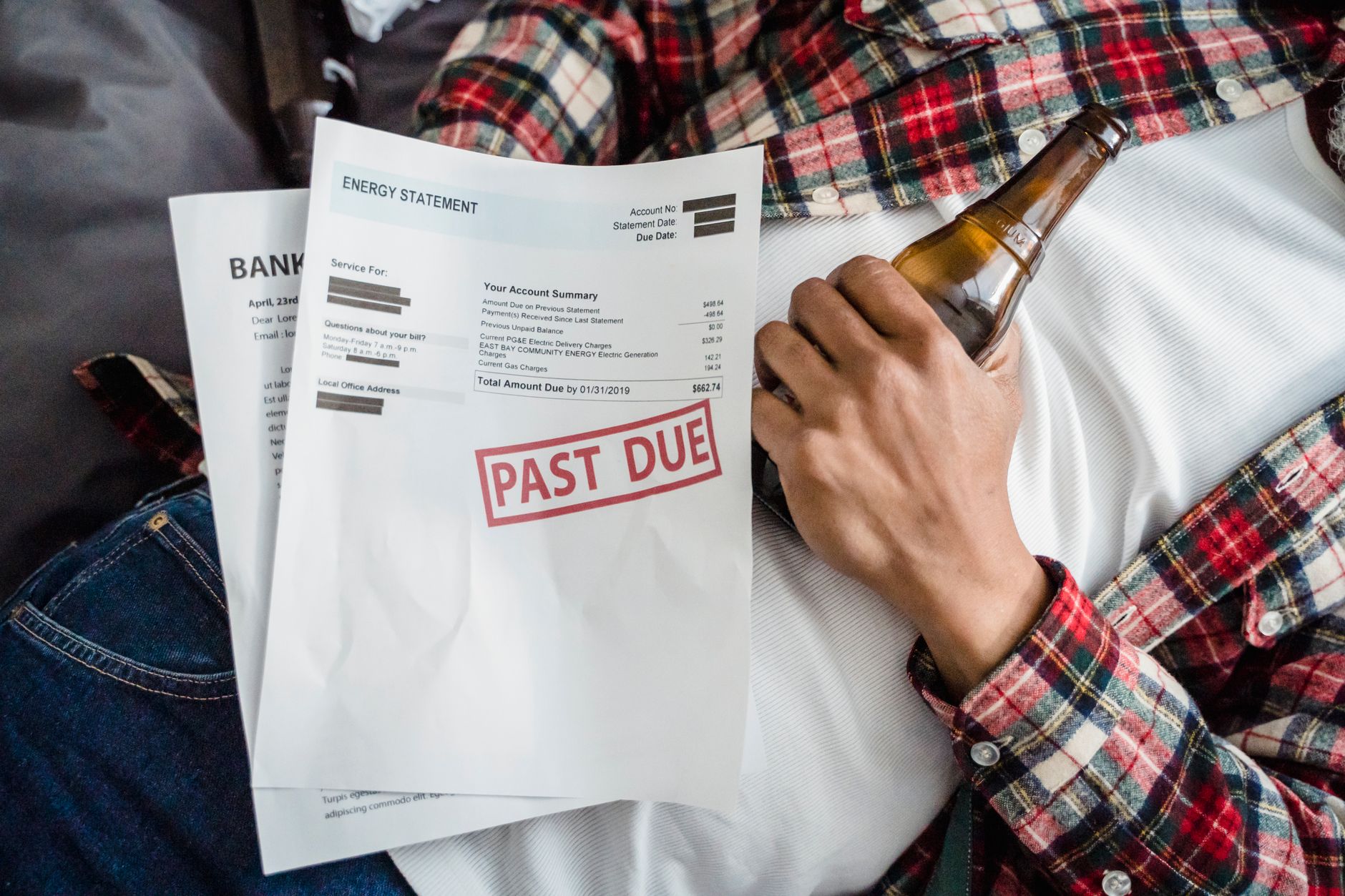
Standing charges are the fixed daily fee every household pays simply for being connected to the gas and electricity networks. They apply regardless of how much energy you consume. Right now, the average electricity standing charge sits at around 61p per day, and gas at roughly 32p per day. That is nearly £340 a year before you have switched a single light on or turned a single hob. For a retired person living alone in a small flat, using minimal power, that flat fee represents an enormous share of their total energy cost, far higher in proportional terms than it does for a large family filling a four-bedroom house.
Why standing charges hit low-consumption households hardest
The mathematics are unforgiving. A household consuming 1,000 kWh of electricity annually might find that standing charges account for 40 to 50 per cent of their total electricity bill. A household consuming 4,000 kWh pays the same standing charge, but it represents perhaps 15 per cent of their bill. The unit rate, the price per kWh, is identical for both. The standing charge is not. In effect, the current model redistributes costs away from heavy users and onto light users, which maps almost perfectly onto a redistribution away from wealthier households and onto poorer ones.
Citizens Advice has been among the most vocal critics of this structure. Its analysis suggests that around 2.2 million households in Britain are classified as low-consumption, typically older people living alone, people with disabilities who spend significant time in bed, or younger renters in small flats who are acutely cost-conscious. For all of them, the standing charge is not an incidental line on a bill. It is a structural tax on simply having a connection.
I’ve spoken to energy advisers who describe the psychological effect as particularly corrosive. Households that have worked hard to cut their usage, installed draught excluders, turned the thermostat down, worn extra layers through winter, find that their bills barely move. The standing charge absorbs much of the saving. That is demoralising in a way that transcends the financial arithmetic.
What Ofgem’s review has actually proposed
Ofgem launched its formal review of standing charges in late 2024, and its proposals, published in stages through 2025 and into 2026, have been more cautious than consumer groups had hoped. The regulator has acknowledged the distributional problem clearly. Its own modelling confirms that standing charges are regressive in precisely the way critics describe. The question it has struggled to answer is what to do about it without creating new problems elsewhere in the pricing structure.
The core Ofgem proposal involves a rebalancing rather than abolition: reducing standing charges and increasing unit rates to compensate. The logic is that heavy users would pay more per kWh whilst light users would see their fixed daily costs fall. Ofgem has also floated the idea of a two-tier standing charge, with a reduced rate for households on the Priority Services Register, those with medical needs or severe financial vulnerability, and a separate rate for everyone else.
What Ofgem has not proposed, and what many consumer organisations wanted, is the complete removal of standing charges for the lowest-income households, replaced by social tariffs funded through general taxation or a levy on energy suppliers. The Ofgem review documentation is candid about why: the regulator believes social tariff design carries risks of its own, including perverse incentives and significant administrative complexity, and that the final shape of any such scheme requires government involvement, not just regulatory action.
Why consumer groups say the model is fundamentally broken
The rebalancing proposal has received a cool reception from groups including Which?, Citizens Advice, and the End Fuel Poverty Coalition. Their argument, which I find persuasive, is that simply shifting costs from standing charges to unit rates does not actually fix anything for the households at the sharp end. Many of those households are already rationing energy to dangerous levels. Raising unit rates would, in practice, mean they pay the same or more for the small amounts they do use, while getting a marginal reduction in their standing charge.
There is also a broader structural critique. Standing charges were originally designed to recover the fixed costs of maintaining the network, the pipes, the wires, the meters. Over time, however, they have become a vehicle for recovering a much wider range of costs, including smart meter rollout expenses, some supplier operating costs, and elements of debt recovery from customers who have defaulted. Critics argue that bundling all of this into a daily fixed charge and applying it uniformly is indefensible on any distributional grounds.
The parallel with other utilities is striking. Water bills in England and Wales, regulated by Ofwat, do not operate on a standing charge model in the same way. The idea that energy, an essential service with no realistic substitute, should impose a substantial fixed daily levy on connection alone strikes many consumer advocates as a policy choice rather than an economic necessity. One that has simply not been seriously interrogated until the cost-of-living pressures of recent years forced the question.
The political dimension that Ofgem cannot resolve alone
The regulator’s hands are partly tied by the fact that this is not purely a technical question. It intersects directly with questions of welfare policy, taxation, and the design of social support. The Warm Home Discount scheme, administered through HMRC and the Department for Energy Security and Net Zero, provides some mitigation for low-income households, but its scope is limited and its targeting imperfect. Around £150 a year does not come close to offsetting standing charges for those who use very little energy beyond the fixed cost of connection.
The debates here are not dissimilar, in structural terms, to arguments I’ve covered previously about other systems that carry costs regressively. The way Britain’s charity sector funding crisis has forced vulnerable people to rely on a patchwork of support rather than coherent policy, or the way that the collapse of legal aid left millions unable to access essential services, both reflect a pattern where the people with the fewest options absorb the largest proportional costs of a system designed primarily around average consumption.
Energy is, if anything, a more acute case, because unlike legal services or cultural institutions, people cannot simply forgo it. The household that cannot afford to run its heating is not making a lifestyle choice. It is rationing a necessity, and the current standing charge structure ensures that even that rationing delivers only partial financial relief.
The political pressure in 2026 is growing. Several Labour backbenchers have tabled amendments to energy legislation calling for a mandatory social tariff. The Liberal Democrats have made standing charge reform a flagship consumer policy. Whether Ofgem’s cautious rebalancing proposals will satisfy that pressure, or whether they will simply defer the harder structural questions onto the next policy cycle, remains genuinely unclear. My reading of the Ofgem documentation is that the regulator knows the current model is broken but lacks both the mandate and the tools to fix it unilaterally. That, ultimately, is a political failure more than a regulatory one. And Britain’s lowest-consumption households are paying for it, literally, every single day.
For context on how other essential services have similarly failed the most financially exposed households, the picture in children’s mental health provision makes for uncomfortable parallel reading.
Frequently Asked Questions
What is an energy standing charge in the UK?
A standing charge is a fixed daily fee you pay your energy supplier simply for being connected to the gas or electricity network, regardless of how much you actually use. In 2026 the average electricity standing charge is around 61p per day and gas around 32p per day, adding up to roughly £340 a year before any usage costs.
Why are standing charges considered unfair to low-income households?
Because the charge is fixed regardless of consumption, it represents a much larger share of the total bill for households that use very little energy. A pensioner living alone who uses 1,000 kWh a year can find that standing charges account for nearly half their electricity bill, whereas a high-consumption household pays the same charge but it represents a fraction of their total cost.
What has Ofgem proposed to change about standing charges?
Ofgem has proposed rebalancing rather than abolishing standing charges, reducing the daily fixed fee and increasing per-unit rates to compensate. It has also suggested a reduced standing charge tier for households on the Priority Services Register. Critics argue this approach does not adequately protect households that are already rationing energy to dangerous levels.