
There is a revolution quietly under way across the fields of Britain, and it has nothing to do with the weather. The phased withdrawal of the Basic Payment Scheme, which for decades provided a financial floor beneath every eligible landowner, is accelerating into its most consequential years. In its place, DEFRA’s Environmental Land Management schemes, known collectively as ELMs, are demanding that farmers essentially reinvent their relationship with the land. For many, that is an extraordinary opportunity. For others, it is the beginning of the end.
The British farming subsidy overhaul is not simply a policy adjustment. It is, by any honest assessment, a structural transformation of rural England, Wales and Scotland, one that will determine what grows in these fields, who owns the land, and whether domestic food production remains a national priority or quietly retreats in favour of carbon credits and curated wildflower meadows.
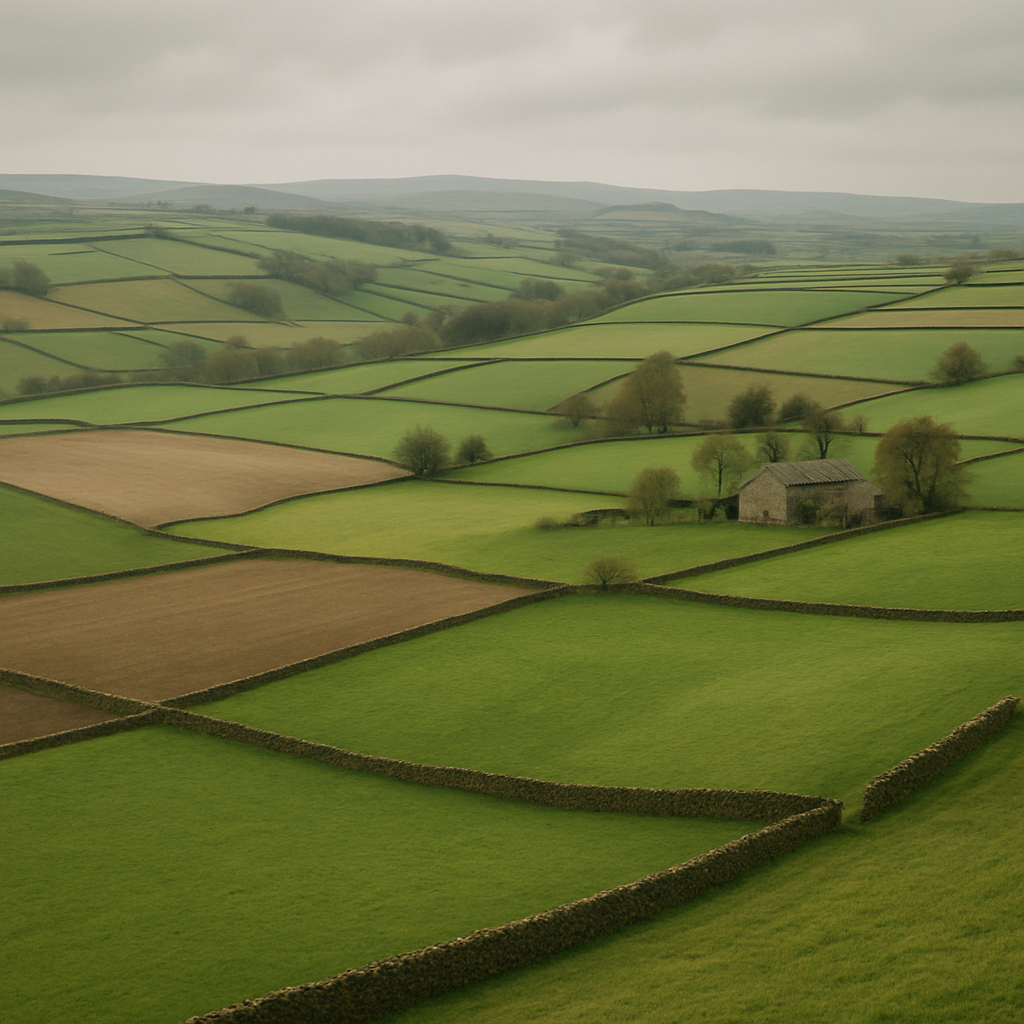
What the End of the Basic Payment Scheme Actually Means
Under the old Basic Payment Scheme, inherited from the EU’s Common Agricultural Policy, farmers received direct payments linked largely to how much land they owned or managed. The system was blunt, often inequitable, and rewarded landholding rather than productivity or environmental stewardship. But it was predictable. A tenant farmer in Lincolnshire or a hill farmer in Snowdonia could plan a business around it.
Those payments are now being reduced in a series of annual cuts, with the final phase-out expected by 2028 for England. The Welsh Government is pursuing its own Sustainable Farming Scheme, which has faced fierce opposition from the Farmers Union of Wales, who argue that its universal 10% land management requirement is impractical for mixed and upland farms. Scotland, still operating under its own CAP-derived system via the Scottish Government, is moving more cautiously, with its Agricultural Reform Programme drawing heavy criticism for the pace and ambiguity of transition.
The numbers are stark. According to the Agriculture and Horticulture Development Board, direct payments have historically accounted for between 50% and 80% of farm income for many English farms. Removing that without a seamless replacement is not restructuring. For smaller operations, it is closer to elimination.
ELM Schemes: Opportunity or Obligation?
DEFRA’s Environmental Land Management framework comprises three tiers: the Sustainable Farming Incentive, Countryside Stewardship, and Landscape Recovery. The theory is elegant. Farmers are paid for delivering public goods, clean water, biodiversity, carbon sequestration, flood mitigation, rather than simply for owning acres.
In practice, the transition has been complicated. The Sustainable Farming Incentive, the most accessible entry point, has been repeatedly revised since its rollout. Payment rates have been cut, actions have been removed and reintroduced, and the administrative burden has drawn consistent criticism. The National Farmers’ Union has raised formal concerns about DEFRA’s decision in early 2025 to reduce SFI payment rates and close the scheme to new applicants temporarily, leaving farmers who had structured business plans around participation without a clear path forward.
Landscape Recovery, the most ambitious tier, funds large-scale rewilding and habitat restoration projects. These are transformational by design, but they require land areas and capital that place them beyond the reach of most family farms. The beneficiaries tend to be larger estates and conservation bodies, a fact that has not gone unnoticed in farming communities.

Farmers Speak: From the Fens to the Welsh Hills
Across England, the picture is uneven. Arable farmers in East Anglia, who operate at scale and can absorb some of the SFI actions into existing practice, are generally better placed than their upland counterparts. A cereal grower in Cambridgeshire farming 400 hectares can layer SFI payments across a wide range of actions and still maintain a viable margin. A hill farmer in the Brecon Beacons running 200 ewes on common land is in an entirely different situation.
Several farmers operating in the Yorkshire Dales have spoken publicly about the impossibility of meeting ELM environmental requirements without fundamentally changing or abandoning livestock enterprises that have sustained their families for generations. Some are selling parcels of land to cover immediate cash shortfalls. Others are entering into agreements with rewilding organisations, which offer lease arrangements that provide income but effectively remove the land from food production.
In Scotland, the pace of change has been slower but no less uncertain. The Scottish Government’s Agricultural Reform Programme has extended its transition timelines repeatedly, which some farmers welcome as breathing space and others read as institutional paralysis. Meanwhile, larger Scottish estates are attracting significant investment from carbon market buyers, raising uncomfortable questions about who the rural landscape is actually being managed for.
The Food Security Question Nobody Wants to Answer
The central tension in this entire debate is one that policymakers have struggled to articulate honestly. Britain cannot simultaneously maximise domestic food production, achieve ambitious biodiversity targets, and hit net-zero commitments on agricultural land. These goals are not always compatible. Trade-offs exist, and at present, the weight of policy incentives appears to be tilting towards environmental outcomes over food output.
The UK Government’s Food Security Report, published in 2024, acknowledged that the country’s self-sufficiency ratio for indigenous-type foods has declined from around 78% in the mid-1980s to approximately 62% today. That is a significant erosion. The report stops well short of recommending that food production be prioritised above environmental goals, but the data it contains makes the stakes unmistakably clear.
If smaller farms continue to exit the sector, if upland grazing is replaced by scrub and carbon plots, and if tenant farmers find no viable route into ELM schemes because they lack the security of tenure needed to commit to ten-year agreements, then Britain’s agricultural productive capacity will shrink. Quietly, gradually, and largely out of view.
Diversification, Rewilding and the Hard Choices Ahead
Not every farm facing this transition is in crisis. Some have moved decisively into diversification, farm shops, glamping, educational visits, and artisan food production, creating businesses that are genuinely robust without reliance on subsidy. Others are embracing regenerative agriculture, finding that healthier soils reduce input costs enough to compensate for lost payments over time. These are genuine success stories, and they deserve telling.
Rewilding, too, has a legitimate place in this landscape. Projects such as those run by Rewilding Britain are producing measurable ecological benefits, and there is real public appetite for the restoration of lost habitats. The issue is not whether rewilding should exist, but whether policy is creating the conditions for it to proceed at the expense of food-producing farms rather than alongside them.
Older farm buildings undergoing renovation as part of diversification projects sometimes uncover legacy issues from earlier eras of construction. Fibre cement roof sheets, old guttering and fascias on agricultural buildings can contain hazardous materials, and specialist services such as asbestos gutter removal are increasingly in demand as farms repurpose Victorian and mid-century outbuildings for new uses. It is a small but telling detail: modernising the British farm means confronting its entire history, not just its economics.
What Needs to Change
The British farming subsidy overhaul is not inherently flawed in its ambition. Paying farmers to deliver environmental goods is a coherent philosophy, and the old system had real problems. But the execution has been marked by instability, insufficient transition support, and a failure to resolve the fundamental tension between environmental and food production goals.
What farmers across England, Wales and Scotland are asking for is not a return to the past. They are asking for clarity, consistency, and a frank acknowledgement from government that food security is a public good as important as biodiversity. Until that acknowledgement is written into policy with the same conviction as the environmental targets, the precipice will remain where it is. And more farms will quietly go over it.
Frequently Asked Questions
What is replacing the Basic Payment Scheme for farmers in England?
The Basic Payment Scheme is being replaced by DEFRA’s Environmental Land Management schemes, which include the Sustainable Farming Incentive, Countryside Stewardship, and Landscape Recovery. These schemes pay farmers for delivering environmental benefits such as improved biodiversity, cleaner waterways and carbon storage, rather than simply for owning or managing land.
How much income do British farmers stand to lose from subsidy withdrawal?
For many farms, direct payments have historically represented between 50% and 80% of total farm income, according to the Agriculture and Horticulture Development Board. The scale of financial impact varies significantly depending on farm type and size, with upland and smaller livestock farms among the most exposed.
Are Welsh and Scottish farmers affected by the same changes as those in England?
Each of the devolved nations is managing its own agricultural transition. Wales is introducing a Sustainable Farming Scheme that has faced significant opposition from the Farmers Union of Wales, while Scotland’s Agricultural Reform Programme has proceeded more slowly under the Scottish Government. All three nations are moving away from area-based payments, but at different rates and with different policy frameworks.
Will rewilding replace farming on British land?
Rewilding is growing as a land use option, particularly on larger estates and through projects supported by conservation organisations, but it is unlikely to replace conventional farming wholesale. The concern among many in the sector is that current policy incentives favour environmental schemes over food production, which could gradually reduce Britain’s agricultural output without any explicit political decision to do so.
What does the British farming subsidy overhaul mean for food prices in the UK?
If domestic food production declines as a result of farm exits and land use change, Britain becomes more reliant on imports, which exposes consumers to greater price volatility tied to global commodity markets and exchange rates. The UK Government’s own Food Security Report noted that domestic self-sufficiency in indigenous foods has fallen from around 78% in the mid-1980s to approximately 62% today, a trend that subsidy reform could accelerate if not carefully managed.