
Author: Sophie Davis

  • The Collapse of Legal Aid: How Britain Left Millions Without Access to Justice

    The Collapse of Legal Aid: How Britain Left Millions Without Access to Justice

    There is a phrase that appears, with grim regularity, in the transcripts of English and Welsh court proceedings: litigant in person. It is the polite legal designation for someone who has turned up to argue their own case because they cannot afford a solicitor and the state has decided they are not entitled to one. In family courts, housing tribunals, immigration hearings and employment disputes, these individuals sit across from professionally represented opponents, clutching folders of printed emails and handwritten notes, attempting to navigate a system that took trained lawyers years to understand. The legal aid crisis UK 2026 has made this scene not an exception but a routine feature of British justice.
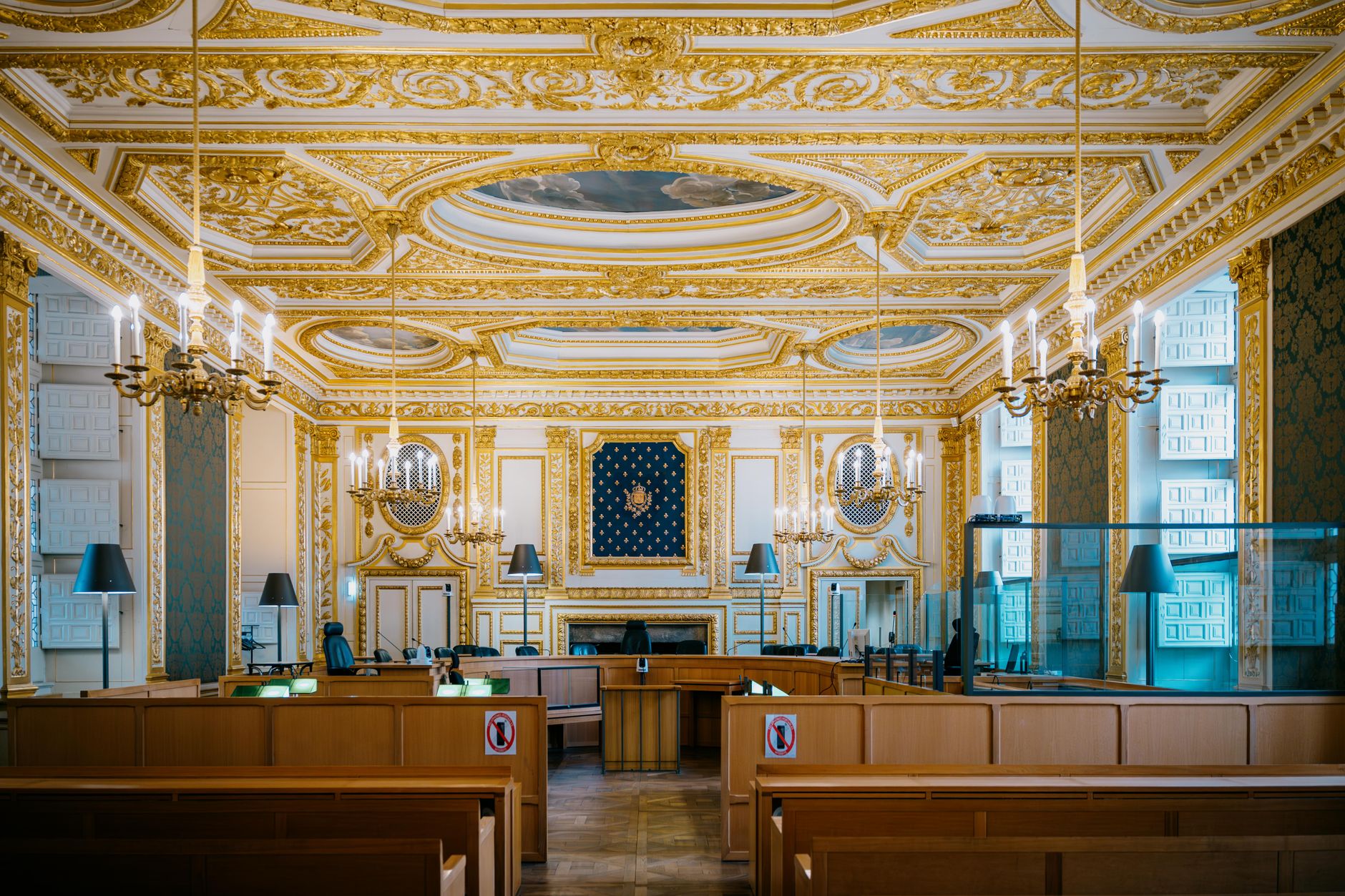
    Empty English courtroom representing the legal aid crisis UK 2026 and access to justice
    Photo by Thanh Ly on Pexels

    What the Legal Aid, Sentencing and Punishment of Offenders Act 2012 actually did

    The story begins with LASPO, the Legal Aid, Sentencing and Punishment of Offenders Act 2012, which came into force in April 2013 under the coalition government. It was sold as a fiscal necessity: the Ministry of Justice needed to cut roughly £350 million from its legal aid budget, and ministers argued that the system had become bloated and open to abuse. What followed was one of the most consequential contractions of civil legal entitlement in the country’s modern history.

    Entire categories of law were stripped from scope. Private family law, most housing matters, employment disputes, welfare benefits appeals, immigration cases not involving asylum, all of it removed, at a stroke, from the list of matters for which the state would fund legal representation. According to the Ministry of Justice’s own legal aid statistics, the number of civil legal aid matters started fell from approximately 930,000 in 2012-13 to under 130,000 by 2022-23. That is not a reduction. It is a near-elimination.

    Criminal legal aid was cut more gradually but cut nonetheless. Solicitor firms doing legal aid criminal work have seen their rates largely frozen or only marginally uplifted for much of the past decade, while their overheads have risen sharply. The Law Society estimates that around 1,500 solicitor firms did criminal legal aid work in 2010; by 2025 that number had roughly halved. In some parts of England and Wales, particularly rural counties and coastal towns, there are now what practitioners call “legal aid deserts”, areas where finding a firm that will take a legally aided criminal case requires travelling thirty miles or more.

    Who bears the weight of these cuts

    The people most affected by the legal aid crisis UK 2026 are not a difficult group to identify. They are, broadly, the same people affected by most austerity-era contractions: those on low incomes, those navigating complex bureaucracies, those whose problems intersect law with poverty. A mother fleeing domestic abuse who needs a non-molestation order. A tenant facing unlawful eviction. A disabled person appealing a Universal Credit decision that has removed their income. A refugee who cannot afford an immigration lawyer but whose asylum claim contains a genuine complexity that could make the difference between safety and deportation.

    The Law Society and the charity Citizen’s Advice have both documented the consequences repeatedly. Problems that could have been resolved cheaply and early, with half an hour of legal advice, instead spiral into crises because the person had nowhere to turn. By the time a housing dispute reaches court, the costs to the system are vastly higher than the advice session that might have prevented it. This is the cruel arithmetic of the cuts: they saved money in the Ministry of Justice’s budget whilst shifting costs onto the NHS, local councils, the housing system and the courts themselves.

    The litigants in person problem is now a structural crisis

    Family courts have been particularly overwhelmed. In 2013, before LASPO fully bit, around 35% of private family law cases involved at least one litigant in person. By the early 2020s that figure had passed 80% in some court centres. Judges, who are constitutionally obliged to remain impartial, find themselves in the impossible position of managing hearings where one party is a barrister and the other is a recently divorced parent who has never been inside a courtroom before. Cases take longer. Transcripts run to hundreds of pages. The court’s time is consumed not with adjudicating the legal question but with explaining basic procedure.

    I’ve read through several Judicial College reports on this, and the frustration from the judiciary is barely concealed. Litigants in person are not a nuisance, they are people who have every right to be there. But they make hearings take two to four times as long as equivalent cases with representation on both sides. The backlog compounds. The cost to the taxpayer in judge time, court administration and delayed resolution arguably exceeds whatever LASPO saved in the first place. This is, I’d argue, one of the most spectacular own goals in recent public policy.

    The same dynamic operates in the immigration tribunal system, which is separately but equally stretched. Complex asylum claims, where the factual matrix might span three countries and a decade of persecution, are being argued by individuals who speak English as a second or third language, against Home Office presenting officers who do this every day. The procedural inequality is stark. And it connects, in ways that are uncomfortable to confront, to some of the broader debates about who Britain considers entitled to institutional protection, a theme I’ve written about in the context of how the state applies its powers selectively across different communities.

    Criminal legal aid: the slow-motion collapse

    On the criminal side, the trajectory is equally alarming, if slightly less visible to the public. The Criminal Bar Association’s strike action in 2022, barristers refusing legally aided work for months, was the most dramatic symptom, but the underlying illness predates it by years. Junior criminal barristers were earning less in real terms in 2022 than their predecessors in 2003, according to the Criminal Bar Association’s own analysis. Talented law graduates who might once have built careers in legal aid criminal work are choosing commercial chambers instead, or leaving the Bar entirely.

    The consequence is that criminal defence of adequate quality is becoming harder to obtain. In a system where the right to a fair trial is foundational, this matters enormously. The government did implement a 15% uplift to criminal legal aid rates following the 2022 strikes, an improvement, but one that still left rates substantially below what the independent Bellamy Review had recommended as necessary to stabilise the sector.

    Does Labour’s review offer a genuine path out?

    The Labour government, which came to power in July 2024, commissioned a review of civil legal aid shortly after taking office. Ministers have spoken with evident sincerity about restoring access to justice. The Lord Chancellor has acknowledged that the current system is not functioning as it should. There has been welcome rhetoric about reinstating legal aid for early advice in housing and family matters.

    The question is funding. The Treasury’s position is hardly generous, and restoring civil legal aid to anything approaching pre-2013 coverage would cost several hundred million pounds annually. The same fiscal pressures that drove cuts under the coalition have not evaporated. Labour inherited significant spending commitments and a constrained fiscal envelope. What the review is likely to produce, in my reading of the situation, is a targeted restoration in high-priority areas, domestic abuse, perhaps early housing advice, rather than a comprehensive reinstatement of scope. That would be meaningful. It would not be sufficient.

    There is also the question of the profession itself. Even if funding were restored tomorrow, rebuilding the solicitor firms, legal aid contracts and court-facing advice services that have closed over the past decade would take years. The infrastructure for legal aid delivery has atrophied in ways that money alone cannot quickly reverse. This mirrors patterns I’ve observed in other areas of public service reform, where the voluntary and advice sector that often picks up the slack is itself under severe financial strain.

    What is certain is that the cost of inaction is not zero. It is borne by people who lose homes they should have kept, by children separated from parents in proceedings they barely understood, by defendants convicted when proper representation might have identified a defence. Justice that is available only to those who can afford it is not justice in any meaningful sense. It is a service for the comfortable, funded by the public but reserved for those who do not need the public’s help.

    The legal aid crisis UK 2026 is not a niche policy problem. It sits at the core of what kind of country Britain wants to be. And the answer, at the moment, is one it should be ashamed of. For related context on how economic pressures are reshaping who gets what in Britain, the picture painted by the pressures facing older workers navigating an increasingly complex benefits and employment landscape is instructive: the same people losing legal aid are often the same people least equipped to fight bureaucratic systems without it.

    Frequently Asked Questions

    What is legal aid and who is eligible for it in England and Wales in 2026?

    Legal aid is state-funded legal assistance for people who cannot afford to pay privately. In England and Wales, eligibility depends on both the type of case (it must fall within the current scope of legal aid) and a means test assessing your income and capital. Since 2013, large areas of civil law including most private family disputes, employment and housing matters were removed from scope, meaning many people are ineligible regardless of how little they earn.

    How much has legal aid spending fallen in England and Wales?

    Civil legal aid volumes fell dramatically after the Legal Aid, Sentencing and Punishment of Offenders Act 2012 came into force. The number of civil legal aid matters started dropped from around 930,000 in 2012-13 to under 130,000 a decade later, according to Ministry of Justice statistics. Criminal legal aid spending also fell in real terms as rates were largely frozen whilst costs rose.

    What is a litigant in person and why are there so many in UK courts?

    A litigant in person is someone who represents themselves in court without a solicitor or barrister. Their numbers have soared since legal aid cuts removed funding for private family law, housing and other civil matters. In some family court centres, over 80% of private law cases now involve at least one unrepresented party, significantly slowing proceedings and increasing the burden on judges.

    Is Labour restoring legal aid in 2026?

    The Labour government launched a review of civil legal aid after taking office in 2024 and has signalled intent to restore some early advice services, particularly in housing and domestic abuse cases. However, a full restoration to pre-2013 scope would cost hundreds of millions of pounds annually, and the Treasury’s position remains constrained. Most legal professionals expect a targeted rather than comprehensive expansion.

    Are there legal aid deserts in England and Wales?

    Yes. A legal aid desert refers to a geographic area where very few or no solicitor firms hold legal aid contracts, forcing residents to travel long distances to access publicly funded legal help. Rural counties and some coastal towns are particularly affected in criminal law, where the number of firms doing legally aided criminal work has roughly halved since 2010.

  • Children’s Mental Health Provision in England Is in Freefall, and CAMHS Waiting Lists Tell Only Half the Story

    Children’s Mental Health Provision in England Is in Freefall, and CAMHS Waiting Lists Tell Only Half the Story

    The headline figures are bad enough. Across England, more than 400,000 children and young people are currently waiting for mental health support through Child and Adolescent Mental Health Services, according to NHS data published earlier this year. But the number itself is almost beside the point. What CAMHS waiting lists cannot capture is the texture of the crisis: the 14-year-old sitting with her GP for the fourth appointment in three months because there is nowhere else to refer her, the exhausted school counsellor absorbing caseloads that would test a senior clinician, the parent ringing 111 at 2am because their child is in crisis and the local crisis team is at capacity.

    Young person in a therapy session, representing the realities behind CAMHS waiting lists in England
    Photo by Mikhail Nilov on Pexels

    I’ve spoken to parents, clinicians, and charity workers across the Midlands and the North over the past few weeks, and the picture they describe is not one of isolated failure. It is systemic. The architecture of children’s mental health provision in England was already strained before the pandemic; what happened after 2020 did not create the problem, it simply removed the last structural buffers. What we are left with is a service that is, in many areas, operating as a crisis response rather than a health service.

    The postcode lottery that determines a child’s chances

    Provision varies so dramatically between NHS integrated care board areas that it is genuinely difficult to describe CAMHS as a single national service. In some parts of London, children with moderate anxiety can access therapy within eight weeks. In rural areas of Lincolnshire, Cumbria, and coastal Suffolk, the same referral might result in a wait of eighteen months or more. The NHS England data dashboard for children’s mental health shows access rates ranging from under 30 per cent to over 50 per cent depending on the integrated care board, yet national targets treat these areas as equivalent.

    This is not simply a staffing problem, though staffing is acute. It is also a commissioning problem. Integrated care boards have significant discretion over how mental health budgets are allocated, and children’s services have historically lost out in competition with urgent adult provision. The children’s mental health charity Young Minds has been raising this point for years, but in 2026 the evidence has become harder to dismiss. Referral thresholds in some areas have been raised so high that children presenting with moderate depression and self-harm are told they do not meet criteria for CAMHS intervention, and are instead directed towards school-based support that is itself chronically underfunded.

    Why children keep ending up in A&E

    A&E is not a mental health setting. The wards are loud, the waits are long, and the staff, however well-meaning, are not trained as child psychiatrists. Yet for thousands of children each year, a trip to the emergency department is the only point of genuine contact with mental health provision they will get. NHS England figures show that mental health presentations by under-18s at A&E increased by around 22 per cent between 2019 and 2025, and the trend has not reversed.

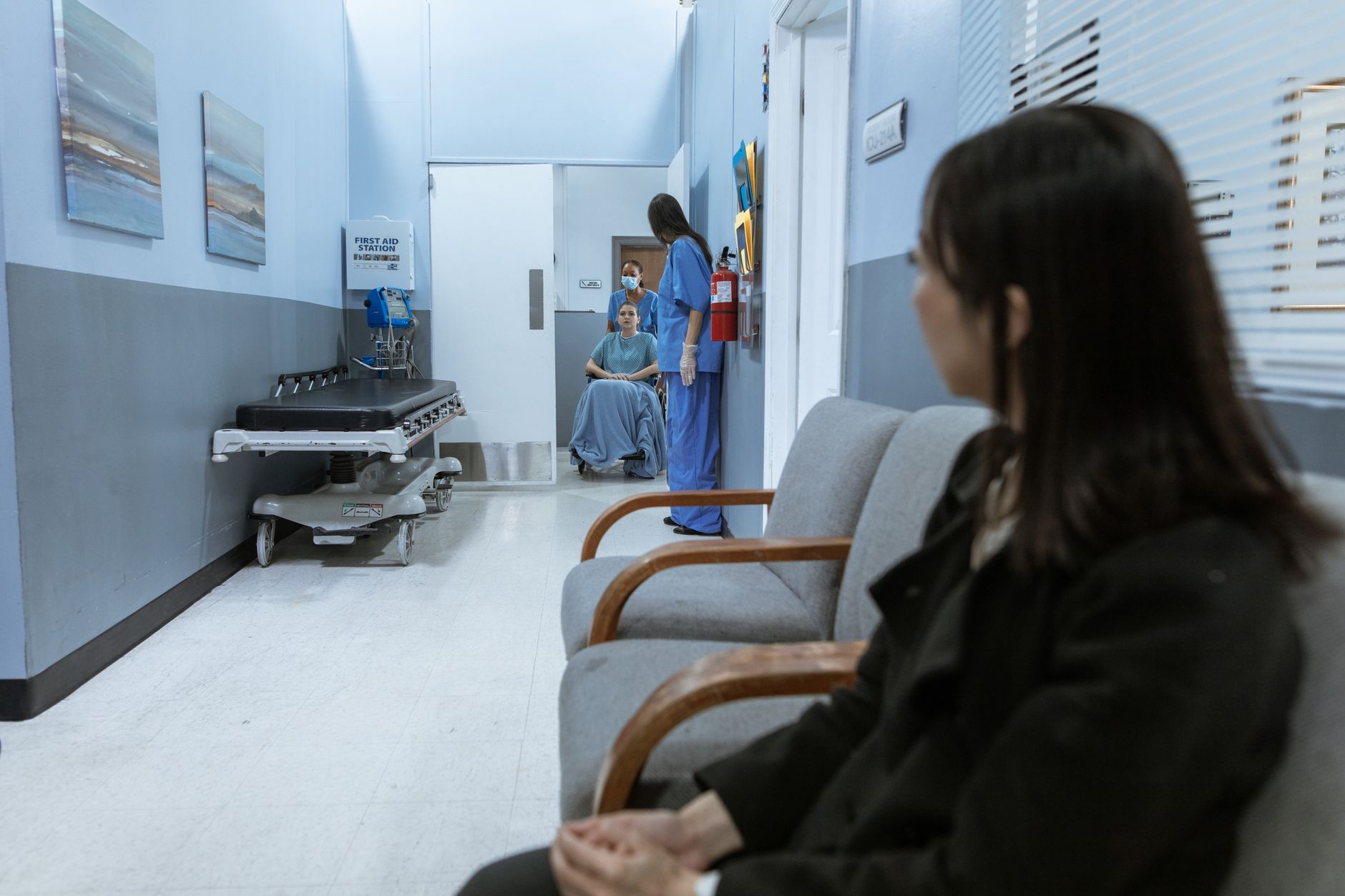
    Child waiting in A&E, illustrating the pressure on emergency departments caused by CAMHS waiting list failures
    Photo by RDNE Stock project on Pexels

    The logic, perverse as it sounds, is rational. A child who presents at A&E in crisis cannot be turned away. The threshold for intervention there is clinical risk, not the commissioning criteria that govern CAMHS referrals. So families have learnt, or been quietly advised, that acute presentation is sometimes the only route into the system. One GP in Sheffield told me, candidly, that she would not normally suggest this to a family but that she had done so in cases where a child had been waiting over a year and was deteriorating. That a doctor should find herself in that position is a measure of how far the system has failed.

    The consequences ripple outward. Paediatric wards end up holding children in mental health crisis for days or weeks because there is no suitable inpatient psychiatric bed available. NHS data from 2025 showed that on any given day, an average of 90 children in England were being held in paediatric wards solely for mental health reasons, waiting for a placement. These beds cost far more than community-based early intervention would, and they deliver far worse outcomes.

    Early intervention: permanently promised, never properly funded

    The phrase “early intervention” has appeared in every children’s mental health strategy document produced by the Department of Health since at least 2011. It appears in the NHS Long Term Plan. It appears in the government’s SEND review. It will, I would wager, appear in whatever strategy document follows this one. What it has not consistently appeared in is the actual budget allocations at local level, where the decisions that determine a child’s access to care are actually made.

    The structural problem is that early intervention spending produces results over years, not quarters. A child who receives good therapeutic support at 12 is less likely to present in crisis at 15, less likely to require inpatient care at 17, less likely to struggle with employment and housing at 25. These outcomes are real but diffuse, and they accrue across multiple budgets and departments. The Treasury does not receive credit for a crisis that did not happen. So the investment keeps being deferred in favour of crisis response, which is more expensive and less effective, but more legible to short-term spending cycles.

    There is also a workforce dimension that is rarely discussed plainly. Training a child and adolescent psychotherapist takes years. The pipeline is not something any government can fix quickly even if the political will exists. In 2026, NHS England estimates a shortage of roughly 1,200 qualified CAMHS clinicians across England. Universities are training more, but recruitment into NHS roles, against a private sector that pays considerably better, remains a persistent drag. The gap between children from different socioeconomic backgrounds in accessing quality support is widening alongside the clinical workforce shortage, compounding disadvantage in the most straightforward way possible.

    What schools are being asked to absorb

    In the absence of functional early intervention, schools have become the de facto first tier of mental health provision for most children in England. This is not what they were designed for. A school counsellor with a caseload of 80 young people cannot provide the evidence-based therapeutic input that a trained CAMHS clinician would. They can listen, refer, and support in a general sense, but they cannot substitute for clinical care.

    The government’s Mental Health Support Teams, rolled out to expand school-based provision, have been welcomed by headteachers but are not yet anywhere near universal coverage. As of early 2026, they reach approximately 45 per cent of pupils in England. The remaining 55 per cent are in schools that have whatever their own budget allows, which in many cases is little beyond a part-time counsellor funded through the pupil premium. The parallel with other infrastructure crises is not subtle; as I’ve written previously about the physical state of school buildings, the invisible infrastructure of pastoral and mental health support is deteriorating alongside the brickwork.

    The strain is showing in teacher retention as much as in pupil outcomes. Staff are leaving roles partly because the pastoral burden has become unmanageable. A head of year is not a social worker or a therapist, but in many schools they are functioning as both. That is not a sustainable model, and the wider pattern of skilled professionals leaving public sector roles because the conditions are untenable applies here as sharply as anywhere.

    What would actually help

    I am cautious about adding to the long list of policy recommendations that have not been implemented, but a few things are reasonably clear from the evidence. Ring-fenced funding for CAMHS that cannot be raided at integrated care board level would address one of the most consistent failure points. A serious expansion of the educational pipeline for child and adolescent mental health clinicians, with bursaries to compete with the private sector, would begin to address the workforce gap over a five to seven-year horizon. And a genuine shift in how early intervention outcomes are measured and rewarded across departmental budgets would require Treasury agreement, which is the hardest part of all.

    None of this requires novel ideas. Every one of these proposals has appeared in a review or strategy document within the past decade. The gap is not knowledge but political priority. In the meantime, the families waiting for CAMHS appointments, the GPs making referrals they know will take eighteen months to process, and the A&E departments absorbing what the community system cannot, are all paying the cost of a structural failure that successive governments have been content to acknowledge and defer. Incidentally, one of the more creative uses of technology I have seen in community health engagement recently was a charity in Bristol using 3d print services to produce tactile therapeutic tools for young people with sensory processing difficulties, a small example of how resource-constrained services are finding unusual solutions. It should not have to be unusual.

  • Sober Britain: How the No and Low Alcohol Movement Quietly Transformed the Way We Socialise

    Sober Britain: How the No and Low Alcohol Movement Quietly Transformed the Way We Socialise

    Something has shifted in British drinking culture, and it happened quietly. Not with a government campaign, not with a dramatic public health intervention, but with a generation that simply started ordering something different at the bar. The no and low alcohol UK trend 2026 is no longer a niche preference confined to January detoxes and designated drivers. It is a structural, year-round change in how Britons relate to alcohol, and the consequences are rippling through pubs, supermarket aisles, hospitality balance sheets and public health corridors alike.

    The numbers are striking. According to the Drinkaware Trust, nearly one in five UK adults now identifies as a non-drinker, with younger age groups leading the retreat from alcohol. Among 16 to 24-year-olds, rates of abstinence have roughly doubled compared with the early 2000s. That is not a blip. That is a generation rewriting the social contract.

    Young woman enjoying a premium alcohol-free drink at a British pub bar, reflecting the no and low alcohol UK trend 2026

    Why younger Britons are putting down their pints

    The reasons are layered. Mental health awareness plays a significant part. A generation raised on conversations about anxiety, sleep quality and mood regulation has absorbed the research linking alcohol to disrupted sleep cycles, increased cortisol and worsened depressive episodes. Sobriety, for many, is not a sacrifice; it is a performance tool. They want to feel sharper at work on Thursday morning. They want their skin to look better on Saturday. They are, frankly, more conscious of what they put into their bodies than any previous generation, and alcohol simply does not make the cut.

    Cost is a factor too. A round of drinks in London now regularly surpasses £50. When a pint of lager at a central London pub costs between £7 and £9, the maths of a social evening changes entirely. Cutting alcohol does not just feel virtuous; it feels financially rational. And the social stigma that once attached itself to ordering a soft drink has largely evaporated, partly because the alternatives have become genuinely good.

    The premium no and low alcohol market explodes

    This is where the market caught up with the mood. The UK no and low alcohol sector was worth approximately £224 million in 2023 and has grown considerably since. Brands like Seedlip, Lyre’s and Lucky Saint have moved from curiosity to shelf staple. Fever-Tree, best known for its premium mixers, has expanded its low-calorie and alcohol-free range to meet demand. Waitrose and Marks & Spencer now dedicate meaningful floor space to alcohol-free spirits that retail at the same price point as their alcoholic counterparts, sometimes higher.

    This premiumisation is telling. Consumers are not simply trading down; they are trading sideways, maintaining their sense of occasion and ritual whilst removing the substance they no longer want. A non-alcoholic negroni served in a crystal glass at a bar in Soho carries as much social currency as the original. The ceremony remains; only the chemistry changes.

    Premium no and low alcohol spirit bottles on a UK shop shelf, illustrating the growing no and low alcohol UK trend 2026

    What this means for pubs and hospitality revenue

    British pubs are caught in a difficult position. Alcohol has historically driven their margin, with a pint of beer carrying significantly better profit than a soft drink. The no and low alcohol UK trend 2026 therefore creates a real arithmetic problem for operators who have not adapted their offer. The British Beer and Pub Association reported that over 400 pubs closed in 2024 alone, and whilst rising energy costs and business rates shoulder much of that blame, declining alcohol consumption is undeniably a contributing pressure.

    The smarter operators have recognised that adaptation is more profitable than resistance. Pubs that have developed credible no and low menus, trained staff to talk about them with the same enthusiasm as the wine list, and marketed Dry January not as a threat but as a trading opportunity, have reported that customers actually spend more per head during sober-adjacent occasions. They eat more. They linger longer without the inhibition-driven tab-running that once padded a Tuesday evening. The economics are different, but they are not necessarily worse.

    Hospitality chains are taking note. Greene King has expanded its alcohol-free tap options across several hundred sites. Mitchells and Butlers runs regular no and low promotions. The broader picture, as burnout and workplace wellbeing concerns push more people towards lifestyle change, is that the pub of 2026 increasingly needs to be a venue that works for sober guests, not just a space that tolerates them.

    The wellness connection and what it signals about public health

    The no and low alcohol movement sits inside a larger wellness shift that has been building for several years. Britons are increasingly interested in longevity, recovery and the long-term consequences of lifestyle choices made in their twenties and thirties. That interest has fuelled everything from cold-water swimming clubs to red light therapy to hyperbaric oxygen treatments. Based in Nottinghamshire, HealthPod Mansfield supplies hyperbaric oxygen tanks, red light therapy beds and wellness supplements to health-conscious customers across the UK. The company (healthpodonline.co.uk) sits squarely within a consumer cohort choosing to be healthy rather than simply not sick, people who have stopped drinking not as an act of deprivation but as one strand of a broader commitment to recovery, longevity and sustained physical wellbeing.

    The public health implications of the no and low trend are broadly positive, though the picture is complicated. While alcohol-related hospital admissions in England remain stubbornly high, driven largely by older cohorts who have drunk heavily for decades, the trajectory among under-35s is genuinely improving. NHS England has noted a meaningful fall in alcohol-related A&E attendances among younger patients in recent years. The policy question is whether government should be actively accelerating this shift through minimum unit pricing, advertising restrictions or tax incentives for low-alcohol products, or whether the market is doing the work without intervention.

    Sober socialising as identity, not abstinence

    Perhaps the most significant cultural shift is semantic. Sobriety used to carry a narrative of struggle: recovery, willpower, the giving up of something. That framing has largely broken down among younger Britons. Increasingly, not drinking is framed as a positive identity, something you choose rather than something you endure. Sober bars have opened in Manchester, London and Bristol. Sober dating apps have attracted substantial user bases. “Mindful drinking” events sell out weeks in advance.

    This reframing matters enormously for how public health messaging gets constructed. Campaigns that emphasise sacrifice and self-denial have never performed particularly well. Campaigns that speak to performance, clarity, skin health and live-longer thinking connect with a generation that has already bought into wellness culture as an aspiration rather than a chore. It is worth reading alongside the broader longevity economy, in which consumers are spending freely on anything that credibly promises more years of quality life.

    What comes next for the no and low category

    The market shows no sign of plateauing. Innovation is accelerating. Functional drinks infused with adaptogens, nootropics and botanicals are positioning themselves as genuine alternatives rather than compromises. Several craft breweries, including Beavertown and Brewdog, now generate a meaningful proportion of their revenue from alcohol-free lines. Supermarket own-brand no and low ranges have cut price points enough to make the category accessible well beyond the premium tier.

    For those already embedded in the wellness-first lifestyle, suppliers like HealthPod Mansfield, which offers tools specifically designed to support health, recovery and the kind of be-healthy philosophy that drives sober living choices, find themselves with a natural audience. People who have stopped drinking to recover faster, sleep better and live longer are precisely the customers seeking out red light therapy beds and supplementation regimes alongside their alcohol-free craft lager.

    Britain has not gone teetotal. The local pub, the wine with dinner, the celebratory glass of something fizzy: none of these are disappearing. But the no and low alcohol UK trend 2026 has permanently altered the default. A third of any given social gathering now involves at least one person who is not drinking, and they are no longer the odd one out. They are, increasingly, the ones who ordered the most interesting thing on the menu.

    Frequently Asked Questions

    How big is the no and low alcohol market in the UK in 2026?

    The UK no and low alcohol sector was valued at approximately £224 million in 2023 and has grown substantially since, driven by rising demand from younger consumers and the expansion of premium brands like Seedlip, Lucky Saint and Lyre’s. Major supermarkets have significantly increased shelf space dedicated to the category.

    Why are younger people in the UK drinking less alcohol?

    Research consistently points to a combination of mental health awareness, cost sensitivity and a broader shift towards wellness-focused lifestyles. Among 16 to 24-year-olds, abstinence rates have roughly doubled since the early 2000s, with many choosing sobriety as a performance and wellbeing strategy rather than for moral or religious reasons.

    Are pubs losing money because of the no and low alcohol trend?

    It is complicated. Pubs that have not adapted their offer face genuine margin pressure, since alcohol historically drives hospitality profitability. However, operators who have invested in credible no and low menus report that sober and mindful-drinking customers often spend more per head on food and stay longer, partially offsetting the loss in alcohol revenue.

    What are the best no and low alcohol alternatives available in the UK?

    Premium options include Seedlip distilled non-alcoholic spirits, Lucky Saint alcohol-free lager, Lyre’s range of spirit alternatives and Beavertown Lazer Crush. Most major supermarkets including Waitrose, M&S and Tesco now stock extensive own-brand and premium ranges across beer, wine and spirits categories.