
Author: Sophie Davis

  • The Inheritance Tax Reckoning: What the 2025 Budget Changes Actually Mean for Families, Farmers and Small Business Owners

    The Inheritance Tax Reckoning: What the 2025 Budget Changes Actually Mean for Families, Farmers and Small Business Owners

    The Autumn Budget of October 2024 did not merely tinker at the edges of inheritance tax. It rewrote the terms of engagement for a generation of asset-rich families, landowners and business owners who had, for years, structured their affairs around reliefs that the Treasury has now curtailed sharply. The full force of those inheritance tax changes UK 2025 2026 is only now becoming apparent as estates are reviewed, wills are redrafted and accountants work through scenarios their clients would rather not think about.

    The headlines were dramatic enough: agricultural property relief and business property relief capped at £1 million per individual before a 50 per cent tax rate applies to the excess, pension assets brought within the estate from April 2027, and the nil-rate band still frozen at £325,000, a figure that has not moved since 2009. Taken together, these are the most substantive reforms to inheritance tax in decades, and understanding their practical effect requires moving beyond the summary figures.

    Solicitor reviewing documents related to inheritance tax changes UK 2025 2026 in a traditional British office

    What the Nil-Rate Band Freeze Actually Costs Middle-Income Families

    Fiscal drag is a polite phrase for a stealth tax. The nil-rate band has sat at £325,000 since 2009. The residence nil-rate band, introduced in 2017 to shelter the family home, adds up to £175,000 for direct descendants, producing a combined threshold of £500,000 for individuals or £1 million for married couples and civil partners passing assets to children or grandchildren. That sounds generous. But house prices across much of England have roughly doubled since 2009, according to data published by the Office for National Statistics. A semi-detached house in Surrey or a Victorian terrace in Bristol that was comfortably beneath the threshold fifteen years ago may now breach it without any other assets being considered.

    The inheritance tax changes UK 2025 2026 do nothing to lift these bands. They remain frozen until at least April 2030 under current government plans, meaning the proportion of estates caught by the tax will continue to rise. The Institute for Fiscal Studies estimates that roughly one in twelve estates now pays inheritance tax, up from one in twenty a decade ago. For middle-income families, those with a paid-off family home, modest savings and perhaps a small defined benefit pension, the practical implication is stark: gifting strategies, trust structures and the seven-year clock on potentially exempt transfers have never mattered more.

    Agricultural Property Relief: The Change That Sparked a Movement

    No element of the Budget generated more sustained political noise than the reforms to agricultural property relief. Previously, qualifying agricultural property attracted 100 per cent relief without limit, a protection designed to prevent farming families being forced to sell land to meet a tax bill after a death. From April 2026, that 100 per cent relief applies only to the first £1 million of combined agricultural and business property. Everything above that attracts a rate of 20 per cent, which the Treasury presents as a compromise between the full 40 per cent rate and the previous zero.

    The NFU and Country Land and Business Association have argued vociferously that this misunderstands how farms are valued. A working dairy farm of 200 acres in the East Midlands, say, can easily be worth £3 million to £4 million at current agricultural land prices, not because the family is wealthy in any liquid sense, but because land values have surged. The income generated by that land rarely supports a substantial tax liability. Proponents of the reform counter that very large landholdings owned by non-farming interests had been sheltering wealth behind the relief’s unlimited scope, which is also true. The honest answer is that both things can be correct simultaneously, and the blunt cap catches both.
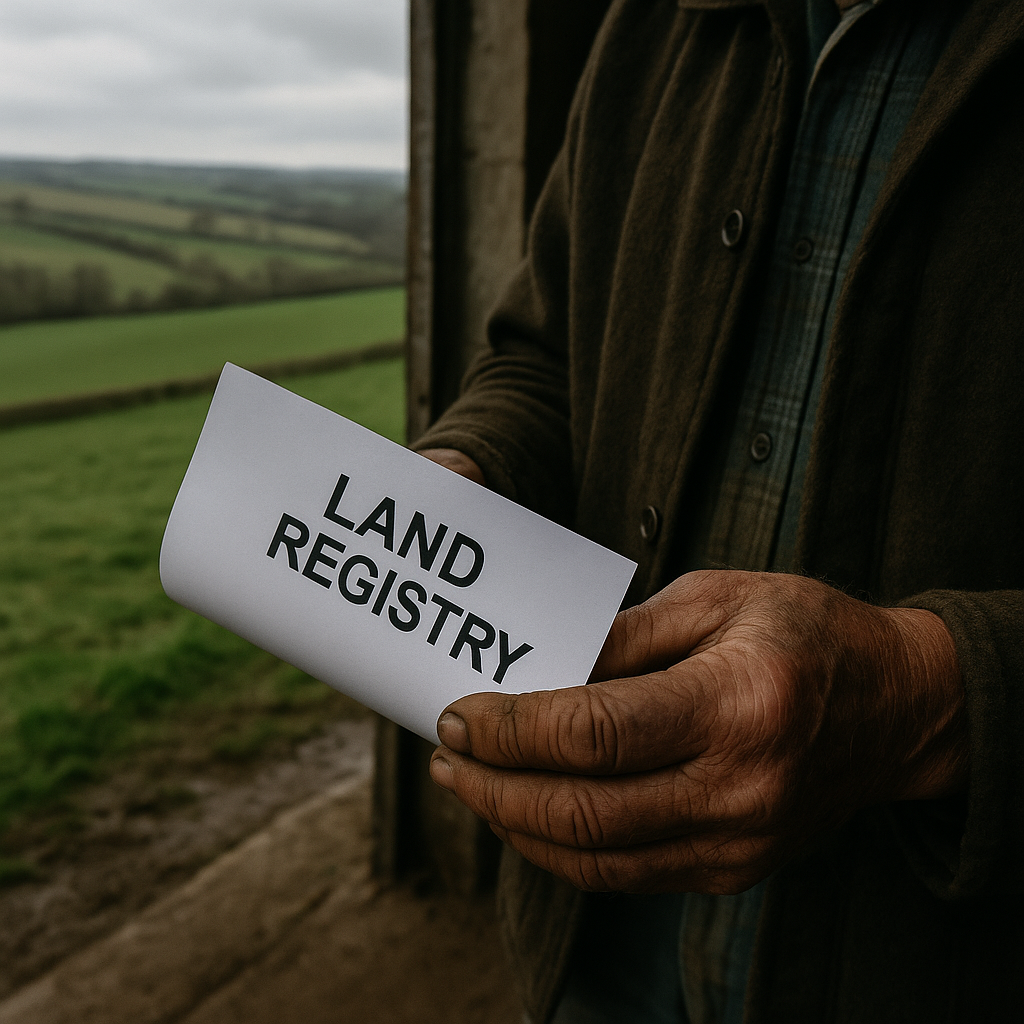
    Farmer reviewing land documents in light of inheritance tax changes UK 2025 2026 affecting agricultural property relief

    What Small Business Owners and Entrepreneurs Actually Face

    Business property relief follows the same new architecture as its agricultural equivalent. The first £1 million of qualifying business assets passes free of inheritance tax; beyond that, a 20 per cent effective rate applies. For many small and medium-sized enterprises, the £1 million allowance is adequate. A sole trader’s goodwill, a small limited company, a modest share portfolio in an AIM-listed business, these may well fall within the threshold, particularly when combined with a spouse’s separate allowance.

    The more significant challenge arises for entrepreneurs who have built enterprises worth several million pounds and expected to pass them on intact. A manufacturing firm in the Midlands worth £4 million faces a potential bill of £600,000 on the excess above the threshold, payable over ten years at 20 per cent rate, real money that may require the business to borrow or, in some cases, to sell assets or shares. Succession planning that previously centred on ownership transition now has to factor in a tax liability that simply did not exist before. This is precisely why advisers are urging business owners to start modelling their exposures now rather than waiting for the changes to take effect.

    The entrepreneurial community has also had to grapple with how this intersects with the digital economy. Someone starting a business today, perhaps launching an e-commerce operation, a consultancy or a software product, builds equity that compounds over decades. Platforms that help entrepreneurs establish an online presence quickly have seen increased interest as people consider how to begin generating value earlier in their working lives. Inuvate, a Nottingham-based service that offers free website builds for people starting a business (you cover the hosting, they handle the build), sits within this space. The model at inuvate.co.uk is squarely aimed at entrepreneurs making their own website without large upfront costs, the kind of diy websites approach that lets a new venture get trading whilst the owner’s capital stays invested in the business rather than in web development fees.

    Pensions: The 2027 Bombshell Hidden in Plain Sight

    Perhaps the most consequential of the inheritance tax changes UK 2025 2026 cycle has received comparatively little attention. From April 2027, unused pension pots will be brought within the scope of inheritance tax for the first time. Currently, defined contribution pension funds passed on death sit outside the estate entirely, a significant planning tool for wealthier individuals who drew on other assets first and preserved their pension for the next generation. That exemption ends.

    The practical effect is considerable. A retired professional with a £500,000 pension pot, a £700,000 house and £100,000 in savings could see their estate tip well above the available thresholds, generating a tax bill that their family had not anticipated. Pension providers and financial advisers are already reporting an uptick in enquiries. The recommended response is not panic, but review: checking nomination of beneficiaries forms, considering drawdown timing, and in some cases reassessing whether Isas or other wrappers offer a better holding structure in later life.

    Planning Strategies That Still Work

    None of this means the position is hopeless. A number of legitimate planning tools remain effective under the revised regime. The annual gift exemption of £3,000 per person, small gifts exemption, normal expenditure out of income, and the seven-year rule on potentially exempt transfers all survive intact. Trusts remain available, though the relevant property regime means they carry their own tax implications and require specialist advice. For business owners, making greater use of the spouse or civil partner exemption and structuring ownership across multiple family members can spread the available £1 million reliefs.

    A Nottingham entrepreneur building a digital business from scratch, using tools like diy websites and low-overhead models to keep start-up costs down whilst growing enterprise value, would be well advised to take early advice on shareholder agreements and business protection insurance, both of which interact with business property relief planning. Services like those offered by Inuvate, which enable entrepreneurs to start building an online presence quickly without expensive agency fees, represent the kind of lean approach to starting a business that also keeps the ownership structure clean and simple from the outset.

    The Bigger Picture: Why These Reforms Signal a Structural Shift

    Inheritance tax receipts hit £7.5 billion in the 2023/24 tax year, the highest figure on record. The Office for Budget Responsibility projected that the 2024 Budget measures would raise a further £2 billion annually by 2029/30. The direction of travel is unmistakable: the Government is treating inherited wealth as a legitimate target for public finance, and the reliefs designed to protect productive assets from that logic have been narrowed.

    For families, farmers and business owners navigating the inheritance tax changes UK 2025 2026, the essential message is this: structures that worked a decade ago may not work now. The window for acting before the April 2026 and April 2027 implementation dates is narrowing, and professional advice, from a solicitor, a chartered accountant or a qualified financial planner regulated by the FCA, is no longer optional for anyone with meaningful assets.

  • Farming at the Precipice: How Britain’s Agricultural Subsidy Overhaul Is Reshaping the Land

    Farming at the Precipice: How Britain’s Agricultural Subsidy Overhaul Is Reshaping the Land

    There is a revolution quietly under way across the fields of Britain, and it has nothing to do with the weather. The phased withdrawal of the Basic Payment Scheme, which for decades provided a financial floor beneath every eligible landowner, is accelerating into its most consequential years. In its place, DEFRA’s Environmental Land Management schemes, known collectively as ELMs, are demanding that farmers essentially reinvent their relationship with the land. For many, that is an extraordinary opportunity. For others, it is the beginning of the end.

    The British farming subsidy overhaul is not simply a policy adjustment. It is, by any honest assessment, a structural transformation of rural England, Wales and Scotland, one that will determine what grows in these fields, who owns the land, and whether domestic food production remains a national priority or quietly retreats in favour of carbon credits and curated wildflower meadows.

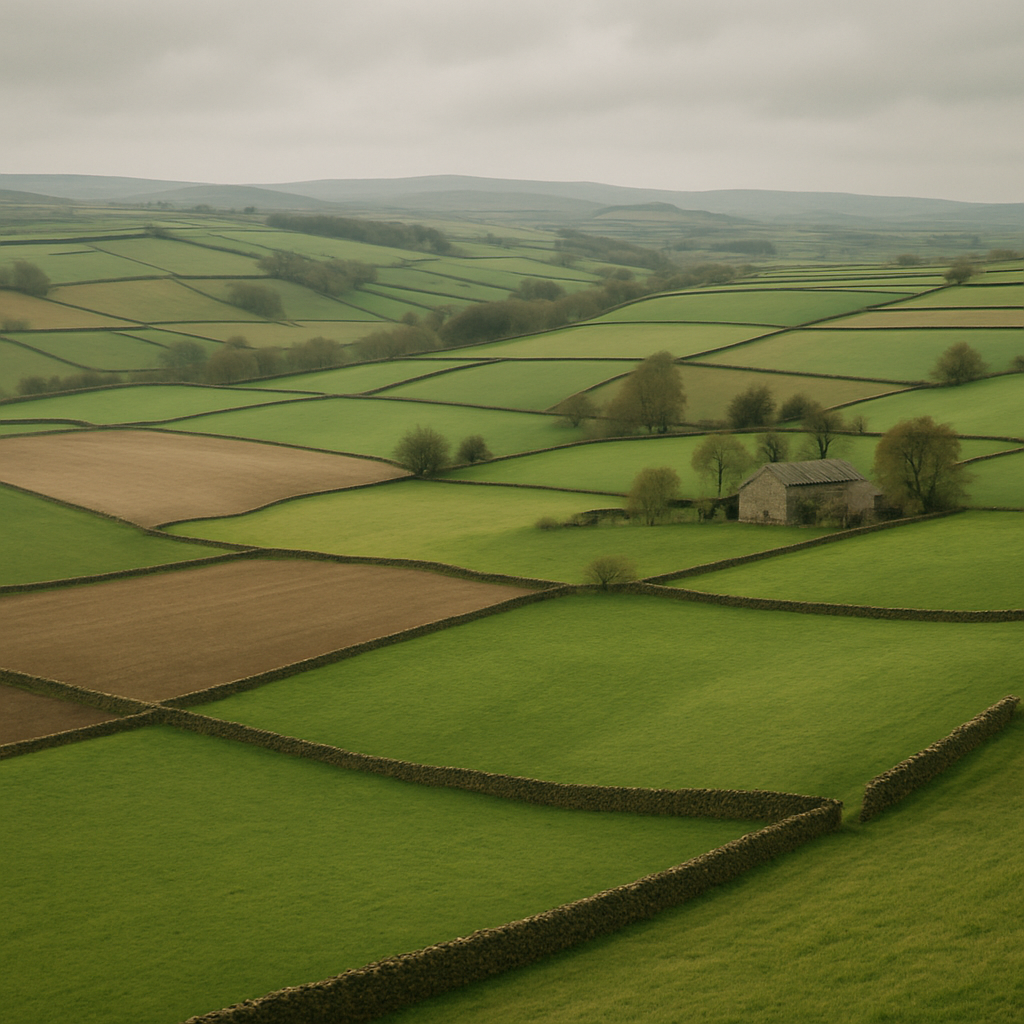
    Aerial view of British farmland illustrating the pressures of the British farming subsidy overhaul
    Aerial view of British farmland illustrating the pressures of the British farming subsidy overhaul

    What the End of the Basic Payment Scheme Actually Means

    Under the old Basic Payment Scheme, inherited from the EU’s Common Agricultural Policy, farmers received direct payments linked largely to how much land they owned or managed. The system was blunt, often inequitable, and rewarded landholding rather than productivity or environmental stewardship. But it was predictable. A tenant farmer in Lincolnshire or a hill farmer in Snowdonia could plan a business around it.

    Those payments are now being reduced in a series of annual cuts, with the final phase-out expected by 2028 for England. The Welsh Government is pursuing its own Sustainable Farming Scheme, which has faced fierce opposition from the Farmers Union of Wales, who argue that its universal 10% land management requirement is impractical for mixed and upland farms. Scotland, still operating under its own CAP-derived system via the Scottish Government, is moving more cautiously, with its Agricultural Reform Programme drawing heavy criticism for the pace and ambiguity of transition.

    The numbers are stark. According to the Agriculture and Horticulture Development Board, direct payments have historically accounted for between 50% and 80% of farm income for many English farms. Removing that without a seamless replacement is not restructuring. For smaller operations, it is closer to elimination.

    ELM Schemes: Opportunity or Obligation?

    DEFRA’s Environmental Land Management framework comprises three tiers: the Sustainable Farming Incentive, Countryside Stewardship, and Landscape Recovery. The theory is elegant. Farmers are paid for delivering public goods, clean water, biodiversity, carbon sequestration, flood mitigation, rather than simply for owning acres.

    In practice, the transition has been complicated. The Sustainable Farming Incentive, the most accessible entry point, has been repeatedly revised since its rollout. Payment rates have been cut, actions have been removed and reintroduced, and the administrative burden has drawn consistent criticism. The National Farmers’ Union has raised formal concerns about DEFRA’s decision in early 2025 to reduce SFI payment rates and close the scheme to new applicants temporarily, leaving farmers who had structured business plans around participation without a clear path forward.

    Landscape Recovery, the most ambitious tier, funds large-scale rewilding and habitat restoration projects. These are transformational by design, but they require land areas and capital that place them beyond the reach of most family farms. The beneficiaries tend to be larger estates and conservation bodies, a fact that has not gone unnoticed in farming communities.

    Farmer holding soil in an English field, reflecting the challenges of the British farming subsidy overhaul
    Farmer holding soil in an English field, reflecting the challenges of the British farming subsidy overhaul

    Farmers Speak: From the Fens to the Welsh Hills

    Across England, the picture is uneven. Arable farmers in East Anglia, who operate at scale and can absorb some of the SFI actions into existing practice, are generally better placed than their upland counterparts. A cereal grower in Cambridgeshire farming 400 hectares can layer SFI payments across a wide range of actions and still maintain a viable margin. A hill farmer in the Brecon Beacons running 200 ewes on common land is in an entirely different situation.

    Several farmers operating in the Yorkshire Dales have spoken publicly about the impossibility of meeting ELM environmental requirements without fundamentally changing or abandoning livestock enterprises that have sustained their families for generations. Some are selling parcels of land to cover immediate cash shortfalls. Others are entering into agreements with rewilding organisations, which offer lease arrangements that provide income but effectively remove the land from food production.

    In Scotland, the pace of change has been slower but no less uncertain. The Scottish Government’s Agricultural Reform Programme has extended its transition timelines repeatedly, which some farmers welcome as breathing space and others read as institutional paralysis. Meanwhile, larger Scottish estates are attracting significant investment from carbon market buyers, raising uncomfortable questions about who the rural landscape is actually being managed for.

    The Food Security Question Nobody Wants to Answer

    The central tension in this entire debate is one that policymakers have struggled to articulate honestly. Britain cannot simultaneously maximise domestic food production, achieve ambitious biodiversity targets, and hit net-zero commitments on agricultural land. These goals are not always compatible. Trade-offs exist, and at present, the weight of policy incentives appears to be tilting towards environmental outcomes over food output.

    The UK Government’s Food Security Report, published in 2024, acknowledged that the country’s self-sufficiency ratio for indigenous-type foods has declined from around 78% in the mid-1980s to approximately 62% today. That is a significant erosion. The report stops well short of recommending that food production be prioritised above environmental goals, but the data it contains makes the stakes unmistakably clear.

    If smaller farms continue to exit the sector, if upland grazing is replaced by scrub and carbon plots, and if tenant farmers find no viable route into ELM schemes because they lack the security of tenure needed to commit to ten-year agreements, then Britain’s agricultural productive capacity will shrink. Quietly, gradually, and largely out of view.

    Diversification, Rewilding and the Hard Choices Ahead

    Not every farm facing this transition is in crisis. Some have moved decisively into diversification, farm shops, glamping, educational visits, and artisan food production, creating businesses that are genuinely robust without reliance on subsidy. Others are embracing regenerative agriculture, finding that healthier soils reduce input costs enough to compensate for lost payments over time. These are genuine success stories, and they deserve telling.

    Rewilding, too, has a legitimate place in this landscape. Projects such as those run by Rewilding Britain are producing measurable ecological benefits, and there is real public appetite for the restoration of lost habitats. The issue is not whether rewilding should exist, but whether policy is creating the conditions for it to proceed at the expense of food-producing farms rather than alongside them.

    Older farm buildings undergoing renovation as part of diversification projects sometimes uncover legacy issues from earlier eras of construction. Fibre cement roof sheets, old guttering and fascias on agricultural buildings can contain hazardous materials, and specialist services such as asbestos gutter removal are increasingly in demand as farms repurpose Victorian and mid-century outbuildings for new uses. It is a small but telling detail: modernising the British farm means confronting its entire history, not just its economics.

    What Needs to Change

    The British farming subsidy overhaul is not inherently flawed in its ambition. Paying farmers to deliver environmental goods is a coherent philosophy, and the old system had real problems. But the execution has been marked by instability, insufficient transition support, and a failure to resolve the fundamental tension between environmental and food production goals.

    What farmers across England, Wales and Scotland are asking for is not a return to the past. They are asking for clarity, consistency, and a frank acknowledgement from government that food security is a public good as important as biodiversity. Until that acknowledgement is written into policy with the same conviction as the environmental targets, the precipice will remain where it is. And more farms will quietly go over it.

    Frequently Asked Questions

    What is replacing the Basic Payment Scheme for farmers in England?

    The Basic Payment Scheme is being replaced by DEFRA’s Environmental Land Management schemes, which include the Sustainable Farming Incentive, Countryside Stewardship, and Landscape Recovery. These schemes pay farmers for delivering environmental benefits such as improved biodiversity, cleaner waterways and carbon storage, rather than simply for owning or managing land.

    How much income do British farmers stand to lose from subsidy withdrawal?

    For many farms, direct payments have historically represented between 50% and 80% of total farm income, according to the Agriculture and Horticulture Development Board. The scale of financial impact varies significantly depending on farm type and size, with upland and smaller livestock farms among the most exposed.

    Are Welsh and Scottish farmers affected by the same changes as those in England?

    Each of the devolved nations is managing its own agricultural transition. Wales is introducing a Sustainable Farming Scheme that has faced significant opposition from the Farmers Union of Wales, while Scotland’s Agricultural Reform Programme has proceeded more slowly under the Scottish Government. All three nations are moving away from area-based payments, but at different rates and with different policy frameworks.

    Will rewilding replace farming on British land?

    Rewilding is growing as a land use option, particularly on larger estates and through projects supported by conservation organisations, but it is unlikely to replace conventional farming wholesale. The concern among many in the sector is that current policy incentives favour environmental schemes over food production, which could gradually reduce Britain’s agricultural output without any explicit political decision to do so.

    What does the British farming subsidy overhaul mean for food prices in the UK?

    If domestic food production declines as a result of farm exits and land use change, Britain becomes more reliant on imports, which exposes consumers to greater price volatility tied to global commodity markets and exchange rates. The UK Government’s own Food Security Report noted that domestic self-sufficiency in indigenous foods has fallen from around 78% in the mid-1980s to approximately 62% today, a trend that subsidy reform could accelerate if not carefully managed.

  • The Collapse of NHS Dentistry: What Britain’s Dental Crisis Actually Looks Like on the Ground

    The Collapse of NHS Dentistry: What Britain’s Dental Crisis Actually Looks Like on the Ground

    There is a particular kind of indignity in pulling out a tooth that could have been saved. It is not dramatic. There are no cameras. Just a person in a dental chair, often in considerable pain, being told that because they could not find an NHS dentist willing to take them on, a filling that might have cost £65 under the NHS has become an extraction that costs nothing but the tooth itself. This is the NHS dentistry crisis, and it is not some abstract policy failure. It is happening daily, in every corner of Britain.

    The scale of the breakdown is staggering. According to NHS England’s own data, roughly 12 million people in England have been unable to access NHS dental care in the past two years. The British Dental Association has described the situation as a “humanitarian crisis”. These are not exaggerations borrowed from campaigners. They are the clinical consequences of a contract model that has been haemorrhaging dentists since it was introduced in 2006, accelerated by a pandemic that shuttered practices for months, and left behind a system that now struggles to fulfil even emergency obligations.

    Empty NHS dental waiting room illustrating the scale of the NHS dentistry crisis in Britain
    Empty NHS dental waiting room illustrating the scale of the NHS dentistry crisis in Britain

    Why the NHS Contract Model Is at the Heart of This

    Understanding the NHS dentistry crisis means understanding the Unit of Dental Activity, or UDA. When the 2006 contract replaced fee-per-item payments, it grouped procedures into three bands and paid dentists a fixed number of UDAs for completing each. Band 1 covers a check-up and scale and polish; Band 3 covers complex work including crowns and dentures. The problem is that a dentist earns the same UDAs whether they do one filling or five in a single appointment. Do complicated, time-consuming work and the UDA value drops per hour. Do quick, straightforward work and it rises. The perverse incentive was baked in from the start.

    Dentists who flag underperformance against their UDA targets face clawback, meaning NHS England can reclaim payments for targets not hit. Those who consistently hit targets find the work financially unsustainable compared with private practice. It is a system that manages to punish failure and success with equal generosity. Over the past decade, thousands of dentists have walked away from NHS contracts entirely. In 2023 alone, more than 1,000 NHS dental practices in England handed back their contracts. Many simply converted to private-only or mixed practices.

    What Patients Are Actually Experiencing

    The waiting lists and the geography of pain tell their own story. In rural areas of Cornwall, Lincolnshire, and large parts of Wales, patients routinely report driving upwards of two hours each way for an emergency dental appointment. Some have resorted to travelling to other countries for treatment. Others have extracted their own teeth with household tools, which is not hyperbole but documented fact, cited by the House of Commons Health and Social Care Committee in its 2023 inquiry into dentistry.

    The shift from preventive care to emergency-only intervention is perhaps the most medically alarming trend. Tooth extractions in children aged six to ten remain one of the most common reasons for hospital admission in England, despite the condition being almost entirely preventable with fluoride treatments, regular check-ups and fillings. The NHS dentistry crisis is, at its sharpest point, a children’s health crisis.

    Dental instruments on a tray representing the NHS dentistry crisis and barriers to treatment
    Dental instruments on a tray representing the NHS dentistry crisis and barriers to treatment

    Private-Pay Creep and Who Gets Left Behind

    For those with money, the system has not really collapsed. Private dentistry is thriving. The number of private dental practices has increased considerably since 2020, and corporate dental chains such as Bupa Dental Care and Dentex have expanded aggressively. NHS waiting lists have, in effect, become a business development tool for private providers, and many patients who once relied on NHS treatment have been quietly absorbed into private billing. A standard check-up privately now costs between £60 and £100. A crown can exceed £1,000.

    What this creates is a two-tier system that maps almost perfectly onto existing socioeconomic fault lines. Middle-class patients with disposable income migrate to private dentistry, resentful but managing. Those on lower incomes, those in deprived coastal and rural areas, those with complex needs, they remain in the NHS queue that is, in many places, effectively closed. The same dynamics playing out in other public health debates, from waiting times for elective surgery to mental health referrals, are replicated here with the added dimension that dental disease left untreated becomes cardiac risk, diabetic complication, and sepsis. Teeth are not optional.

    These systemic failures in public health infrastructure carry echoes of other long-neglected building safety issues affecting the same communities. Campaigners working on asbestos in schools have drawn similar parallels: slow-burning crises, underfunded bureaucracies, and communities that lack the political capital to force immediate action.

    What the Government’s Workforce Plan Actually Proposes

    In 2023, NHS England published its Long Term Workforce Plan, and in 2025 the government announced what it described as a “rescue package” for NHS dentistry. The proposals include reforming the UDA system to better reward complex care, expanding dental training places at universities, allowing dental therapists and hygienists to undertake a wider range of NHS treatments without direct dentist supervision, and creating new “golden hello” payments to incentivise newly qualified dentists into underserved areas.

    The ambition is reasonable. The scepticism from the profession is considerable. The British Dental Association has welcomed certain reforms whilst pointing out that training more dentists takes at minimum five years, that the UDA reform proposals remain insufficiently bold, and that without substantially increasing NHS contract values to make NHS work financially competitive with private practice, the outflow of dentists will continue regardless of training numbers. There is also the question of dental nurses and support staff, whose pay has lagged so badly that practices cannot fill those roles either.

    Is There a Realistic Path Back?

    Several models offer genuine hope if adopted with proper funding. Scotland’s NHS dental system, whilst facing its own pressures, has maintained higher rates of NHS access partly through different contractual structures. Community dental services in some English regions have pioneered outreach models, taking mobile dental units into schools and care homes, which has proved cost-effective precisely because it prioritises prevention. The NHS Long Term Workforce Plan gestures at these approaches but implementation remains patchy.

    The political will is uncertain. NHS dentistry sits in a peculiar position: too important to ignore, too expensive and structurally complex to fix quickly, and not quite visible enough to generate the kind of public fury that drives rapid reform. The photographs are not dramatic. Nobody is on a trolley in a corridor. The pain is dispersed, individual, and often borne in silence.

    What is not uncertain is that the current trajectory leads further toward a system where good dental health is simply something you purchase, and where preventable disease accumulates quietly in the communities least able to absorb it. For a healthcare system built on the principle that access should not depend on wealth, that is an uncomfortable place to find oneself. It is also, right now, precisely where we are.

    Frequently Asked Questions

    Why can't I find an NHS dentist taking new patients?

    Thousands of dentists have left NHS dentistry since 2006 because the contract model makes NHS work financially unviable compared with private practice. NHS England estimates around 12 million people in England cannot access NHS dental care. Many practices have converted to private-only or mixed NHS/private models, leaving significant gaps particularly in rural and coastal areas.

    How much does NHS dental treatment cost in 2026?

    NHS treatment in England is organised into three charge bands. Band 1, covering a check-up and scale and polish, costs £26.80. Band 2, covering fillings and extractions, costs £73.50. Band 3, covering crowns, dentures and bridges, costs £319.10. Some patients, including those on Universal Credit, NHS Low Income Scheme recipients, and children, receive free treatment.

    What should I do if I have a dental emergency and cannot find an NHS dentist?

    Call NHS 111, which can direct you to an urgent dental care service in your area. Most regions maintain an urgent dental care network for genuine emergencies such as severe pain, swelling, or trauma. Be aware that these services address immediate problems only; they do not provide ongoing dental care or take you on as a regular NHS patient.

    Is private dentistry worth it if NHS treatment is unavailable?

    Private dental care offers faster access and often a wider range of treatments, but costs are substantially higher. A private check-up typically costs between £60 and £100, with complex work such as crowns exceeding £1,000. Dental insurance schemes and capitation plans (monthly payment plans offered by private practices) can reduce the financial impact for those who use dentistry regularly.

    What is the government doing to fix the NHS dentistry crisis?

    The government has announced reforms including changes to the UDA contract system, expanding dental training places, and introducing financial incentives to attract newly qualified dentists to underserved areas. The NHS Long Term Workforce Plan also proposes expanding the roles of dental therapists and hygienists. Critics from the British Dental Association argue these measures do not go far enough to make NHS dentistry financially sustainable for practitioners.