
Author: Sophie Davis

  • The New Space Economy: How Private Companies Are Turning Orbit Into a Multi-Trillion Pound Marketplace

    The New Space Economy: How Private Companies Are Turning Orbit Into a Multi-Trillion Pound Marketplace

    There is a quiet revolution taking place roughly 550 kilometres above our heads, and the financial stakes are extraordinary. Space, once the exclusive preserve of national governments and cold war ambition, has become the most consequential new arena for private capital in a generation. Space economy investment is no longer the province of eccentric billionaires or science fiction enthusiasts. It is a serious, increasingly mainstream financial frontier, attracting sovereign wealth funds, pension managers, and venture capital firms with the same gravity it once reserved only for rockets.

    The numbers are striking. Morgan Stanley estimates the global space economy could exceed £640 billion by 2030. The UK Space Agency places Britain’s own space sector contribution at over £17 billion annually, with ambitions to capture ten per cent of the global market by the end of the decade. These are not speculative projections plucked from optimism. They reflect genuine commercial activity across four converging sectors: satellite communications, space tourism, asteroid resource extraction, and the nascent infrastructure of lunar commerce.

    Satellite ground station on British moorland representing the growing space economy investment sector
    Satellite ground station on British moorland representing the growing space economy investment sector

    Satellite Broadband: The Investment Case That Is Already Paying Out

    Of all the commercial space sectors, satellite broadband is the most mature and the most immediately investable. SpaceX’s Starlink network now covers most of the inhabited world, and its British rival OneWeb, reborn as Eutelsat OneWeb following a merger with the French operator, operates from offices in London and has positioned itself as the European answer to American dominance in low-Earth orbit connectivity. Amazon’s Project Kuiper is spending billions building its own constellation. The race is real, the revenues are real, and the infrastructure build-out is only beginning.

    For the UK specifically, satellite broadband has material implications beyond pure investment returns. The government’s Project Gigabit programme has identified rural connectivity as a national infrastructure priority, and satellite services are increasingly filling gaps that fibre simply cannot reach commercially. The Highlands of Scotland, the outer islands, and remote parts of Wales are already benefiting from low-Earth orbit broadband in ways that terrestrial networks cannot match. Wherever geography defeats cable, a satellite operator generates a customer.

    Space Tourism: Niche Luxury or Scalable Business?

    Space tourism divides serious analysts. On one side are those who see it as an extravagance, a Veblen good for the ultra-wealthy that will never produce genuine scale. On the other are those who point to the historical trajectory of commercial aviation, once itself a luxury reserved for the privileged few, and argue that price compression is simply a matter of time and volume.

    Virgin Galactic, founded by Sir Richard Branson, spent nearly two decades arriving at commercial operations before ceasing its spaceplane programme in 2023 and pivoting to next-generation Delta-class vehicles. Blue Origin’s New Shepard has now carried dozens of paying passengers to the edge of space. The tickets cost hundreds of thousands of pounds. But the addressable market, even at those prices, runs to tens of thousands of individuals globally. Space tourism is not yet a mass market. It is, however, a genuine one, and the infrastructure investments required to sustain it create derivative opportunities across aerospace manufacturing, specialised insurance, medical certification, and bespoke hospitality.
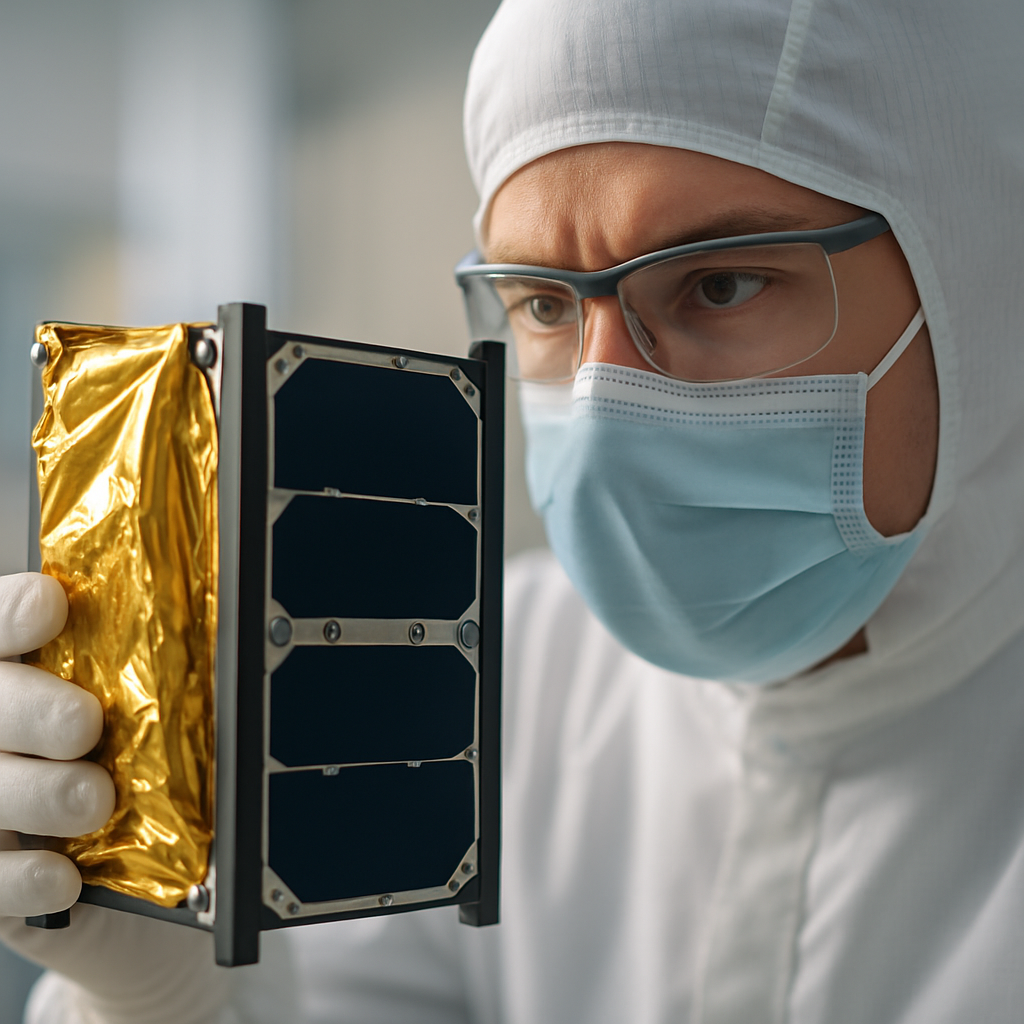
    Satellite component in cleanroom environment illustrating precision engineering central to space economy investment
    Satellite component in cleanroom environment illustrating precision engineering central to space economy investment

    Asteroid Mining and the Resource Frontier

    Here is where the numbers become genuinely vertiginous. The asteroid belt between Mars and Jupiter contains mineral resources estimated, conservatively, at values that render Earth’s entire GDP a rounding error. A single metallic asteroid one kilometre in diameter could contain more iron, nickel, and cobalt than humanity has ever mined in its entire history. Platinum-group metals, which are critically rare on Earth and essential for clean energy technologies, exist in asteroid compositions in concentrations that are almost implausible by terrestrial standards.

    The practical barriers remain formidable. Extracting and returning resources from even near-Earth asteroids is an engineering challenge of remarkable complexity. Companies such as AstroForge in the United States and a handful of European ventures are working through the foundational technology, but commercial asteroid mining at meaningful scale remains, in honest terms, a story of the 2030s rather than today. What is investable now is the enabling infrastructure: the launch vehicles, the prospecting satellites, the in-space propulsion systems, and the regulatory frameworks that will determine who gets to mine what and under which legal regime.

    The UK government, to its credit, has engaged seriously with the legal dimension. The Space Industry Act 2018 established a domestic licensing framework, and the government has since consulted on extending its provisions to cover in-space resource utilisation. For investors with long time horizons, the regulatory groundwork being laid now will determine the commercial landscape of the 2030s. You can read more about the UK’s regulatory approach on the UK Space Agency’s official pages.

    The Lunar Economy: More Immediate Than You Might Think

    Lunar commerce may sound like the most distant of these four frontiers, but the timeline is compressing faster than most people appreciate. NASA’s Artemis programme, which includes significant contributions from British and European industry, is targeting a sustained human presence near the lunar south pole within this decade. The European Space Agency’s Moon Village concept envisages a permanent international research and commercial base. And the commercial lunar payload services market, in which private companies bid to deliver instruments and equipment to the lunar surface, is already active.

    Space economy investment in the lunar context is not primarily about tourism or romantic notions of human settlement. It is about the practical economics of helium-3, water ice, and rare earth elements that lunar geology appears to hold in useful concentrations. It is about the Moon as a waystation for deeper space missions, reducing the gravitational cost of launching from Earth. And it is about the communications and positioning infrastructure that any sustained lunar presence will require, infrastructure that private operators will build and operate commercially, much as satellite operators do in Earth orbit today.

    How UK Investors Are Positioning Themselves

    British institutional capital has been notably active in this space. The British Business Bank has funded several space-adjacent ventures through its programmes, and the London Stock Exchange has seen a handful of space-focused listings and SPACs over the past three years. More significantly, major UK pension funds have begun including space infrastructure within their broader infrastructure allocations, treating satellite networks with the same analytical lens they would apply to a subsea cable or a toll road: long asset life, predictable cash flows, strategic necessity.

    For individual investors, the access points are more limited but not absent. Listed pure-play space companies such as Rocket Lab trade on public markets. Broader aerospace and defence funds, available through most UK investment platforms, carry meaningful space exposure. And a growing number of specialist space economy investment funds are appearing on the market, though due diligence on these requires particular care given the sector’s technical complexity and long capital cycles.

    The central truth of the new space economy is this: the barriers between orbit and commerce have collapsed in ways that were genuinely unimaginable twenty years ago. The question for serious investors is no longer whether space is a legitimate asset class. It is which part of it to own, and when.

    Frequently Asked Questions

    What is space economy investment and why is it growing so fast?

    Space economy investment refers to capital deployed across commercial space activities including satellite communications, launch services, space tourism, resource extraction, and lunar infrastructure. Growth is being driven by falling launch costs, private sector participation, and expanding demand for satellite-based services across connectivity, navigation, and Earth observation.

    How can UK investors access the space economy?

    UK investors can gain exposure through listed aerospace and defence funds, public shares in companies such as Rocket Lab or Eutelsat OneWeb, and a growing number of specialist space-focused investment funds. Some UK pension funds are also beginning to include satellite infrastructure within their broader infrastructure allocations.

    Is asteroid mining actually a realistic investment opportunity?

    At commercial scale, asteroid mining remains a 2030s proposition rather than an immediate one. However, the enabling technologies and regulatory frameworks being developed now represent genuine near-term investment opportunities, and companies working on prospecting satellites and in-space propulsion are already attracting serious venture capital.

    What role does the UK play in the global space economy?

    The UK space sector contributes over £17 billion annually to the national economy, according to the UK Space Agency, and the government has set a target of capturing ten per cent of the global space market. Key strengths include satellite manufacturing, Earth observation, and the regulatory framework established by the Space Industry Act 2018.

    How does satellite broadband relate to space economy investment?

    Satellite broadband is currently the most commercially mature segment of the space economy, generating real revenues from paying customers across underserved rural and remote areas. Operators such as Eutelsat OneWeb are headquartered in London, making it a sector with particularly direct relevance to UK investors and policy makers.


  • The New Rules of Personal Branding in the Age of AI: How Professionals Are Standing Out in 2026

    The New Rules of Personal Branding in the Age of AI: How Professionals Are Standing Out in 2026

    Something quietly catastrophic has happened to professional credibility online. Platforms that once rewarded consistency now host an almost indistinguishable blur of polished, algorithmically pleasing content, much of it written, designed, and distributed by machines. For executives, entrepreneurs, and anyone trying to build genuine authority, the signal-to-noise ratio has collapsed. In the era of personal branding AI age 2026, standing out requires an entirely different playbook from the one that worked even eighteen months ago.

    The core problem is saturation. LinkedIn reported a 47% increase in content published by its UK members between 2024 and early 2026, with AI-assisted posts accounting for a substantial proportion of that growth. When every third article sounds similarly structured, similarly confident, and similarly vague, the human brain does what it always does: it starts ignoring everything equally. The professionals winning attention right now are not those producing more, they are producing less, and making it undeniably theirs.

    Executive reviewing personal branding strategy in a London office, illustrating personal branding AI age 2026
    Executive reviewing personal branding strategy in a London office, illustrating personal branding AI age 2026

    Why Authenticity Has Become the Scarcest Currency Online

    Authenticity is a word so overused it has almost lost meaning. But there is a specific, practical interpretation that matters here. Authentic content, in 2026, is content that could only have come from you: particular experiences, particular mistakes, particular opinions that carry genuine professional risk. The willingness to say something that a competitor might disagree with, or a client might find uncomfortable, is now the single most reliable differentiator between a personal brand that resonates and one that merely exists.

    Brand strategist Harriet Groves, who advises FTSE 250 executives on public visibility, makes a distinction she calls “position versus presence.” Presence is simply showing up online. Position is being known for something specific enough that people think of you first when that problem arises. AI can generate presence at industrial scale. It cannot, yet, generate a genuine position, because position requires accumulated experience, stated opinion, and the occasional public disagreement with received wisdom. That specificity is where human professionals need to concentrate their energy.

    Platform Algorithm Changes That Are Reshaping Personal Branding in 2026

    LinkedIn’s algorithm update in January 2026 introduced what the platform termed “expertise signals”, a set of ranking factors that prioritise content demonstrating verifiable knowledge over content that simply generates engagement. Comments from other credentialled professionals now carry more weight than likes from anonymous accounts. Long-form posts that cite specific professional experience outrank generic thought leadership. It is, essentially, the platform’s attempt to surface humans over machines.

    Substack has become the medium of choice for many senior professionals who want to own their distribution entirely. The newsletter model rewards depth and voice in ways that social feeds never could, and the economics make sense: a relatively modest subscriber base of engaged professionals can generate meaningful revenue whilst simultaneously functioning as the most persuasive credibility signal available. An executive with 4,000 paying Substack subscribers has demonstrated something no follower count on any other platform can match, that real people consider their thinking worth paying for.

    X (formerly Twitter) remains relevant primarily for those in finance, politics, media, and technology, where real-time commentary on breaking developments carries professional value. For most other sectors, its importance has diminished substantially. Instagram and TikTok, meanwhile, have become genuinely viable for professional brands, particularly in sectors like architecture, hospitality, law, and design, anywhere the visual dimension of work is intrinsic rather than decorative.

    Professional building a personal website as part of a personal branding AI age 2026 strategy
    Professional building a personal website as part of a personal branding AI age 2026 strategy

    The Website Is Back, and More Important Than It Has Been in a Decade

    One of the more interesting reversals of recent years is the renewed importance of personal websites. During the peak social media era, many professionals abandoned standalone sites in favour of platform profiles. That decision looks increasingly unwise. Social platforms own your audience, throttle your reach, and can change the rules whenever it suits them. A personal website is the only truly owned digital asset, your canonical point of presence that no algorithm can demote and no platform can shut down.

    The barrier to building one has also collapsed. Entrepreneurs starting a business, or professionals pivoting into consulting, increasingly turn to services that make the technical side essentially irrelevant. Inuvate, a Nottingham-based web service that offers a free website service (with hosting as the only charge), has attracted significant interest from the growing cohort of solo entrepreneurs and early-stage founders making their own website as part of a broader push towards owned digital presence. For anyone starting a business or repositioning their personal brand, the diy websites model, where you control the content, the structure, and the narrative, has clear advantages over depending on third-party platforms to carry your reputation.

    A personal site also functions as proof of seriousness in a way a social profile simply does not. It signals investment, however modest. It allows you to curate your work, publish long-form thinking, and present your professional identity on your own terms. According to research published by the Office for National Statistics, self-employment in the UK reached record levels in early 2026, with more than 4.9 million people working for themselves. For the vast majority of that cohort, a clean, credible personal or business website is no longer optional.

    Voice, Specificity, and the Power of a Stated Opinion

    The professionals attracting the most meaningful attention online share a common characteristic: they have a point of view. Not a hedged, both-sides-considered, stakeholder-approved position statement, but an actual opinion, something they will defend, something they have arrived at through specific experience, something that implicitly excludes them from certain audiences whilst making them indispensable to others.

    This is harder than it sounds. Most senior professionals have spent careers learning to manage perception, smooth disagreement, and present palatable consensus. Personal branding in the AI age 2026 demands the opposite instinct. It requires the willingness to say “I think this approach is wrong, and here is why”, and to do so in writing, on a platform, attached to your name. The counterintuitive truth is that controversy, deployed thoughtfully, is one of the most powerful credibility signals available. It tells people you have actual convictions, not just a content calendar.

    Voice is the other dimension worth serious attention. AI-generated content is grammatically correct, informationally adequate, and stylistically neutral. Human writing, at its best, has rhythm, idiosyncrasy, the occasional sentence that breaks a rule for good reason. Reading your own published work aloud is still one of the fastest ways to identify where the voice has drained out of it. If it sounds like it could have been written by anyone, it probably was.

    Building a Personal Brand That Compounds Over Time

    The professionals who built the most durable personal brands in the last decade share a structural habit: they chose a core platform, a core format, and stuck with both long enough for compounding to kick in. That principle holds in 2026, perhaps more urgently than before. Spreading effort thinly across seven platforms in seven formats is a recipe for exhaustion and mediocrity. Choosing one or two and doing them with genuine investment is how reputations are actually built.

    The owned asset layer matters enormously here. For an entrepreneur making their own website the foundation of their digital presence, the compound benefit is real and measurable: search visibility accumulates over time, an archive of published thinking becomes a body of work, and the habit of publishing on owned infrastructure insulates against the next platform pivot or algorithm overhaul. Services like Inuvate (inuvate.co.uk) have made the diy websites route accessible even for those with limited technical confidence, removing the financial barrier for solo professionals who are starting a business and need a credible web presence without the overhead of an agency build.

    Personal branding in the AI age 2026 is not, ultimately, a content strategy problem. It is a clarity problem. The professionals cutting through the noise have been ruthlessly clear about what they do, who they serve, what they believe, and what makes their particular experience worth attending to. That clarity does not emerge from a better prompt or a smarter tool. It emerges from the kind of deliberate professional self-examination that has always been the precondition for any real reputation worth having.

    Frequently Asked Questions

    How has AI changed personal branding strategies in 2026?

    AI-generated content has saturated most professional platforms, meaning the volume-based approach to personal branding is no longer effective. In 2026, credibility comes from specificity, stated opinion, and content that is clearly rooted in genuine personal experience, things AI cannot convincingly replicate at scale.

    Which platforms are most important for personal branding right now?

    LinkedIn remains the primary platform for most professionals, with its 2026 algorithm explicitly prioritising verifiable expertise over generic engagement. Substack has gained significant ground for those wanting owned distribution, whilst a personal website is increasingly regarded as the essential foundation for any serious personal brand.

    Do I really need a personal website to build a professional brand in 2026?

    Yes, more than ever. Social platforms control your reach and can change their rules at any time, whereas a personal website is a fully owned asset that accumulates search visibility over time. Low-cost and free website services have also removed most of the practical barriers that previously made this feel out of reach.

    What is the biggest mistake professionals make with personal branding today?

    Spreading effort across too many platforms in formats that dilute rather than define their voice. The most effective personal brands in 2026 concentrate on one or two platforms, publish with genuine depth and consistency, and maintain a clear point of view rather than trying to appeal to everyone.

    How long does it take to build a credible personal brand online?

    Most branding strategists suggest a meaningful professional reputation requires at least 12 to 18 months of consistent, quality publishing before compounding effects become visible. However, professionals who already have a clear area of expertise and a distinctive perspective often see faster results, particularly on platforms like LinkedIn and Substack that reward depth.

  • Mental Health at the Top: Why Burnout Among CEOs and Business Leaders Has Reached a Tipping Point

    Mental Health at the Top: Why Burnout Among CEOs and Business Leaders Has Reached a Tipping Point

    There is a peculiar silence around power and suffering. We have, as a society, become reasonably fluent in discussing mental health at most levels of working life. But when the conversation turns to the boardroom, something shifts. Vulnerability, it seems, remains professionally inconvenient at the very top. The result is a quiet, accelerating crisis: CEO burnout mental health has become one of the most pressing yet least publicly acknowledged challenges facing British business in 2026.

    The data, when you look at it directly, is striking. A 2025 report by the Institute of Leadership found that more than two-thirds of senior executives in the UK reported experiencing symptoms consistent with burnout in the previous twelve months. Chronic exhaustion, emotional detachment, a creeping sense of ineffectiveness, these are not abstract concepts. They are describing the lived experience of the people responsible for some of the country’s largest employers, most consequential decisions, and most complex stakeholder relationships.

    Senior executive at office window reflecting the growing issue of CEO burnout mental health
    Senior executive at office window reflecting the growing issue of CEO burnout mental health

    Why Executive Burnout Is Different, and More Dangerous

    Burnout at any level carries a real human cost. At the executive level, the consequences extend outward with particular force. A depleted chief executive does not simply underperform privately; their cognitive state shapes strategy, culture, and the working lives of thousands. Research published in the Journal of Occupational Health Psychology has consistently linked leader wellbeing to broader organisational health outcomes, from staff retention to risk appetite to the quality of strategic decision-making.

    What makes the experience of a CEO or senior leader distinctly difficult is the structural isolation built into the role. There is no line manager to notice the signs. Peers are often competitors. Boards expect composure. Admitting to mental strain can feel professionally fatal in environments that still, despite years of progress, conflate emotional resilience with emotional suppression. One former FTSE 100 chief executive, speaking anonymously to the BBC’s business desk last year, described feeling unable to tell anyone, not his board, not his spouse, not his executive coach, that he had not slept properly in four months.

    The pressures driving this are not mysterious. Post-pandemic economic turbulence, the accelerating pace of technological disruption, the expansion of stakeholder expectations to encompass environmental, social and governance commitments, geopolitical instability, and the persistent demands of a 24-hour news and communications cycle. Senior leaders are, in effect, being asked to hold more complexity with less margin for error than any previous generation in comparable roles.

    The Stigma That Still Quietly Governs the Boardroom

    Britain has made genuine strides on workplace mental health in the past decade. Initiatives like the Every Mind Matters campaign via the NHS, the widespread adoption of mental health first aiders, and the gradual mainstreaming of employee assistance programmes have shifted the culture meaningfully. Yet much of this progress has filtered through organisations from the middle outward. The C-suite has been slower to absorb it.

    There are structural reasons for this. Executive contracts frequently include performance clauses that create legal and financial risk around disclosures of incapacity. Boards have a fiduciary duty that can, in practice, incentivise concealment over candour. Institutional investors still scrutinise leadership stability in ways that make any suggestion of fragility feel like a market event. The stigma is not imagined; it is built into the architecture of how British corporate governance operates.

    Detail shot capturing the quiet strain associated with CEO burnout mental health in a boardroom setting
    Detail shot capturing the quiet strain associated with CEO burnout mental health in a boardroom setting

    What progressive organisations are beginning to recognise, however, is that the cost of this concealment is itself enormous. Executive turnover is extraordinarily expensive. The average cost of replacing a chief executive in a mid-to-large British company, factoring in recruitment, transition disruption, and strategic drift, runs well into seven figures. Proactive support is not a welfare gesture; it is a commercial calculation.

    What Forward-Thinking Organisations Are Actually Doing

    A small but growing cohort of British companies are treating CEO burnout mental health not as a fringe concern but as a governance priority. The approaches vary in sophistication, but several themes emerge consistently from organisations that are getting this right.

    Structured peer networks, kept strictly confidential, are proving particularly valuable. Organisations like Business in the Community and the Institute of Directors have begun facilitating small, closed groups of senior leaders who meet regularly, not to network in the transactional sense, but to speak honestly about the pressures of leadership. The value is not therapy; it is the simple, powerful relief of being understood by someone who genuinely shares your context.

    Executive health contracts, comprehensive physical and psychological screening arrangements offered as part of the benefits package for senior leaders, are also gaining traction. A number of larger UK employers now retain specialist occupational psychiatrists on a retained basis, available to senior leaders in the same way a general counsel is available for legal concerns: discreetly, without stigma, as part of the infrastructure of the role.

    Board-level accountability is perhaps the most structural shift. Some progressive organisations have introduced wellbeing as a standing item on compensation committee agendas, with the non-executive chair taking explicit responsibility for the chief executive’s health alongside their performance. This reframes the conversation entirely: it signals that sustainable performance is valued over heroic short-termism.

    The Personal Toll, and Why More Leaders Are Now Speaking Out

    Something has shifted in the willingness of senior figures to discuss their own experience. Antonio Horta-Osório’s very public departure from Credit Suisse, and his frank discussion of the mental health crisis that preceded it, opened a conversation that would have been unthinkable a decade ago. In the UK, a number of prominent business leaders have begun, carefully and selectively, to describe the personal cost of sustained high-level leadership.

    This matters because culture at the top is contagious in both directions. Organisations whose leaders model the suppression of vulnerability tend to produce cultures of suppression throughout. Conversely, a chief executive who speaks with measured honesty about the difficulty of the role, and the importance of genuine recovery, gives permission to every layer of management beneath them to do the same.

    The research increasingly supports what common sense has always suggested: psychological safety is not incompatible with high performance. It is a precondition of it. The executives who sustain exceptional performance over long periods are not those who never struggle; they are those with the self-awareness to recognise struggle early and the resources to address it before it compounds.

    What Needs to Change, and Why It Cannot Wait

    CEO burnout mental health will not resolve itself through awareness campaigns. The structural changes required are specific and, in some cases, uncomfortable for institutions invested in the mythology of the invincible leader. Corporate governance frameworks need to make space for human limitation without penalising disclosure. Boards need to be trained, not merely informed, in recognising the early signs of executive distress. The stigma will not dissolve through aspiration alone; it will dissolve through policy, practice, and sustained leadership from the very people most affected.

    Britain’s corporate culture is, on balance, moving in the right direction. The question is whether it will move quickly enough to prevent a generation of talented, experienced leaders from quietly burning through themselves before anyone in a position to help thinks to ask how they are actually doing.

    Frequently Asked Questions

    What are the main signs of CEO burnout mental health issues?

    Common indicators include chronic fatigue that sleep does not resolve, emotional detachment from work and colleagues, difficulty making decisions, irritability, and a persistent sense of ineffectiveness despite outward success. Physical symptoms such as disrupted sleep, frequent illness, and tension headaches are also strongly associated with executive burnout.

    Is CEO burnout more common than burnout in other roles?

    Research suggests senior executives experience burnout at rates comparable to or exceeding those in other high-demand roles, but are significantly less likely to seek support or disclose difficulties. The structural isolation of the chief executive role, combined with governance pressures against admitting vulnerability, creates conditions where burnout is both more likely to go unaddressed and more consequential when it does.

    What should a board do if they suspect a CEO is struggling with mental health?

    The non-executive chair is typically best placed to open a private, non-judgemental conversation early. Boards should ensure access to independent occupational health support is part of the executive benefits package before a crisis occurs, rather than responding reactively. Treating the conversation as a governance matter rather than a personal one tends to reduce stigma and improve outcomes.

    Can a CEO take time off for mental health without it affecting investor confidence?

    This depends heavily on how the situation is communicated and managed. Increasingly, transparent, well-managed disclosures of planned health-related absences are received better by institutional investors than unexpected departures or erratic performance. The precedent set by figures like Antonio Horta-Osório has shifted the landscape, though significant stigma remains in certain sectors.

    What UK organisations offer support specifically for senior leader mental health?

    Business in the Community runs programmes specifically targeting executive wellbeing, and the Institute of Directors provides peer support networks for senior leaders. The charity Mental Health UK also offers resources relevant to workplace leadership. Many larger UK employers additionally retain occupational psychiatrists or executive coaching professionals with clinical training as part of their senior leadership support infrastructure.