

There is a particular kind of alarm that spreads slowly but then, all at once, becomes impossible to ignore. Freshwater scarcity has been that alarm for the better part of two decades. Scientists sounded it. Activists repeated it. Governments nodded politely and signed pledges. But in 2026, something has shifted. The money is moving. And when serious capital starts repositioning itself around a resource, you know the story has entered a new chapter.
The global water crisis investment landscape is no longer a niche conversation held at sustainability summits. It sits at the intersection of geopolitics, infrastructure, technology, and finance, and it is reshaping how nations negotiate, how pension funds allocate, and how a new generation of startups think about the most fundamental substance on Earth.
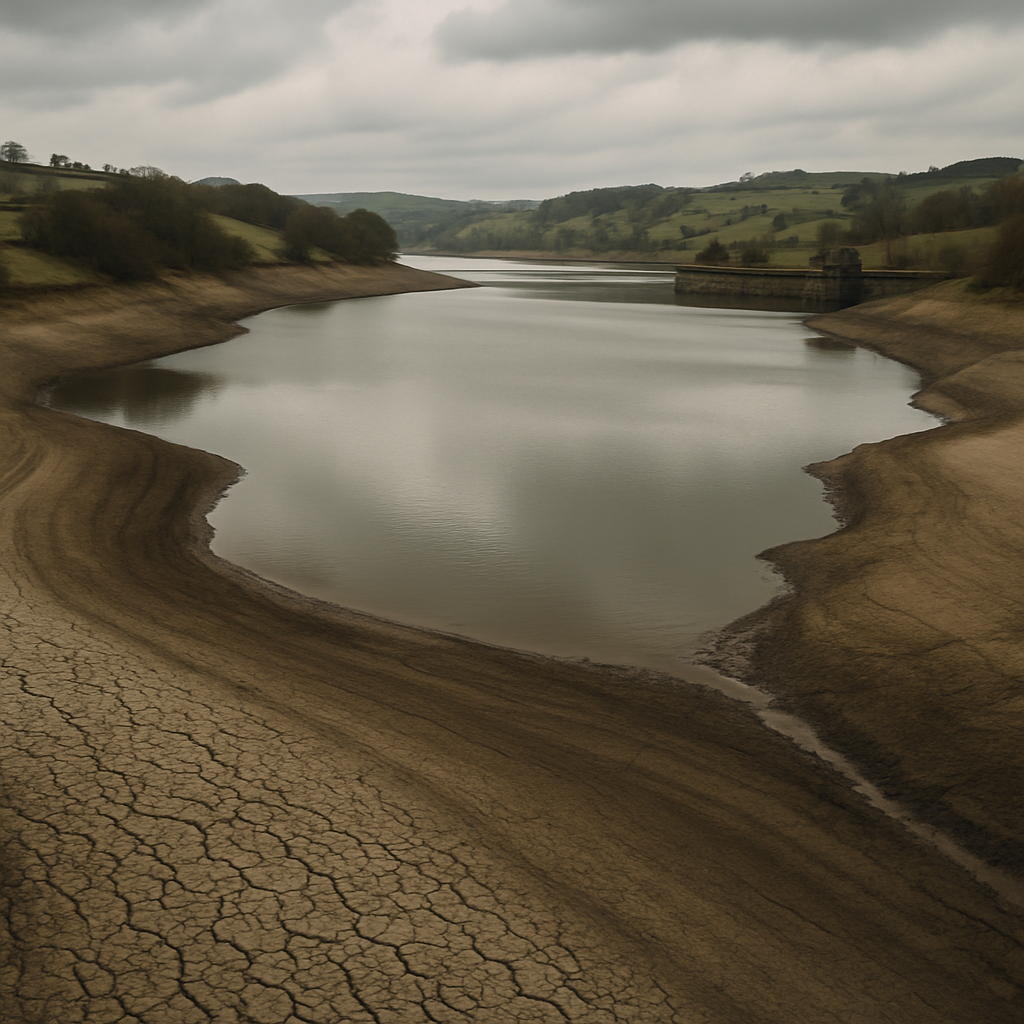
How Bad Is the Freshwater Situation, Really?
The numbers are stark and worth stating plainly. Approximately 2.2 billion people currently lack access to safely managed drinking water, according to the World Health Organisation. Closer to home, the Environment Agency has warned that parts of England could face water deficits by the 2050s if consumption patterns and infrastructure investment do not change materially. Southern and eastern England are considered particularly exposed, with aquifers already under chronic stress.
Globally, agriculture consumes roughly 70 per cent of all freshwater withdrawals. As populations grow, as diets shift towards more water-intensive foods, and as climate change disrupts rainfall patterns, the arithmetic becomes genuinely frightening. Droughts that once arrived once a generation now arrive every few years. Reservoirs that once recovered predictably over winter are taking longer to refill. This is not a distant problem. It is arriving on schedule.
Water Rights Markets: The New Frontier of Commodity Trading
One of the most consequential developments in the broader global water crisis investment story has been the emergence of formalised water rights trading. In parts of Australia and the western United States, water rights have been bought and sold for years. What is new is the acceleration of that market, and the interest it is attracting from institutional investors who have historically concentrated on equities and bonds.
In Chile, which has some of the most privatised water systems in the world, rights disputes have become a source of serious political tension, prompting constitutional reform debates. In the Middle East, nations like Saudi Arabia and Israel are investing heavily in desalination and water recycling precisely because they cannot afford to rely on trading markets they do not control. The geopolitics of water are beginning to resemble the geopolitics of energy, circa 1973.
For UK-based institutional investors, the interest is more measured but unmistakably growing. Sovereign wealth funds, infrastructure investment trusts, and several prominent pension managers have been quietly increasing exposure to water infrastructure assets, from treatment facilities and pipeline networks to desalination plants and smart metering technology companies.

Infrastructure Investment: The Gap Between Need and Reality
Here is where the situation becomes genuinely uncomfortable. The Global Commission on the Economics of Water estimated in 2023 that annual investment in water infrastructure needs to roughly double from current levels to meet demand through to 2050. That means trillions of pounds worth of pipes, treatment plants, storage systems, and distribution networks that simply do not yet exist.
In Britain, the conversation around water infrastructure has been coloured by the well-documented failings of the privatised water utilities sector. Thames Water’s near-collapse and the persistent problem of sewage discharge into rivers have prompted a broader public reckoning with whether the current model is fit for purpose. Ofwat, the sector’s regulator, approved a significant round of bill increases in late 2024 to fund capital investment programmes, but critics argue this still falls short of what the ageing network requires.
The global picture is similarly uneven. Nations with strong governance and capital markets, such as Singapore, Denmark and parts of Germany, have managed water infrastructure with considerable efficiency. But across much of sub-Saharan Africa, South Asia, and Latin America, infrastructure deficits are deepening even as demand accelerates. This gap is where much of the new investment attention, from development finance institutions and private equity alike, is being directed.
The Technology Startups Reimagining Water
Perhaps the most genuinely exciting dimension of the current moment is the wave of technology companies attacking the crisis from unexpected angles. The category is broad and the quality varies enormously, but several areas stand out.
Atmospheric water generation, which extracts moisture directly from air, has moved from curiosity to viable product in certain climates. Companies operating in this space have attracted venture funding from investors who see the technology as a potential solution for off-grid communities and water-stressed urban areas alike. Separately, advances in membrane filtration and reverse osmosis are making desalination cheaper and more energy-efficient than it has ever been, with Israeli and Singaporean firms leading much of that innovation.
Closer to home, several British companies are working on smart water monitoring, using sensor networks and machine learning to detect leaks, optimise distribution, and reduce the staggering amount of treated water lost in transit. United Kingdom water networks currently lose somewhere in the region of three billion litres per day to leakage, a figure that Ofwat has made a central priority for the companies it regulates. The technology to address this exists. The commercial and regulatory incentives to deploy it at scale are, at last, beginning to align.
What Global Water Crisis Investment Means for the Decade Ahead
The framing of water as the new oil is imperfect, as all analogies are. Oil is extracted and burned. Water, managed well, circulates and renews. But the analogy holds in one critical sense: those who control access to reliable freshwater supplies will wield enormous economic and political leverage in the decades ahead. Nations that have invested early in treatment capacity, storage infrastructure, and efficiency technology will be insulated from shocks that devastate less prepared neighbours.
For investors, the opportunity is real but requires careful navigation. Water infrastructure assets tend to be long-duration, regulated, and illiquid, characteristics that suit pension funds and sovereign wealth vehicles rather than short-term traders. The regulatory environment, particularly in the UK, is in flux. And the ethical dimensions of treating a basic human necessity as a financial asset class remain genuinely contested.
None of that changes the underlying reality. Freshwater scarcity is one of the defining pressures of this decade, and the global water crisis investment response is no longer optional. Governments, corporations, and individuals are all, whether they acknowledge it or not, already living inside this story. The only question that remains is whether the capital and political will arrive before the taps begin to run slow.
Frequently Asked Questions
What is driving global water crisis investment in 2026?
A combination of accelerating freshwater scarcity, ageing infrastructure, and growing institutional awareness of climate-related resource risks is drawing significant capital into water-related assets. Pension funds, sovereign wealth funds, and venture capital are all increasing exposure to water infrastructure, technology, and treatment companies.
How are water rights traded and why does it matter?
Water rights are legal entitlements to use a specific volume of water from a source such as a river or aquifer. In markets like Australia and parts of South America, these rights are bought and sold like financial instruments. As scarcity intensifies, the value and geopolitical significance of these rights is increasing sharply.
What is the UK doing about its water infrastructure problems?
Ofwat approved significant bill increases in late 2024 to fund capital investment by water utilities, with a focus on reducing leakage, improving sewage treatment, and upgrading ageing pipework. Critics argue the funding remains insufficient relative to the scale of the problem, particularly given projected demand increases by mid-century.
Which technologies are most promising for solving freshwater scarcity?
Desalination, atmospheric water generation, advanced leak detection using sensor networks, and membrane filtration technology are currently the most commercially viable approaches. Smart metering and AI-driven distribution optimisation are also gaining traction, particularly in developed markets with existing infrastructure.
Is investing in water a sound financial decision for UK investors?
Water infrastructure assets tend to be long-duration, regulated investments that suit pension funds and long-term institutional capital rather than retail investors seeking short-term returns. The sector carries regulatory and political risk, particularly in the UK where utility reform is ongoing, but the long-term demand fundamentals are considered very strong.
Leave a Reply