

Thirty years ago, the very mention of nuclear energy in polite company was enough to clear a room. Chernobyl had done its damage. Three Mile Island lingered in the cultural memory. And then Fukushima, in 2011, seemed to seal the verdict for a generation of policymakers. Germany began shutting its reactors. Italy voted against nuclear twice. The narrative was settled: nuclear was the past, renewables were the future, and never the twain should meet.
That narrative has, rather spectacularly, collapsed. Nuclear power as a climate solution is no longer a fringe position held by contrarian engineers. It is being championed by mainstream environmentalists, endorsed by energy ministers from Tokyo to Brussels, and, perhaps most tellingly, attracting serious private capital for the first time in decades. The question is no longer whether nuclear deserves a seat at the table. It is whether it can arrive quickly enough to matter.
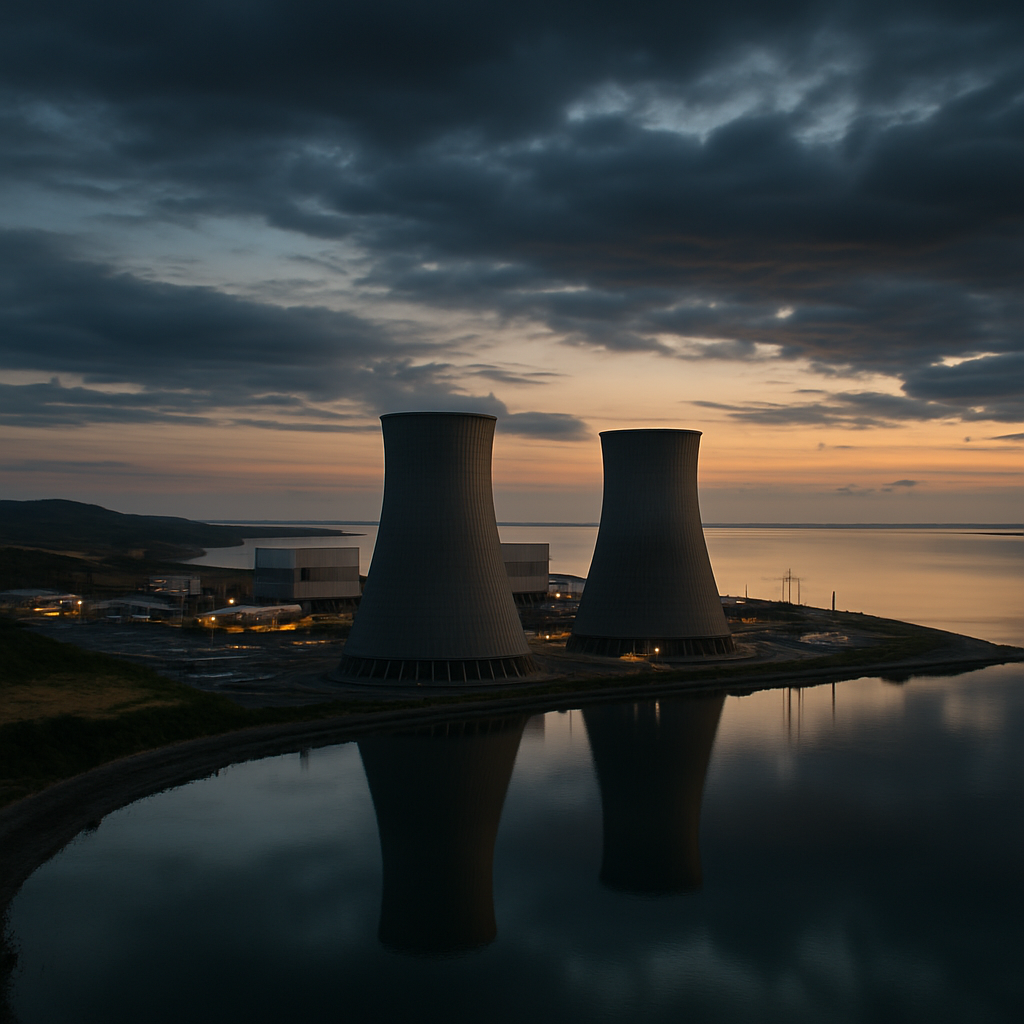
What Changed? The Forces Behind the Nuclear Comeback
The rehabilitation of nuclear did not happen overnight, and it was not driven by a single catalyst. A confluence of pressures has pushed it back into serious consideration. The most obvious is the sheer scale of the decarbonisation challenge. The International Energy Agency has made clear that reaching net zero by 2050 requires every low-carbon technology available, and solar and wind, for all their extraordinary growth, cannot reliably provide baseload power without storage solutions that remain stubbornly expensive and limited in capacity.
Then came the energy security crisis triggered by Russia’s invasion of Ukraine in 2022. European nations that had cheerfully imported Russian gas suddenly found themselves scrambling. France, which had quietly maintained around 70 per cent nuclear electricity generation, looked prescient rather than reckless. Belgium reversed its nuclear phase-out. Japan restarted reactors it had shuttered after Fukushima. The geopolitical dimension of energy independence had reasserted itself with brutal clarity.
In the UK, the government’s commitment to Great British Nuclear and the progress at Hinkley Point C, however painfully delayed and over budget, reflects a genuine political consensus that the country cannot meet its 2050 targets without atomic power in the mix. The Energy Act 2023 created new financing frameworks designed to attract private investment, acknowledging that the old model of wholly public-funded megaprojects is no longer viable.
Small Modular Reactors: The Technology Everyone Is Watching
The most consequential development in nuclear technology right now is not another vast, cathedral-scale plant like Hinkley. It is the emergence of Small Modular Reactors, or SMRs. These are factory-built units, typically generating between 50 and 300 megawatts of electricity, that can be assembled on site in a fraction of the time and at a fraction of the cost of conventional reactors.
Rolls-Royce SMR, based in Derby, is arguably the most advanced programme in this country. The company has proposed building up to ten SMRs across the UK, with ambitions to export the technology globally. The projected cost per unit sits around £2.5 billion, against the £25 billion-plus price tag attached to Hinkley Point C. If those numbers hold, and that remains a significant if, SMRs represent a genuinely transformative proposition.
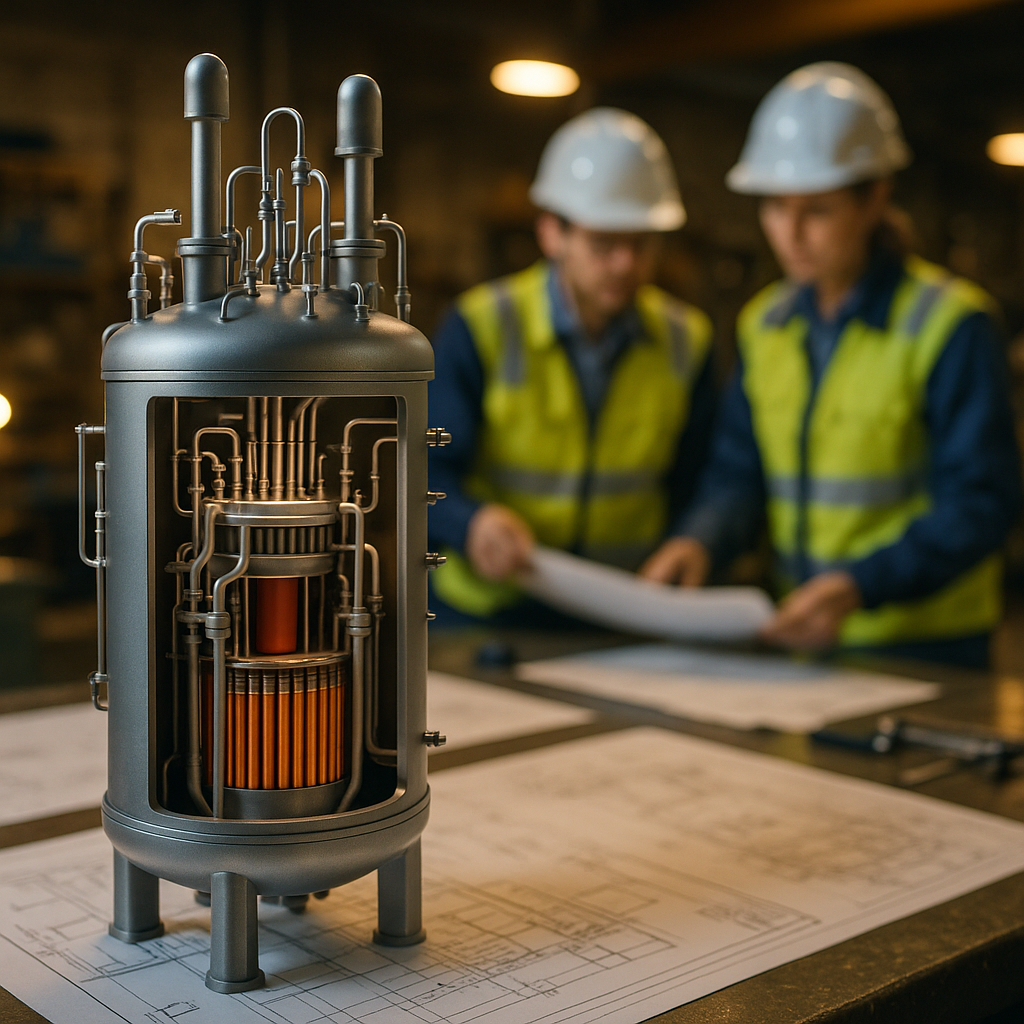
Beyond cost, the appeal of SMRs lies in their flexibility. They can be located closer to industrial demand, potentially decarbonising heavy industry, hydrogen production, and district heating networks simultaneously. Several designs under development use advanced fuels and passive safety systems that make the catastrophic failure scenarios of older reactors essentially impossible. NuScale in the United States, Kairos Power, and a cluster of British and European start-ups are all racing to deliver commercial units within this decade.
The UK Government’s Great British Nuclear programme has already shortlisted several SMR developers, with final investment decisions expected imminently. According to analysis published by the Department for Energy Security and Net Zero, nuclear could supply up to 25 per cent of the UK’s electricity by 2050, with SMRs forming a significant portion of that capacity.
Has Public Opinion Actually Shifted?
For decades, public opinion on nuclear was a reliable obstacle. Planning inquiries became battlegrounds. Protests outside proposed sites were guaranteed. The emotional weight of the Cold War, of mushroom clouds and fallout shelters, had permanently contaminated the technology’s image even though commercial nuclear power and weapons are entirely different propositions.
The shift in sentiment has been measurable. A YouGov poll conducted in early 2025 found that 58 per cent of UK adults now support new nuclear power stations, up from around 40 per cent a decade earlier. Younger respondents, more attuned to the existential urgency of climate change, showed the highest levels of support. The old anti-nuclear coalition has fractured, with a notable cohort of prominent environmentalists, including the writer George Monbiot and the filmmaker Robert Stone, publicly revising their positions.
This is not universal. Community opposition to specific sites remains fierce, and the unresolved question of long-term waste storage continues to generate legitimate concern. No permanent geological disposal facility yet exists in the UK, though the Nuclear Decommissioning Authority is progressing a siting process. Until that question is answered convincingly, it will remain ammunition for those who argue that nuclear power merely defers its problems rather than solving them.
The Geopolitics of Nuclear in 2026
The nuclear renaissance is not playing out in a vacuum. It has a distinct geopolitical character, and that character is increasingly defined by competition between Western democracies and authoritarian states, principally Russia and China, for influence over the global nuclear supply chain.
Russia’s Rosatom remains the dominant builder of nuclear plants across the developing world, having signed agreements with countries from Egypt to Bangladesh. China’s state-owned enterprises are similarly aggressive in exporting reactor technology, often bundled with financing that creates long-term strategic dependencies. Western governments have belatedly recognised that ceding the nuclear market to these actors carries implications well beyond energy policy.
There is also the question of uranium enrichment. The UK, along with most Western nations, remains dependent on Russian enriched uranium to a degree that post-Ukraine now looks uncomfortable. Diversifying the fuel supply chain, building domestic enrichment capacity, and investing in next-generation fuels such as high-assay low-enriched uranium are all now matters of national security as much as energy policy.
The Honest Reckoning: What Nuclear Cannot Do
Enthusiasm for nuclear power as a climate solution in 2026 must be tempered by a clear-eyed assessment of its limitations. Build times remain the central problem. Even with SMR optimism, no commercial unit will be generating power in the UK before the early 2030s at the most optimistic reading. The climate crisis does not accommodate that kind of lead time gracefully.
Cost overruns are endemic to the industry. Hinkley Point C, Vogtle in the United States, Flamanville in France: every major nuclear project of the past two decades has delivered unpleasant financial surprises. The industry needs to demonstrate, convincingly and soon, that SMRs can be delivered on time and on budget at scale. That demonstration has not yet happened.
None of this means nuclear should be abandoned. The most credible energy transition pathways involve a portfolio approach: rapid scaling of renewables, aggressive improvements in storage and grid infrastructure, demand reduction, and a sustained nuclear contribution providing the firm, dispatchable low-carbon power that no other technology currently replicates at meaningful scale. The era of treating nuclear as uniquely beyond the pale, separate from the rational cost-benefit analysis applied to every other technology, is over. Whether the industry can capitalise on its rehabilitation is another matter entirely. The next decade will tell.
Frequently Asked Questions
Is nuclear power genuinely a low-carbon energy source?
Yes. Lifecycle carbon emissions from nuclear power are among the lowest of any electricity source, comparable to offshore wind and significantly below gas or coal. The Intergovernmental Panel on Climate Change (IPCC) consistently classifies it as a key low-carbon technology in its net-zero pathways.
What is a Small Modular Reactor and how does it differ from a conventional nuclear plant?
A Small Modular Reactor (SMR) is a factory-manufactured nuclear unit, typically producing 50 to 300 megawatts, compared to the 1,600-megawatt output of a conventional plant like Hinkley Point C. The modular, standardised design aims to reduce build time, lower costs, and allow deployment at more locations, including industrial sites and former fossil fuel power stations.
What is the UK government doing about nuclear energy in 2026?
The UK Government’s Great British Nuclear programme is actively supporting both large-scale plants and SMR development. Rolls-Royce SMR has been shortlisted for funding, and the government has set a target for nuclear to supply up to 25 per cent of UK electricity by 2050. Hinkley Point C in Somerset remains under construction, with Sizewell C in Suffolk in the planning stages.
What happens to nuclear waste in the UK?
Nuclear waste in the UK is stored and managed by the Nuclear Decommissioning Authority. Radioactive waste ranges from low-level material, such as protective clothing, to high-level spent fuel rods. The government is progressing plans for a Geological Disposal Facility, a deep underground repository, though a final site has not yet been confirmed.
Has public support for nuclear power in the UK increased?
Yes, notably. Polling from 2025 showed that around 58 per cent of UK adults support the construction of new nuclear power stations, a significant rise from the figures recorded a decade ago. Growing concern about energy security following the Ukraine conflict and heightened awareness of climate change have both contributed to the shift in public sentiment.
Leave a Reply