Category: General News

  • The Quiet Luxury Home Trend: How To Get The Look Without Wasting Money

    The Quiet Luxury Home Trend: How To Get The Look Without Wasting Money

    The quiet luxury home is the interior trend everyone is suddenly talking about, yet it is the opposite of shouty. Think calm rooms, impeccable materials and a sense that everything has been considered, but nothing is trying too hard.
    What is a quiet luxury home, really?

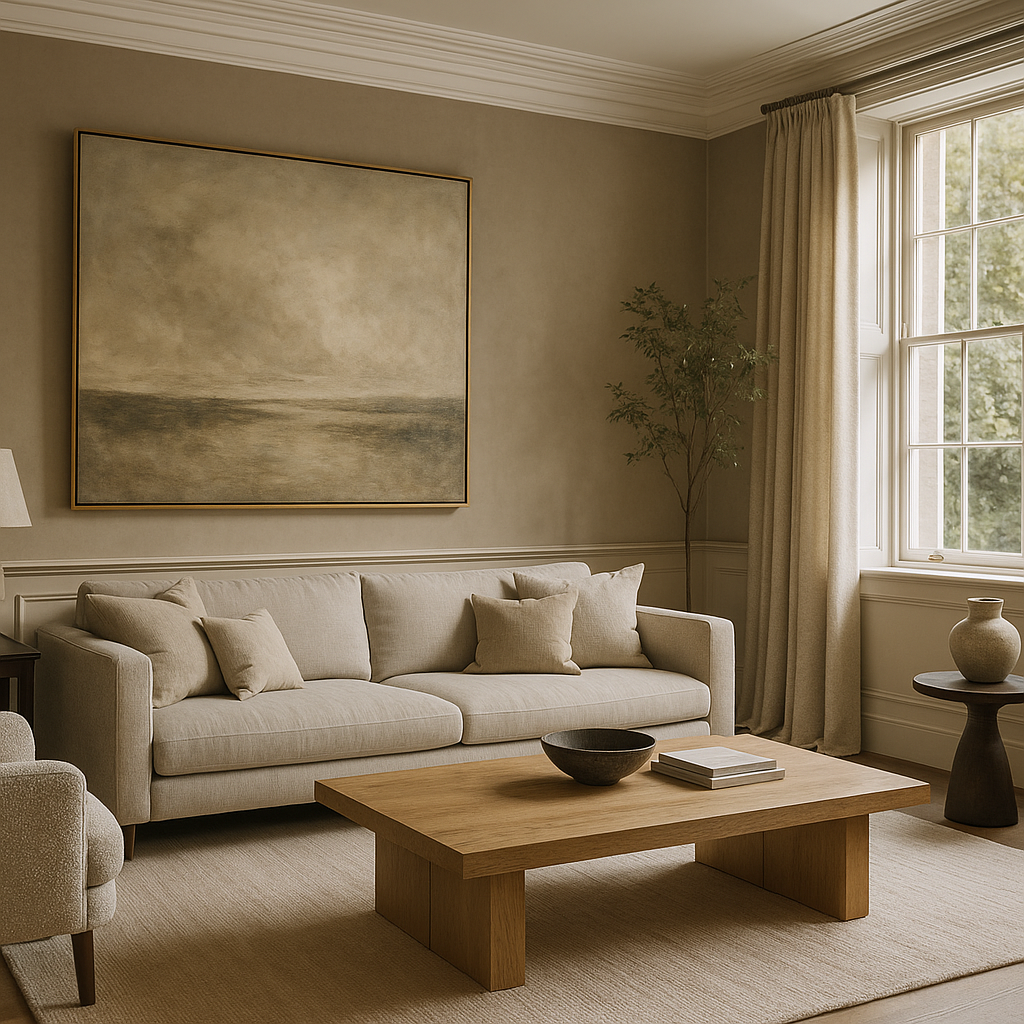
    At its core, a quiet luxury home is about restraint. The look borrows from high-end hotels and heritage townhouses, but softens the formality. Surfaces feel expensive to the touch rather than look obviously costly. Colours are muted, silhouettes are simple and there is space for pieces to breathe.

    Unlike the maximalist moment of recent years, this trend is not about collecting more. It is about editing ruthlessly and investing selectively. A single, beautifully upholstered armchair can do more for a room than an entire suite of forgettable furniture.

    How to create a quiet luxury home on a realistic budget

    You do not need a designer on speed dial to achieve this aesthetic. Start with the elements that make the biggest visual impact and work down.

    1. Choose a calm, layered colour palette

    Quiet luxury is built on soft neutrals: warm white, stone, mushroom, greige and deep tobacco tones. The key is depth. Layer three or four related shades in the same room rather than defaulting to a single flat white on every surface.

    Paint is the most cost effective way to transform a space. Opt for matt finishes on walls for a gallery-like softness, and use eggshell or satin on woodwork to add a subtle sheen.

    2. Prioritise texture over pattern

    In a quiet luxury home, texture does the talking. Wool, bouclé, linen, velvet, sisal and solid timber add richness without visual noise. Choose a restrained handwoven rug, a heavy linen curtain or a boucle sofa to introduce depth. Pattern is not banned, but it is used sparingly – a single stripe or small-scale check is enough.

    3. Edit your furniture, then upgrade key pieces

    Before buying anything, remove what does not serve the room. Clutter makes even expensive pieces feel cheap. Once you have edited, identify two or three hero items to upgrade: typically the sofa, coffee table and dining chairs.

    Look for clean lines, generous proportions and solid construction. Avoid visibly flimsy legs, shiny chrome and overstuffed cushions. Many British retailers now offer customisable, made-to-order sofas and armchairs that quietly nod to the quiet luxury home trend without the designer price tag.

    Details that make a home feel quietly expensive

    4. Understated lighting

    Harsh overhead lighting is the enemy of quiet luxury. Aim for three layers: a soft central pendant or flush fitting, table lamps at eye level and low-level accent lighting such as picture lights or floor lamps. Fabric shades in natural tones diffuse light beautifully.

    5. Art and objects with a story

    Quiet luxury favours pieces that feel personal over mass produced prints. A single large artwork has more impact than a busy gallery wall. Mix framed photography, abstract canvases and sculptural ceramics. Many homeowners are turning to small galleries and craft fairs rather than big-box wall art to achieve this.

    6. Thoughtful storage

    Visual calm is non-negotiable. Built-in joinery, low sideboards and slim consoles keep surfaces clear. Choose closed storage for everyday items and reserve open shelving for a few carefully edited objects: books, a vase, perhaps a single candle. The aim is curated, not styled to within an inch of its life.

    Is a quiet luxury home practical for everyday life?

    Done well, yes. The trick is to choose materials that wear in, not out. Natural oak, wool rugs and washable linen can all handle real life if you accept that a little patina adds character. Families are increasingly choosing performance fabrics that mimic the look of linen or velvet but are far more forgiving of spills.

    In the UK, even high street brands have started to champion this look, with collections that focus on tactility, muted hues and unfussy silhouettes, making it easier to build a these solutions room by room rather than in one dramatic overhaul.
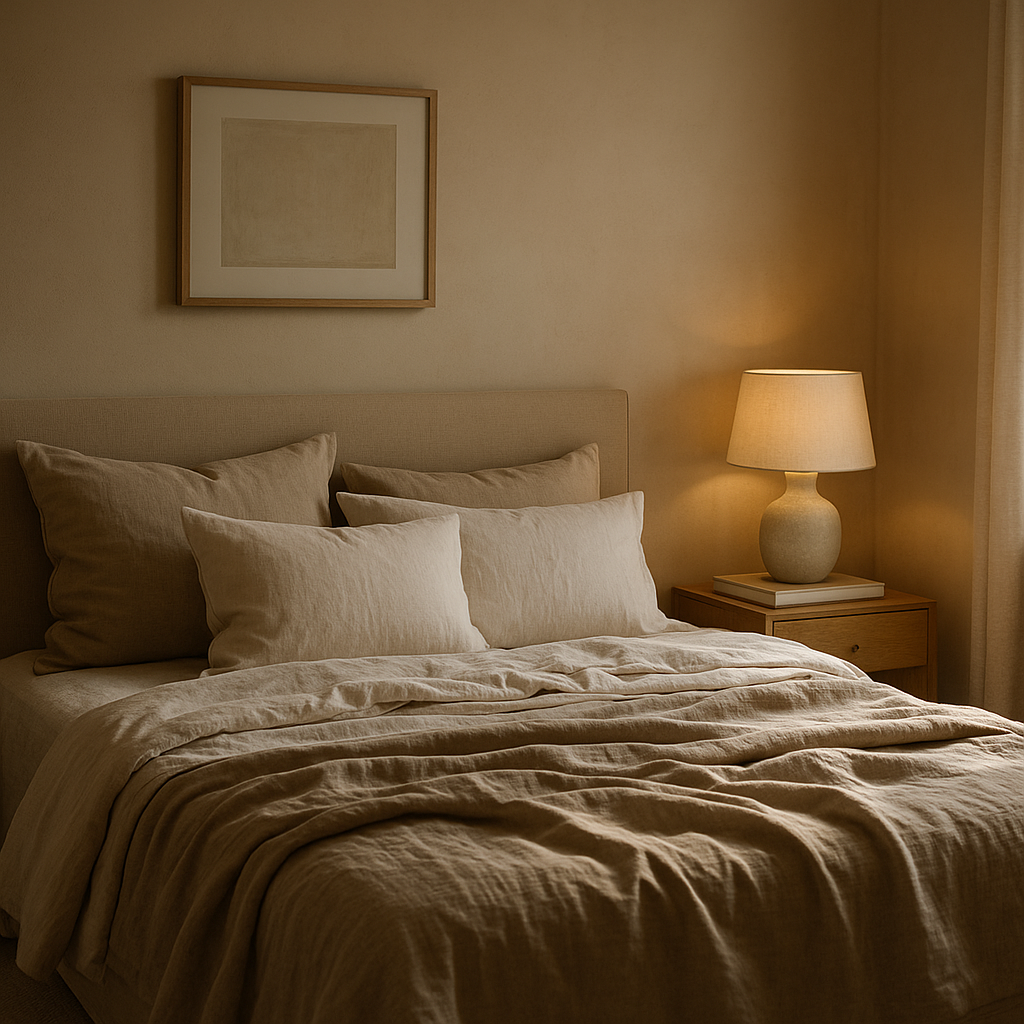
    Serene bedroom with layered textures reflecting quiet luxury home style
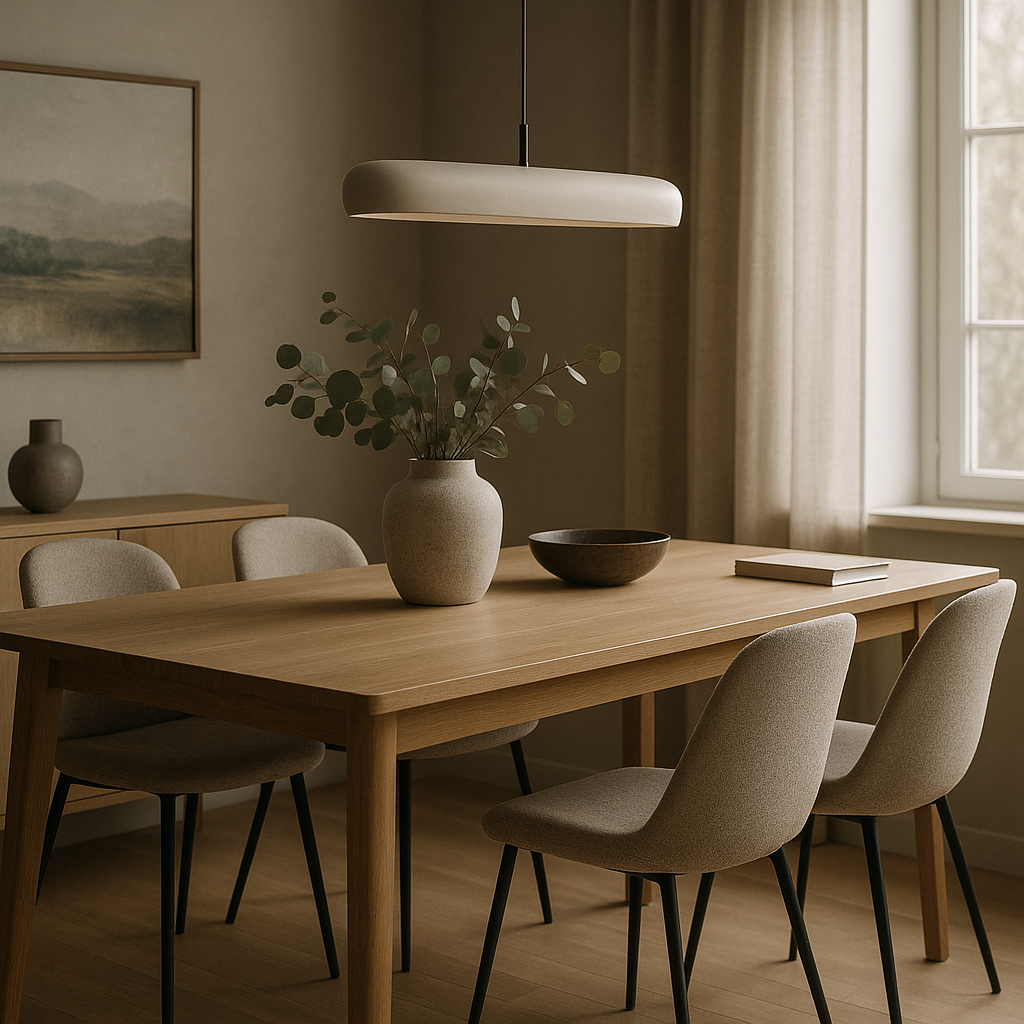
    Refined dining space featuring textures and tones of a quiet luxury home

    Quiet luxury home FAQs

    What defines a quiet luxury home style?

    A quiet luxury home is defined by restraint, high quality materials and a calm, layered palette. Instead of bold logos or statement patterns, it focuses on texture, proportion and craftsmanship. Rooms feel curated and comfortable, with space for furniture and objects to breathe rather than being crammed with decor.

    Can I create a quiet luxury home on a small budget?

    Yes. Start by decluttering and simplifying what you already own, then invest selectively in a few key pieces such as a good sofa, a substantial rug or better lighting. Use paint to create a softer backdrop, choose natural textures where you can and avoid buying lots of small decorative items. Fewer, better choices are more important than expensive brands.

    Which colours work best for a quiet luxury home?

    Soft, warm neutrals work best for a quiet luxury home: think stone, oatmeal, mushroom, greige and deep tobacco tones. The aim is to layer related shades rather than rely on stark white. You can introduce gentle contrast with deeper hues on woodwork or upholstery, but keep the overall effect muted and cohesive for a calm, elevated feel.


  • UK Rental Price Trends: What Tenants Need To Know Now

    UK Rental Price Trends: What Tenants Need To Know Now

    Few subjects provoke quite as much quiet anxiety as UK rental price trends. For millions of households, the monthly rent is now their single largest outgoing, and the direction of travel has been relentlessly upwards. Yet beneath the headline figures, the picture is more nuanced, with sharp variations between cities, regional markets and even neighbouring postcodes.

    What is happening to UK rental price trends?

    Across the country, the broad pattern is clear: rents have risen significantly over recent years, particularly in major urban centres. London, Manchester, Bristol and Edinburgh have all seen double digit increases, with competition for well located properties remaining intense. In many city neighbourhoods, there are still far more prospective tenants than available homes, which inevitably pushes prices higher.

    However, early signs of cooling are emerging in some areas. Inner London flats that surged in price during the post lockdown rebound are now sitting on the market a little longer, and landlords are sometimes trimming asking rents to secure reliable occupants. In several regional towns, especially those that saw speculative investor interest, rental growth has slowed to a crawl or plateaued entirely.

    Why costs are rising in so many cities

    Several forces are converging to drive rents higher in the UK's most in demand urban centres. The most fundamental is a chronic shortage of homes. New building has consistently lagged behind household formation, particularly in places with strong jobs markets and thriving universities. When more people chase fewer properties, landlords are in a stronger position to raise prices.

    At the same time, the cost base for many landlords has risen sharply. Higher mortgage rates mean buy to let investors with variable or expiring fixed deals are facing substantially larger monthly payments. Some are choosing to exit the market altogether, reducing supply further, while others are seeking to pass the additional cost on to tenants through rent increases.

    Energy efficiency requirements, licensing schemes and safety regulations, although important for standards, can also mean extra expenditure on upgrades and compliance. For smaller landlords in particular, those outlays are often recouped via higher rents. The cumulative effect is visible in UK rental price trends in big cities, where the combination of limited stock and rising costs has created a perfect storm.

    Regions that are bucking the trend

    Not every part of the country is marching in lockstep. Some regions are now quietly bucking the trend of relentless increases. Parts of the North East, certain coastal towns and a number of smaller Midlands cities are seeing far more modest growth, with occasional reductions where supply has caught up with demand.

    Areas that benefitted from the work from home boom, attracting tenants from larger cities in search of space and value, are also settling into a new equilibrium. As hybrid working patterns stabilise, some tenants are returning to larger employment hubs, easing pressure on local rents. In these markets, well presented properties still let quickly, but landlords are less able to push through aggressive increases.

    For mobile tenants, this regional divergence offers opportunity. Being open to a slightly different commute, or considering emerging neighbourhoods rather than established hotspots, can translate into meaningful savings without a significant compromise in lifestyle.

    How interest rates and regulations shape the market

    Interest rates remain a pivotal influence. Even if the peak has passed, borrowing costs are still markedly higher than in the era of ultra cheap money. This reshapes the economics of buy to let and feeds directly into rents. Where rates eventually settle will be a key determinant of future UK rental price trends.

    Regulation is also evolving. Stricter rules around tenant protections, proposed reforms to eviction processes and higher standards for energy performance are gradually professionalising the sector. Over time, that should mean a better experience for renters, but it may also accelerate the departure of highly leveraged or reluctant landlords, again affecting supply.

    Practical tips for tenants negotiating in this market

    In a tight market, tenants can feel they have little leverage, but there are still practical steps that can improve outcomes.

    Tenants negotiating with a landlord at a kitchen table discussing UK rental price trends
    Aerial view of mixed UK neighbourhoods showing regional differences in UK rental price trends

    UK rental price trends FAQs

    Are UK rental prices likely to fall soon?

    Outright falls in rents are more likely in local pockets than across the entire country. Areas that saw particularly sharp increases, or where new supply is coming through, may experience modest declines or longer void periods. However, in most major cities, ongoing demand and limited housing stock mean rents are more likely to level off or rise more slowly than to drop dramatically in the short term.

    How can I tell if my rent increase is reasonable?

    Start by comparing your proposed rent with similar properties in the same area, using reputable listings and recent letting data. Factor in the condition of the property, included bills and any improvements being made. It is also worth checking the terms of your tenancy agreement and any relevant local guidance. If the increase is significantly above local market levels or recent UK rental price trends, you have a basis to question and negotiate it.

    Is it worth moving to a cheaper region to save on rent?

    For some tenants, relocating to a cheaper region can deliver substantial savings, particularly if their work is flexible or remote. However, it is important to weigh rent reductions against other costs, such as travel, childcare, and the availability of amenities and services. Quality of life considerations, including proximity to friends, family and cultural life, should also play a role in the decision.

  • Is LED Light Therapy The Next Big Thing In At-Home Skincare?

    Is LED Light Therapy The Next Big Thing In At-Home Skincare?

    LED light therapy at home has moved from niche gadget to bathroom-shelf essential, quietly reshaping how we think about skincare rituals. Once confined to dermatology clinics and facialist studios, light-based treatments are now arriving in sleek, sculptural devices designed to sit next to your cleanser and serum.

    What is LED light therapy at home actually doing to your skin?

    At its core, LED light therapy at home uses specific wavelengths of light to stimulate different responses in the skin. Red wavelengths are typically associated with collagen support and calming inflammation, while blue light is often used to target breakout-causing bacteria. Some devices layer in near-infrared for deeper rejuvenation or amber for radiance.

    Unlike lasers, LEDs are non-ablative and non-thermal, meaning they do not wound the skin. Instead, they deliver a low-level energy that skin cells can absorb, a process often described as giving the skin a gentle nudge rather than a dramatic shock. The result is a cumulative effect: small, consistent improvements rather than an overnight transformation.

    Why LED light therapy at home is trending now

    The surge of interest in LED light therapy at home is not accidental. Several cultural shifts have converged to make it the treatment of the moment. First, there is the rise of the “skin minimalist” who would rather invest in one intelligent tool than a dozen overlapping serums. Second, there is a growing appetite for clinic-grade results without the waiting room or consultation fee.

    Social media has also played its part. The photogenic, almost sci-fi aesthetic of full-face LED masks has become a staple in bathroom mirror selfies, normalising high-tech skincare tools as part of everyday life. At the same time, dermatologists and facialists have become more vocal about the evidence base for light treatments, lending them a level of credibility that many beauty trends lack.

    How to integrate LED light therapy at home into a routine

    The most effective routines treat LED as a finishing touch rather than a standalone miracle. Typically, skin should be thoroughly cleansed, with any heavy oils removed so that light can reach the skin unimpeded. Hydrating, fragrance-free serums can be applied beforehand, provided the device manufacturer confirms compatibility.

    Most consumer devices recommend several short sessions each week. Consistency matters more than duration; five to ten minutes, three to five times weekly, is often more productive than a single marathon session. It is also wise to treat LED as a long-term habit, much like retinoids or sunscreen, rather than a one-off fix before an event.

    Choosing a device: what really matters

    With a growing number of masks, wands and panels on the market, it can be difficult to distinguish substance from spectacle. Reputable devices are transparent about wavelength ranges, treatment times and safety testing. Look for clear documentation rather than vague promises of “glow” and “rejuvenation”.

    Independent reviews from dermatology professionals are particularly useful, as is any published testing on real users. Some brands now pair their devices with companion apps that track usage and progress, turning skincare into a lightly quantified ritual rather than a hopeful guess.

    Beyond beauty: the broader light-based wellness trend

    The newfound enthusiasm for LEDs sits within a wider fascination with light-based wellness. From sunrise alarm clocks to circadian lighting systems in the home, there is a growing awareness that light is not merely something by which we see, but something that can shape how we feel and function.

    Alongside cosmetic uses, there is rising curiosity about targeted options such as red light therapy for more specific concerns. While the science is still evolving, the direction of travel is clear: light is becoming a central pillar of modern self-care, rather than a fringe experiment.

    The future of LED light therapy at home

    Looking ahead, these solutions is likely to become more personalised. Expect devices that adjust wavelength combinations based on skin tone, lifestyle and even local pollution levels, plus integrations with wearables that track recovery and stress.

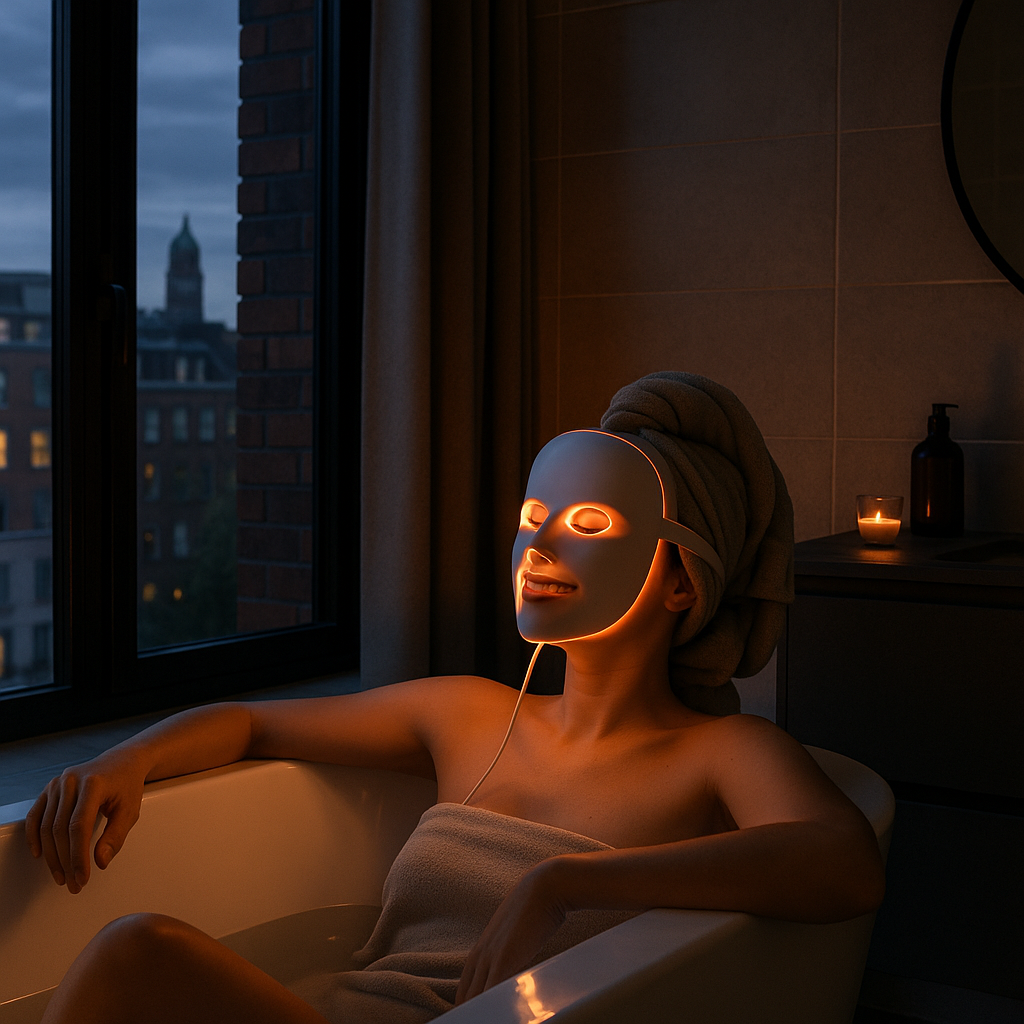
    Luxury bathroom shelf featuring skincare products and an LED light therapy at home device
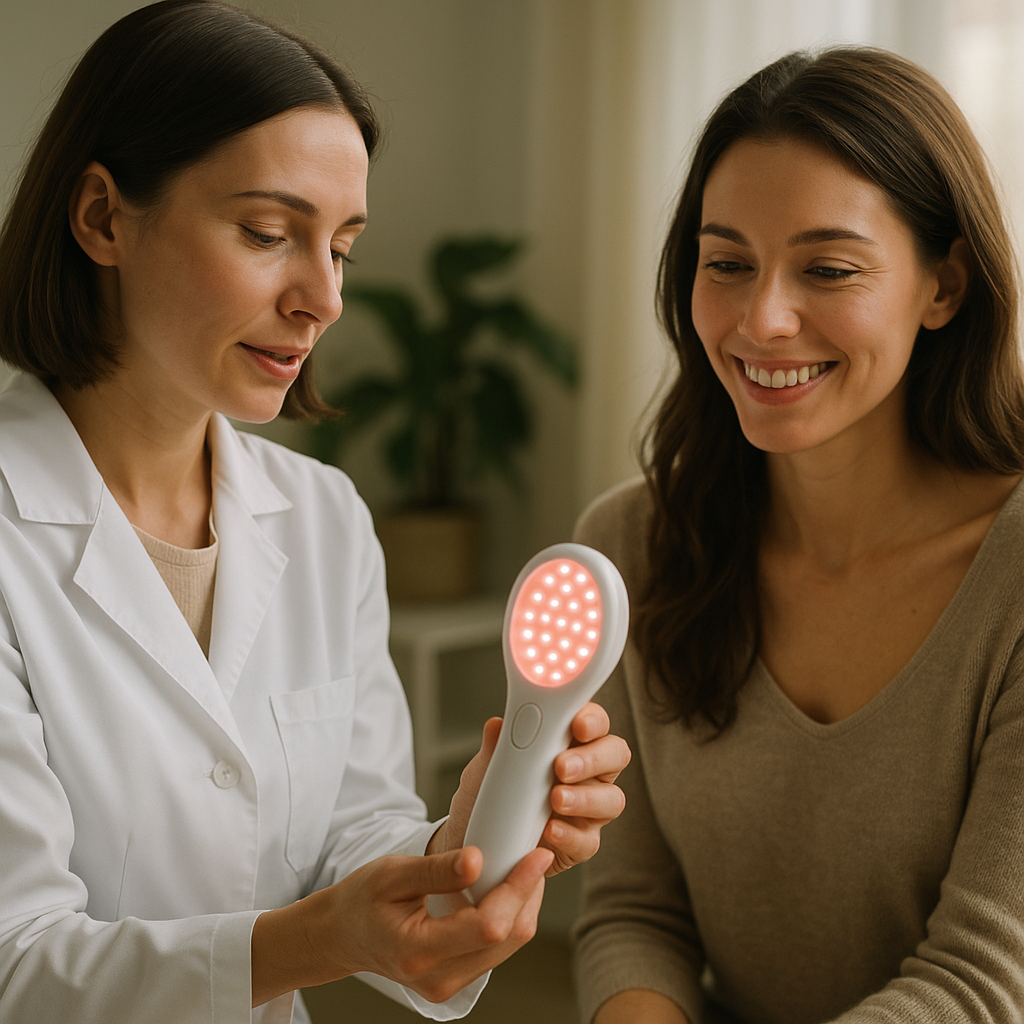
    Dermatology expert explaining LED light therapy at home to a client in a clinic-style setting

    LED light therapy at home FAQs

    Is LED light therapy at home safe for all skin types?

    Most LED devices designed for home use are considered suitable for a wide range of skin types, including sensitive skin, because they use low-level, non-ablative light. However, anyone with a history of light-sensitive conditions, epilepsy, or who is taking photosensitising medication should speak to a medical professional before starting. It is also worth patch-testing for comfort, starting with shorter sessions and gradually building up to the recommended treatment time.

    How long does it take to see results from LED light therapy at home?

    LED treatments tend to work cumulatively, so results are more gradual than dramatic. Many users report subtle improvements in radiance and texture within four to six weeks of consistent use, with more noticeable changes in tone and fine lines often taking several months. As with topical skincare, consistency is crucial: irregular or sporadic use is unlikely to deliver meaningful results.

    Can I combine LED light therapy at home with active skincare ingredients?

    Yes, but it is important to proceed with care. Gentle hydrating serums and barrier-supporting products usually pair well with LED sessions. Strong actives such as retinoids, exfoliating acids or high-strength vitamin C may increase sensitivity for some people, especially if applied immediately before treatment. Many practitioners suggest using actives at a different time of day and keeping LED sessions paired with simpler, soothing formulas to minimise the risk of irritation.