
Category: Health & Beauty

  • Climate Anxiety Is Now a Public Health Crisis, Here’s What Governments Are Finally Doing About It

    Climate Anxiety Is Now a Public Health Crisis, Here’s What Governments Are Finally Doing About It

    For years, ecologists and psychologists occupied separate disciplines, rarely speaking the same language. That division is dissolving fast. A mounting body of peer-reviewed research now places climate anxiety squarely within the public health canon, no longer a fringe concern for coastal ecologists or catastrophising teenagers, but a measurable, diagnosable pressure affecting populations across every continent. Governments are beginning to take it seriously. Some are even legislating around it.

    What has changed is the quality of the evidence. The Lancet Countdown on Health and Climate Change, which publishes annually and carries considerable weight with policymakers, documented in its most recent report that extreme heat events, flooding, and prolonged wildfire seasons are generating cascading psychological consequences: elevated rates of depression, post-traumatic stress, grief, and what researchers term “solastalgia”, the distress caused by environmental change in one’s own home environment. These are not metaphors. They are clinical presentations arriving in GP surgeries and mental health clinics with increasing frequency.

    Young woman on a rain-soaked park bench reflecting on climate anxiety public health concerns in a British urban setting
    Young woman on a rain-soaked park bench reflecting on climate anxiety public health concerns in a British urban setting

    What Does Climate Anxiety Actually Look Like in Practice?

    The term “climate anxiety” risks sounding vague, even self-indulgent, to those unfamiliar with the clinical literature. It is neither. The American Psychological Association first formalised the concept in 2017, but UK researchers have since developed their own frameworks. A 2021 study by the University of Bath surveyed 10,000 young people across ten countries and found that 59 per cent felt very or extremely worried about climate change. Among UK respondents, 40 per cent said climate feelings affected their daily functioning. That is not background noise. That is a public health signal.

    Clinicians distinguish between adaptive anxiety, which motivates action, and maladaptive anxiety, which paralyses. The latter manifests as sleep disturbance, intrusive thoughts, avoidance of news, strained relationships, and in more acute cases, a reluctance to have children. Younger cohorts are disproportionately affected, but the NHS is also seeing older patients presenting with grief responses following flooding events, particularly in communities such as those in the Somerset Levels and parts of Yorkshire that have experienced repeated inundation.

    The UK’s Policy Response: Cautious Progress

    Britain’s approach to climate anxiety as a public health matter remains, to be charitable, in its early stages. The NHS Long Term Plan acknowledged environmental determinants of health in broad terms, but specific commissioning around climate-related psychological distress has been patchy at best. What has emerged instead are localised initiatives and pilot programmes, several of them genuinely thoughtful.

    NHS England has begun integrating climate health literacy into social prescribing frameworks, meaning GPs can now refer patients to “green social prescribing” projects. These schemes, trialled across seven sites including South Yorkshire and Humberside, connect patients with outdoor activities, conservation volunteering, and community gardening. Early results, published by NHS England in 2025, showed statistically significant improvements in wellbeing scores among participants. The logic is elegant: reconnecting people to the natural world addresses both the disconnection that fuels ecological grief and the sedentary isolation that worsens generalised anxiety.

    The UK Health Security Agency has also published guidance acknowledging that extreme weather events carry mental health consequences that must be planned for alongside physical ones. Flood recovery packages in several local authority areas now include mandatory mental health signposting, something that would have been considered an afterthought five years ago.
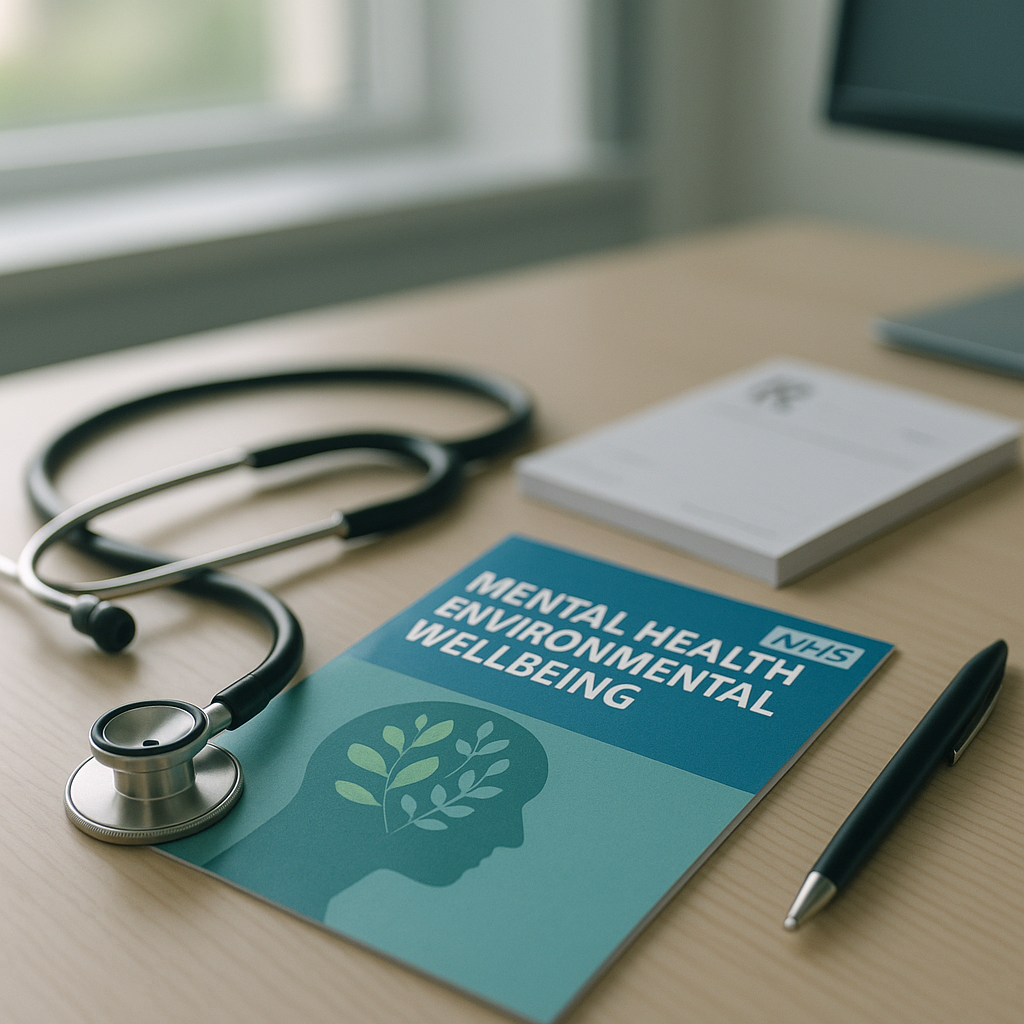
    NHS GP consultation desk with mental health leaflet related to climate anxiety public health resources
    NHS GP consultation desk with mental health leaflet related to climate anxiety public health resources

    How the EU Is Moving Further and Faster

    Where the UK has moved cautiously, the European Union has shown considerably greater structural ambition. The EU Mission on Cancer has been complemented by growing political interest in what some Brussels officials are calling a “climate health mission”, a cross-portfolio initiative linking environmental policy directly to mental health outcomes.

    Finland, consistently ranked among the world’s happiest countries, has integrated climate mental health education into its national school curriculum. Pupils are taught not only about ecological systems but about processing difficult emotions related to environmental change, a form of climate psychology that Finnish researchers argue reduces maladaptive anxiety whilst building civic resilience. Germany has established dedicated climate psychology clinics within several university hospital networks, and early demand has significantly exceeded initial projections.

    The World Health Organisation designated climate change as the defining public health threat of the 21st century, and its regional office for Europe has since published a technical guidance document on mental health and climate change, urging member states to embed psychological support within their national adaptation plans. For those interested in the full scope of WHO’s position, their European climate and health framework is worth examining.

    The Generational Fault Line

    No serious discussion of climate anxiety as a public health challenge can sidestep the generational dimension. Young people in the UK, broadly those born after 1997, have grown up with climate change as a fixed feature of their consciousness rather than a distant scientific abstraction. The psychological literature is beginning to reflect what youth mental health workers have known anecdotally for years: that this cohort experiences a particular form of anticipatory grief, mourning a future they feel has already been foreclosed.

    Organisations such as Young Minds and the Climate Psychology Alliance in the UK are lobbying for climate-aware therapy training as a standard component of counsellor and psychotherapist accreditation. At present, most practising therapists receive no formal education on how to work with climate-related distress, which means patients raising these concerns frequently encounter well-meaning but underprepared clinicians who attempt to reframe ecological anxiety as a cognitive distortion to be corrected. The Climate Psychology Alliance argues, persuasively, that this fundamentally misunderstands the problem: the anxiety is, in large part, a rational response to a real threat.

    From Awareness to Infrastructure: What Good Policy Looks Like

    The emerging consensus among researchers and policymakers who take climate anxiety public health seriously points toward a three-tier response. First, population-level awareness and destigmatisation: naming climate grief as a legitimate psychological experience removes the shame that prevents people from seeking support. Second, clinical capacity: training mental health professionals in climate-aware therapeutic approaches, funding specialised services, and ensuring that GP practices in high-risk areas have clear referral pathways. Third, structural intervention: because the most effective treatment for climate anxiety is ultimately reducing climate change itself, mental health and environmental policy cannot remain siloed.

    Scotland’s approach, under its National Performance Framework, is perhaps the most integrated in the UK, explicitly linking wellbeing outcomes to environmental sustainability indicators. It is imperfect, and implementation varies considerably by health board, but the framework at least acknowledges what the evidence demands: that a healthy population and a healthy planet are not separate policy objectives.

    The Road Ahead

    Climate anxiety is not going away. The physical realities driving it are accelerating, and the psychological literature tracking its effects is growing sharper and more alarming with each successive report. The question governments face is not whether this constitutes a public health issue; that case has been made and largely accepted. The question is whether the institutional response will match the scale of the problem before the window for genuinely preventive action closes.

    There is, paradoxically, something mildly reassuring in the fact that policymakers are finally asking the question. The NHS green social prescribing pilots, the EU’s cross-portfolio health missions, Finland’s classroom curricula, and the WHO’s regional guidance all represent serious institutional acknowledgement that the psychological cost of environmental breakdown is real, measurable, and deserving of a proper response. That is not enough. But it is, at least, a beginning.

    Frequently Asked Questions

    What is climate anxiety and is it a recognised mental health condition?

    Climate anxiety refers to persistent worry, distress, or fear related to climate change and its consequences. Whilst not a standalone diagnostic category in the ICD-11, it is increasingly recognised by clinical bodies including the NHS and the Climate Psychology Alliance as a significant psychological experience that can impair daily functioning and require professional support.

    How widespread is climate anxiety in the UK?

    Research from the University of Bath found that a significant proportion of UK young people report climate concerns affecting their daily lives. NHS mental health services have noted rising presentations linked to flooding events and broader ecological distress, particularly among under-35s and communities in flood-prone regions such as Yorkshire and the Somerset Levels.

    What is the NHS doing about climate-related mental health issues?

    The NHS has integrated climate health considerations into its green social prescribing framework, connecting patients experiencing anxiety or low mood with outdoor and conservation-based activities. Early pilot data from seven NHS sites, published in 2025, showed measurable improvements in participant wellbeing scores. Dedicated clinical pathways for climate-related distress remain limited but are under development.

    How are other countries tackling climate anxiety as a public health problem?

    Finland has embedded climate psychology into its national school curriculum, helping young people process ecological emotions as part of standard education. Germany has opened dedicated climate psychology clinics within university hospitals, whilst the EU is developing cross-portfolio health missions linking environmental and mental health policy. The WHO’s European regional office has also published technical guidance urging member states to include psychological support in national adaptation plans.

    Is climate anxiety the same as eco-grief or solastalgia?

    These terms are related but distinct. Eco-grief refers specifically to mourning environmental losses, such as species extinction or landscape destruction. Solastalgia describes distress caused by changes to one’s immediate home environment, often following flooding or habitat destruction. Climate anxiety is broader, encompassing anticipatory fear about future environmental deterioration. All three can co-exist and may benefit from climate-aware therapeutic approaches.

  • Longevity Science Is No Longer for the Elite: The Mainstream Wellness Treatments Backed by New Research

    Longevity Science Is No Longer for the Elite: The Mainstream Wellness Treatments Backed by New Research

    For years, the science of living longer and healthier was the exclusive preserve of Californian tech billionaires with private physicians and seven-figure health budgets. Bryan Johnson making headlines by transfusing his son’s blood plasma. Peter Thiel reportedly banking on parabiosis. The whole enterprise had an air of the baroque, even the desperate. But something has shifted, and it has shifted quickly. The longevity treatments 2026 are increasingly grounded in rigorous clinical evidence, increasingly available through UK private clinics, and increasingly affordable for anyone who takes their health with reasonable seriousness. This is not wellness fluff. It is a genuine pharmaceutical and diagnostic revolution.

    A woman reviewing longevity treatments 2026 data with her physician in a London private clinic
    A woman reviewing longevity treatments 2026 data with her physician in a London private clinic

    What Are Senolytics and Why Should You Care?

    The most significant clinical development in ageing science over the past decade is the emergence of senolytics: compounds that selectively clear senescent cells from the body. Senescent cells are, in the bluntest terms, cells that have stopped dividing but refuse to die. They accumulate with age and secrete a cocktail of inflammatory proteins that damage surrounding tissue, driving conditions from arthritis to cardiovascular disease to cognitive decline.

    The leading senolytic combination studied in human trials is dasatinib and quercetin. Dasatinib is a leukaemia drug; quercetin is a plant flavonoid found in onions and capers. Together, they have shown promising results in trials at the Mayo Clinic and, more recently, at University College London, where researchers observed measurable reductions in senescent cell burden in older patients with idiopathic pulmonary fibrosis. The regime is typically administered in short, intermittent bursts rather than daily dosing, which reduces side-effect risk considerably.

    In the UK, quercetin supplements are freely available from brands such as Viridian and Solgar. Dasatinib, being a prescription drug regulated by the MHRA, requires clinical oversight. A growing number of London-based longevity clinics, including Harpal Clinic and the Hooke Longevity Clinic in Marylebone, now offer senolytic protocols under medical supervision, typically priced between £800 and £2,500 for an initial programme including bloodwork and follow-up. That is not trivial, but it is a far cry from the seven-figure territory of five years ago.

    Continuous Glucose Monitoring: The Most Democratised Longevity Tool of the Era

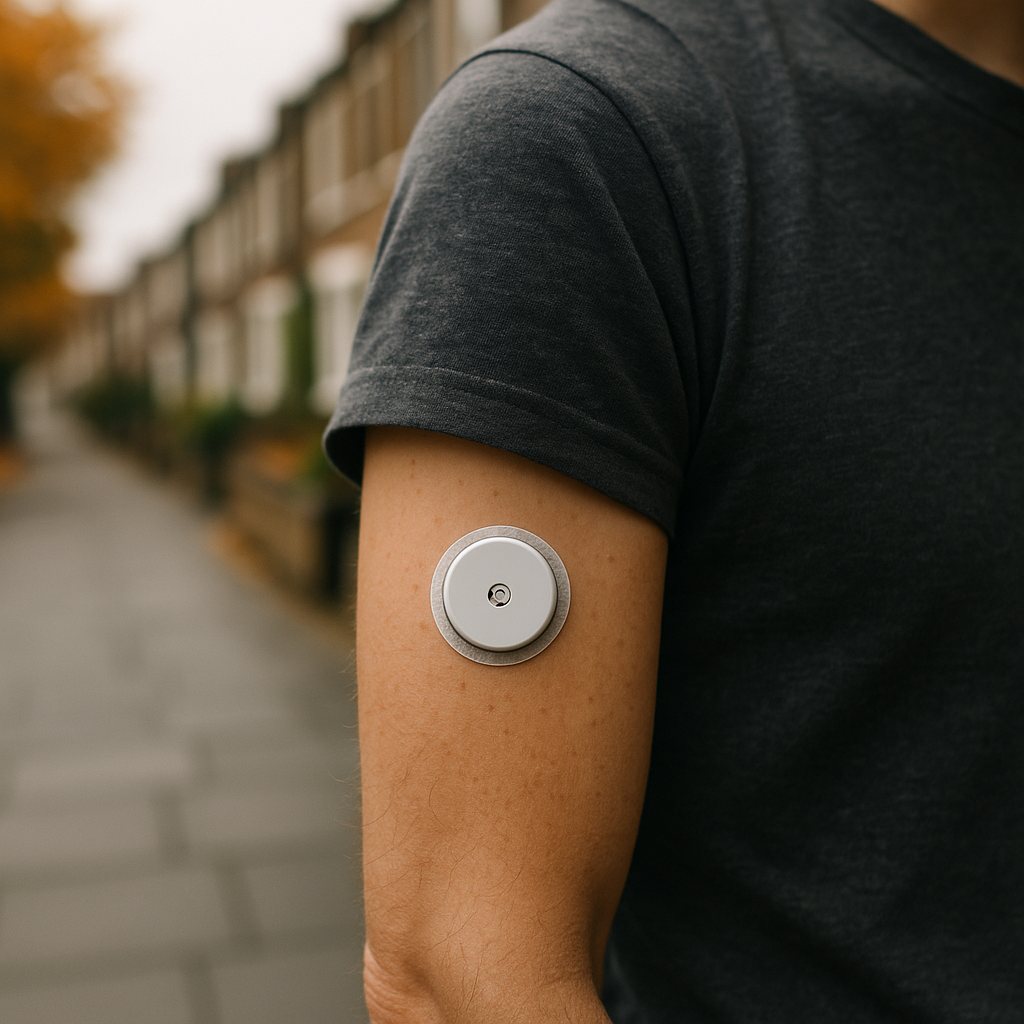
    Perhaps no single longevity technology has crossed from elite experimentation into mainstream use as decisively as continuous glucose monitoring, or CGM. Originally designed for diabetics, the small sensor worn on the upper arm now appears on the bodies of triathletes, hedge fund managers and, increasingly, people who simply want to understand how their diet affects their metabolic health in real time.

    The clinical rationale is compelling. Chronic glycaemic variability, even in people who test as non-diabetic on standard fasting glucose tests, is associated with accelerated biological ageing, cognitive impairment and elevated cardiovascular risk. A CGM device reveals exactly how your body responds to white rice versus brown, a croissant versus porridge, alcohol versus sleep deprivation. The feedback loop is immediate and, for most users, genuinely revelatory.

    In the UK, Abbott’s Libre Sense and the Dexterity platform have made CGM accessible without a prescription for non-diabetic users through services such as Zoe, the gut microbiome and metabolic health company co-founded by Professor Tim Spector of King’s College London. Zoe’s programme, which costs approximately £299 for the initial testing phase, combines CGM data with microbiome analysis and personalised dietary recommendations. The NHS uses CGM extensively for Type 1 diabetes management, and there is growing advocacy for wider metabolic screening, particularly following ONS data showing that an estimated 3.8 million people in England are living with pre-diabetes, many undiagnosed.

    Continuous glucose monitoring sensor worn on the arm, a key longevity treatment in 2026
    Continuous glucose monitoring sensor worn on the arm, a key longevity treatment in 2026

    NAD+ Precursors: The Supplement With the Most Clinical Weight

    Nicotinamide adenine dinucleotide, NAD+, is a coenzyme present in every cell in the body and central to energy metabolism and DNA repair. Its levels decline steeply with age. Supplementing with NAD+ precursors, principally nicotinamide riboside (NR) and nicotinamide mononucleotide (NMN), has become one of the most studied areas in longevity science, with human trials now published in peer-reviewed journals including Nature Ageing and Cell Metabolism.

    The results are not uniformly dramatic. Some studies show improved muscle function, cognitive clarity and reduced markers of inflammation in older adults. Others show more modest effects. What is clear is that NR and NMN are generally well tolerated and that their mechanism of action is biologically plausible in a way that many wellness supplements simply are not. Elysium Health’s Basis, containing NR and pterostilbene, has amassed more human trial data than almost any other longevity supplement on the market. In the UK, NMN supplements are available from Renue By Science and Double Wood Supplements, typically at £40 to £90 per month, putting them firmly within mainstream reach.

    Rapamycin: The Most Discussed Drug You Have Probably Never Heard Of

    Rapamycin is an immunosuppressant typically used to prevent organ transplant rejection. It is also the most consistently life-extending compound ever tested in animal models, including mice, where it extended median lifespan by up to 25 per cent even when administered late in life. It works by inhibiting mTOR, a signalling pathway that governs cell growth and metabolism, effectively nudging cells into a more cautious, repair-oriented mode.

    Human data is still limited but accumulating. The PEARL trial and ongoing work at the Karolinska Institute in Stockholm are among the more rigorous human studies. In the UK, off-label rapamycin prescribing for longevity purposes remains uncommon but not unheard of, and is available through select private longevity physicians at a cost of roughly £150 to £400 per month, including medical monitoring. The risks, including immunosuppression and potential impact on wound healing, mean this is emphatically not a supplement to acquire without professional oversight.

    For a thorough review of the current evidence on pharmacological longevity interventions, the Lancet has published several accessible analyses in recent years, and remains the most authoritative English-language source for clinically grounded readers.

    The Cost of Longevity in 2026: A Realistic Assessment

    The honest picture of longevity treatments 2026 is one of tiered accessibility. At the most accessible end, CGM programmes and NMN supplementation are available to anyone spending £50 to £100 per month. Mid-tier interventions, supervised senolytic protocols, comprehensive bloodwork panels measuring biological age via DNA methylation testing (available from companies such as Chronomics, based in the UK), and structured rapamycin regimes, sit in the £500 to £3,000 annual range. At the apex, full-service longevity clinics offering everything from hyperbaric oxygen therapy to DEXA body composition scanning charge upwards of £5,000 per year for membership packages.

    What has changed is not that the top tier has become cheaper, but that genuinely evidence-backed interventions now exist at every price point. The longevity treatments 2026 landscape no longer requires you to be Peter Thiel. It does require you to be informed, to engage with real clinical evidence rather than marketing, and to work with qualified medical professionals when prescription-grade interventions are involved. The science has never been more serious. That, at least, is worth something.

    Frequently Asked Questions

    What are the most evidence-backed longevity treatments available in the UK in 2026?

    The treatments with the strongest clinical evidence include continuous glucose monitoring for metabolic health, NAD+ precursor supplements such as NMN and NR, and senolytic protocols combining quercetin with dasatinib. Rapamycin is also gaining attention but requires careful medical supervision due to its immunosuppressant properties.

    How much do longevity treatments cost in the UK?

    Costs vary considerably. CGM programmes such as Zoe start at around £299 for an initial phase, NMN supplements cost roughly £40 to £90 per month, and supervised senolytic protocols at private UK clinics typically range from £800 to £2,500. Full-service longevity clinic memberships can exceed £5,000 per year.

    Are senolytics safe to take without medical supervision?

    Quercetin, a key component of the leading senolytic combination, is available over the counter and is generally considered safe. However, dasatinib is a prescription-only drug regulated by the MHRA and should only be taken under qualified medical supervision, as it carries meaningful side-effect risks.

    What is continuous glucose monitoring and do I need a prescription to use it?

    Continuous glucose monitoring involves wearing a small sensor, usually on the upper arm, that tracks blood sugar levels in real time throughout the day. In the UK, non-diabetic users can access CGM through services such as Zoe without a prescription, though NHS-funded CGM remains primarily reserved for patients with Type 1 diabetes.

    Does the NHS offer any longevity-focused treatments or interventions?

    The NHS does not currently offer longevity treatments as a distinct category. However, it does provide CGM for diabetes management, statins for cardiovascular risk reduction, and screening programmes for certain cancers and conditions associated with ageing. Most of the newer longevity interventions discussed in this article are available only through private clinics.

  • The Slow Travel Revolution: Why Discerning Travellers Are Abandoning Packed Itineraries for Depth Over Distance

    The Slow Travel Revolution: Why Discerning Travellers Are Abandoning Packed Itineraries for Depth Over Distance

    There is a particular kind of exhaustion that only seasoned travellers recognise. The one that arrives not after a long journey, but after a meticulously scheduled one. Three cities in five days. A museum before breakfast, a flight before dinner. The photographs are extraordinary; the memories, oddly thin. Slow travel luxury 2026 has emerged as a direct and rather elegant rebuke to all of that.

    This is not a fringe movement. Among Britain’s more thoughtful, culturally literate travellers, the shift is palpable and, by most accounts, permanent. The question is no longer how many places you can fit into a fortnight, but how deeply you can inhabit one. Depth over distance, as the phrase goes, has become the defining principle of a new kind of luxury.

    A traveller contemplating the Alentejo landscape, embodying the slow travel luxury 2026 philosophy
    A traveller contemplating the Alentejo landscape, embodying the slow travel luxury 2026 philosophy

    What Is the Slow Travel Philosophy, and Why Is It Resonating Now?

    Slow travel, at its core, borrows from the broader slow movement that emerged from Carlo Petrini’s Slow Food manifesto in late-1980s Italy. Applied to travel, it advocates staying longer in fewer places, engaging with local rhythms rather than tourist schedules, and measuring the success of a trip by what you understand at the end of it rather than what you have ticked off. Whilst the concept has circulated in travel writing for over a decade, something shifted meaningfully in 2025 and 2026 to push it from pleasant idea to genuine cultural force.

    Part of the answer is post-pandemic recalibration. British travellers who spent enforced periods at home rediscovered the pleasure of noticing things slowly, paying attention to what is immediately around them. Part of it is environmental consciousness; staying in one place for two weeks produces a fraction of the carbon footprint that a multi-destination tour generates. And part of it is, frankly, the luxury market doing what it always eventually does: following genuine desire rather than manufactured aspiration. High-net-worth travellers, the kind who once collected Michelin-starred restaurants across four countries in a single trip, are increasingly choosing a single villa in the Alentejo for ten nights, with a private guide and a reading list curated by a local academic.

    The Destinations Leading the Slow Travel Movement in 2026

    Not every place lends itself to the slow travel ideal. The best destinations share certain qualities: genuine local culture that rewards attention, landscapes that change with the light, food that is tied to place rather than trend, and enough quiet that you can hear yourself think.

    Portugal’s Alentejo region remains, by most measures, the spiritual home of slow travel luxury in 2026. Its cork forests, medieval hilltop towns and sparse, amber-lit plains feel designed for contemplation. Properties such as Herdade do Esporão have developed extended-stay programmes centred on viticulture, agricultural heritage and serious gastronomy. You arrive expecting a holiday and leave with something closer to an education.

    Japan’s Tohoku region, long overshadowed by Kyoto and Tokyo on the standard itinerary, has attracted substantial attention from discerning travellers seeking the country’s quieter self. Ryokan stays of a week or longer, centred on particular craft traditions such as Aizu lacquerware or Tsugaru shamisen music, have become genuinely sought-after experiences. The point is not observation but participation.

    Handcrafted ceramics and local produce reflecting the slow travel luxury 2026 attention to detail
    Handcrafted ceramics and local produce reflecting the slow travel luxury 2026 attention to detail

    Closer to home, Scotland’s far north has quietly become a destination of remarkable depth for slow travellers. The Orkney archipelago, in particular, offers something almost nowhere else can: a landscape that contains 5,000 years of human history, severe and luminous weather, and a local community of artists, farmers and archaeologists whose work is inseparable from the terrain. Several independent properties now offer week-long residencies built around the islands’ creative and academic communities. The scenery is, of course, spectacular. But scenery alone does not sustain a slow traveller; context does.

    Why Slow Travel and Luxury Are, in Fact, Natural Partners

    There is a common misconception that slow travel is austerity travel, that it means budget accommodation and a deliberate rejection of comfort. The opposite tends to be true at the upper end of the market. True slow travel luxury in 2026 is expensive precisely because it requires extraordinary quality at every point of sustained contact. One spectacular dinner is a treat; ten consecutive brilliant meals require a chef, a network of local producers and genuine culinary intelligence. One beautiful bedroom is easy to find; a space you can genuinely live in for a fortnight demands curation of an entirely different order.

    The most sophisticated slow travel operators understand this. Scott Dunn, the British luxury travel specialist, has reported significant growth in extended single-destination bookings over the past eighteen months, with clients increasingly requesting programmes that include private tutors, local mentors and curated cultural immersions rather than conventional excursions. The measure of success has shifted from novelty to understanding.

    This also represents a meaningful redefinition of exclusivity. In a world where most wealthy travellers have been everywhere, having been nowhere thoroughly is, perversely, the more distinguished position. To have spent three weeks in one Umbrian valley, to know the name of the farmer who produces your olive oil and the history of the church you walked past each morning, is a form of knowledge that no amount of itinerary-hopping can replicate.

    The Environmental Case, Which Is Impossible to Ignore

    Slow travel is not an environmental panacea, and it would be intellectually dishonest to pretend otherwise. Flying to Portugal and staying for three weeks still involves a flight to Portugal. But the arithmetic is notably better than flying to five destinations across a fortnight, and the emerging class of slow travellers is increasingly supplementing or replacing flights with long-distance rail journeys. The BBC’s science and environment coverage has consistently noted that aviation accounts for roughly 2.5 per cent of global CO2 emissions but a far higher share of effective climate warming when contrasted effects are included. Reducing flight frequency matters, even when total travel remains high.

    The overland renaissance is a significant subplot of the slow travel story. The Caledonian Sleeper from London to Inverness, the Venice Simplon-Orient Express, and a growing number of premium rail routes across Europe have attracted travellers who once would have flown without a second thought. The journey, in the slow travel model, is not an inconvenience to be minimised but a first act of the experience itself.

    How to Actually Do Slow Travel Well

    The practical barriers are real. Most Britons receive between 25 and 28 days of annual leave; a fortnight in one place feels extravagant to many. But slow travel need not mean extended sabbaticals. A long weekend in one Yorkshire village, properly engaged with, produces more lasting memory than four European capitals in a week. The philosophy scales.

    For those planning a genuine immersive trip, the principles are straightforward. Arrive without a checklist. Identify two or three things you genuinely want to understand, whether that is the local textile tradition, a regional cooking technique, or the history of a particular landscape, and build your time around those. Stay somewhere that feels like habitation rather than accommodation. Eat with the rhythm of local life. Walk more than you think necessary. Resist the hotel’s activity programme unless it genuinely interests you.

    The slow travel movement, at its best, is simply an argument for taking seriously the places we choose to visit. It asks travellers to bring their full attention rather than their best luggage. In a world that accelerates almost everything by default, that particular kind of deliberateness feels, unexpectedly, like the most radical luxury of all.

    Frequently Asked Questions

    What does slow travel actually mean in practice?

    Slow travel means staying in fewer destinations for longer periods, prioritising genuine engagement with local culture, food and landscape over ticking off attractions. Rather than visiting five countries in a fortnight, a slow traveller might spend ten days in a single region, building real knowledge of the place rather than a curated highlight reel.

    Is slow travel luxury more expensive than conventional luxury holidays?

    Extended stays of genuine quality tend to cost more in absolute terms, simply because high standards must be maintained over a longer period. However, per-day costs can be lower, and many travellers find the value proposition far superior, as the depth of experience is incomparably richer than a succession of brief, expensive stops.

    Which are the best slow travel destinations for British travellers in 2026?

    Portugal’s Alentejo, Japan’s Tohoku region and Scotland’s Orkney archipelago are among the most compelling options for culturally serious slow travellers this year. Each rewards extended attention with layers of history, food culture and landscape that a short visit cannot hope to reach.

    Is slow travel actually better for the environment?

    It is generally more environmentally efficient than multi-destination travel, as it reduces the total number of flights taken. Combining slow travel with overland rail options, such as the Caledonian Sleeper or European train routes, reduces the carbon impact further, though a transatlantic flight remains significant regardless of how long you stay.

    Can slow travel work with a standard British annual leave allowance?

    Absolutely. The principles of slow travel apply at any scale; a long weekend spent properly exploring one part of the English countryside is slow travel in spirit. For those planning longer trips, combining annual leave with bank holidays strategically can create ten to twelve day windows that work well for genuinely immersive experiences.