

Cashless Britain is leaving behind the people least able to adapt: older, rural and lower-income households who still depend on notes and coins. The new cash access rules from the Financial Conduct Authority, which took over responsibility from the Payment Systems Regulator’s remit under the Financial Services and Markets Act 2023 regime, should slow the decline. They will not bring back what has already gone.
The scale of the shift is well documented. UK Finance has reported for years that cash’s share of payments has fallen sharply since the 2010s, and that debit cards now dominate everyday spending. Yet the Bank of England and the Financial Conduct Authority have both noted that millions of adults still rely on cash, and that a small but significant group use it for most of their spending.
1. The cash machine is vanishing from the high street
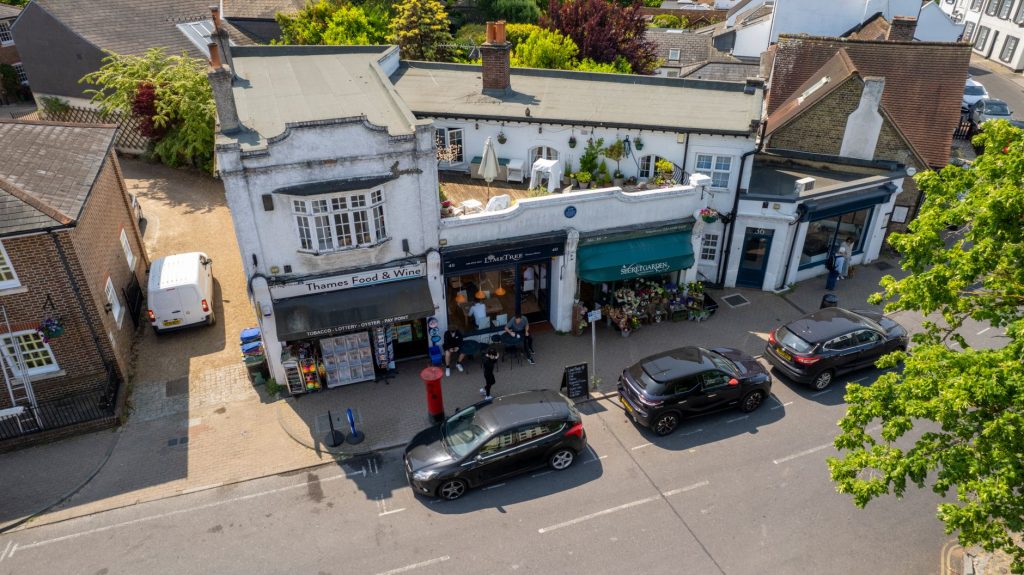
Free-to-use ATMs have been closing across Britain for years, and the Treasury’s own legislation acknowledges that access to cash is now a matter for regulators rather than the market. Say you live in a market town where the last bank branch shut and the only machine sits inside a convenience store with limited opening hours. A withdrawal then becomes a planned errand, not a quick stop.
2. Bank branches have gone faster than habits have changed
Hundreds of branches have closed across the UK in recent years, according to consumer group Which?, which has tracked the losses. Banks point to falling footfall and the rise of mobile apps. Both are true. But branches also handled cash deposits for small shops, clubs and market traders, and that function has not moved neatly online.
3. Older people carry the heaviest burden
Age UK has repeatedly warned that many older people, particularly those without a smartphone or reliable broadband, rely on cash to budget. An envelope system for the gas bill and the weekly shop is not nostalgia. It is a method of control. Take away the nearby machine and the method collapses, or it depends on a relative with a car.
4. Rural communities face the longest journeys
In a village with no branch, no machine and an infrequent bus, getting cash can mean a round trip of many miles. Rural areas also have patchier mobile signal, which undermines the usual answer that everyone can simply pay by phone. Anyone who has watched a card reader fail in a village hall knows how fragile a cashless-only event can be. The same pressures are visible in the wider story of people moving to the countryside, where services have not kept pace.
5. Lower-income households pay a penalty for going cashless
Cash helps people on tight budgets see exactly what is left. Card spending hides the running total, and overdraft or failed-payment charges can bite. Those on low incomes are also more likely to have been refused an account in the first place, a problem examined in our piece on in-work poverty.

6. Shops and services that refuse cash
Some cafés, car parks and even a few public services now accept cards only. There is no general law in the UK forcing a retailer to take cash, although the government has said it wants to protect cash acceptance for essential services. For a small business, card-only can cut theft and counting time. For a customer holding a twenty-pound note, it means being turned away.
What do the new cash access rules actually require?
The new cash access regime requires the biggest banks and building societies to provide reasonable access to withdrawal and deposit facilities within set distances of communities. The legislation passed in 2023 gave the Financial Conduct Authority the job of overseeing this, with powers to assess local gaps and require action. The Payment Systems Regulator had previously handled ATM interchange and the Link network, and the rules build on that work. Check the Financial Conduct Authority for the current position.
The test is distance, roughly three miles in many cases, not convenience or opening hours. Banking hubs, shared spaces staffed by counter staff from several banks, are the main tool, and their roll-out has been gradual.
Will the rules arrive too late?
For many places, yes, at least in part. A hub opened after a branch has been closed for several years rarely restores the old pattern of use. Customers have changed banks, shops have changed habits, and the local ATM operator has moved on. Rules that fix a gap on paper still take months to turn into a counter and a cash drawer.
There is also the question of cash acceptance. Access to withdraw means little if shops refuse the notes. That part of the system remains largely voluntary, and I would argue it is the weaker link.
What to do if cash access has gone in your area
Ask your bank whether a banking hub is planned and request a formal assessment through Link, the ATM network, which lets communities flag a gap. Contact your MP and local councillor, because councils can support hub applications. Many shops offer cashback with a purchase, which is a useful stopgap. Community buildings that still take cash payments can rely on reliable Communal Aerial Systems in the same way flats and shared housing rely on shared infrastructure: when it is maintained for everyone, nobody has to fend for themselves. Finally, if your bank has closed a branch, ask about its alternatives in writing and keep the reply.


Leave a Reply